NewSpace Market · Sector Catalogue
Launch Vehicles
Every unit we list in this sector — specifications, manufacturers and where to ask for a quote. Compiled from the live NewSpace Market catalogue.
About this catalogue
What is inside
This catalogue lists 163 launch vehicles products offered by 87 manufacturers across 24 countries. Of those, 20 carry a manufacturer datasheet and 5 publish a price; the rest are quoted on request — normal in this market, where configuration drives cost.
Entries are grouped alphabetically by manufacturer. Every product links back to its page on newspacemarket.com, where you will find the full specification, the datasheet and a quote form that reaches the manufacturer directly.
Compiled 15 October 2026 from the live catalogue. Specifications are as published by the manufacturers; we normalise units but do not re-measure. Where a figure looked implausible it was left out rather than guessed.
Manufacturers by country
Overview
All products at a glance
| Product | Manufacturer | Country | Key specification | Price |
|---|---|---|---|---|
| Agnibaan | Agnikul Cosmos | India | Height: ~18 m | on request |
| Agnibaan SOrTeD | Agnikul Cosmos | India | Type: Suborbital Technology Demonstrator | on request |
| Alpha | Firefly Aerospace | United States | Payload to LEO (200 km): 1,000 kg | on request |
| Antares | Yuzhnoye Design Bureau | Ukraine | Vehicle class: Medium-lift | on request |
| Antares 330 | Northrop Grumman Space Systems | United States | Stages: Two-stage: liquid-fueled first stage + solid-fueled second stage | on request |
| Ariane 5 / Ariane 6 Structural Components and VESPA Satellite Adapter | Beyond Gravity (ex-RUAG Space) | Switzerland | — | on request |
| Ariane 6 Launch Vehicle | arianegroup | France | Configurations: A62 (2 boosters), A64 (4 boosters) | on request |
| ASCA Project | Innovative Space Carrier (ISC) | Japan | — | on request |
| ASCA Reusable Launch Vehicle | Innovative Space Carrier (ISC) | Japan | Vehicle type: Reusable rocket system (two-stage from ASCA 1.2 on) | on request |
| Atlas V | United Launch Alliance (ULA) | United States | First stage engine: 1× RD-180 (LOX/RP-1) | on request |
| Aurora | Reaction Dynamics | Canada | Powered by: RE-202C | on request |
| Aurora Light Spaceplane | POLARIS Raumflugzeuge | Germany | Length: ~28 meters | on request |
| AURORA SPACEPLANE | Dawn Aerospace | New Zealand | Top speed: Mach 3.7 | on request |
| BLACK BIRD Sounding Rocket Series | INNOSPACE | South Korea | Black bird-1 — length: 1,485 mm | on request |
| Black Brant Sounding Rocket | Magellan Aerospace | Canada | Payload capacity: 70–850 kg | on request |
| Blue Whale 0.1 | Perigee Aerospace | South Korea | Vehicle type: Educational sounding rocket | on request |
| Blue Whale 0.4 | Perigee Aerospace | South Korea | Vehicle type: Suborbital research vehicle | on request |
| Blue Whale 1 | Perigee Aerospace | South Korea | Vehicle type: Two-stage orbital launch vehicle | on request |
| C6 Rocket | C6 Launch Systems Inc. | United States | Height: 13 meters | on request |
| Ceres-1 | Galactic Energy | China | Stages: 4 (3 solid stages + liquid upper stage) | on request |
| Ceres-2 | Galactic Energy | China | Configuration: 3 solid stages + liquid upper stage | on request |
| Composite Payload Fairings | Beyond Gravity (ex-RUAG Space) | Switzerland | Diameter range: 0.7 m to 5.4 m | on request |
| Cowbell Suborbital Test Rocket | Miles Space / RocketStar | United States | Length: 12 meters | on request |
| Cyclone-1 | Yuzhnoye Design Bureau | Ukraine | Vehicle class: Lightweight | on request |
| Cyclone-4M | Yuzhnoye Design Bureau | Ukraine | Vehicle class: Medium-lift | on request |
| Cyclone-5 | Yuzhnoye Design Bureau | Ukraine | Vehicle class: Medium-lift | on request |
| Dauntless | Vaya Space | United States | Height: 35 m (~115 ft) | on request |
| Daytona | Phantom Space | United States | Payload to SSO (500 km): 306 kg (Daytona II) | on request |
| DNLV — Dedicated Nano Launch Vehicle | Independence-X Aerospace | Malaysia | Propulsion: Liquid oxygen (LOX) + RP-1 kerosene (cryogenic) | $4 500 000 |
| DORADO Sounding Rocket | Equatorial Space Systems | Singapore | Propulsion: Hybrid HTP oxidizer / HRF-1 fuel | on request |
| Electron | Rocket Lab | United States | Height: 18 m | on request |
| Epsilon Launch Vehicle | JAXA - Japan Aerospace Exploration Agency | Japan | Height: 26 m | on request |
| Eris | Gilmour Space Technologies | Australia | Stages: 3 | on request |
| Esrange Suborbital and Small Satellite Launch Services | Esrange Space Center (SSC) | Sweden | Location: Kiruna, Sweden (68°N, Arctic Circle) | on request |
| Falcon 9 | SpaceX | United States | Payload to LEO: 22,800 kg | on request |
| Falcon Heavy | SpaceX | United States | Payload to LEO: 63,800 kg (expended) | on request |
| Flight Termination System | PacSci EMC | United States | Redundant ordnance events: 5 | on request |
| Flight Termination Systems | Ensign-Bickford Aerospace & Defense (EBAD) | United States | Type: Flight Termination System (FTS) | on request |
| Future Heavy Spaceplane | POLARIS Raumflugzeuge | Germany | Target timeframe: Early 2030s | on request |
| Gravity-1 (Yinli-1) | Orienspace (Orient Space) | China | Configuration: All solid: 3.5 stages, solid core with 4 solid boosters (a L… | on request |
| H-IIB | Mitsubishi Heavy Industries Launch Services | Japan | Payload to LEO: 19,000 kg | on request |
| H3 Launch Vehicle | Mitsubishi Heavy Industries Launch Services | Japan | Payload to GTO: 6,500 kg (ΔV 1,500 m/s to GSO) | on request |
| HANBIT-Micro Launch Vehicle | INNOSPACE | South Korea | Payload capacity: 170 kg (500 km SSO) | on request |
| HANBIT-Mini Launch Vehicle | INNOSPACE | South Korea | Payload capacity: 1,300 kg (500 km SSO) | on request |
| HANBIT-Nano Launch Vehicle | INNOSPACE | South Korea | Payload capacity: 90 kg (500 km SSO) | on request |
| Hapith I | TiSPACE (Taiwan Innovative Space) | Taiwan | Propulsion type: Non-explosive hybrid rocket propulsion | on request |
| Hapith V | TiSPACE (Taiwan Innovative Space) | Taiwan | Max. LEO payload mass: 390 kg | on request |
| Heavy Lunar Lander | Yuzhnoye Design Bureau | Ukraine | Payload capacity to lunar surface: Up to 10 tonnes | on request |
| Helios and Trailblazer Launch Vehicles | Aphelion Orbitals | United States | Payload to SSO: 20 kg | on request |
| Hornet Block 2 | Destinus | Switzerland | Range: 150+ km | on request |
| Hydrogen Technology | MT Aerospace | Germany | — | on request |
| Hype | HyPrSpace | France | Propulsion: Hybrid (LOX / solid fuel) | on request |
| Hyperbola-1 | iSpace (Beijing Interstellar Glory) | China | Height: 20.8 m | $5 000 000 |
| HyperSat Satellite Platform — Polish Space Electronics and Nanosatellite Systems | Creotech Instruments S.A. | Poland | — | on request |
| Hypersonic Platform VEGA | POLARIS Raumflugzeuge | Germany | Configuration: Two-stage, fully reusable, horizontal launch | on request |
| Infinity One | Omspace Rocket and Exploration | — | Payload to LEO: Up to 500 kg (dedicated mission; Omspace's rocket page also… | on request |
| Innovative Launch System | Celestia Aerospace | Spain | Platform variants: BioPharmaSat, SemicondSat, TestSat, ClusterSat | on request |
| KAIROS | Space One — KAIROS | Japan | Stages: 4 (3 solid + 1 liquid) | on request |
| Kinetica-1 (PR-1) Launch Vehicle | CAS Space | China | Propulsion: Solid | on request |
| Kinetica-2 (PR-2) Launch Vehicle | CAS Space | China | Propulsion: Kerosene / LOX (Kinecore engines) | on request |
| Kinetica-3 Launcher | CAS Space | China | Height: 91 m | on request |
| Kuaizhou-1A | CASIC ExPace — Kuaizhou | China | Stages: 3 solid-propellant stages plus a liquid-propellant fourth-stage orb… | on request |
| KZ Commercial Launch Vehicles | AVIC (Aviation Industry Corp of China) Space Division | China | Kz-1a payload: 300 kg to 700 km SSO | on request |
| Long March 2C (LM-2C / CZ-2C) | CALT (China Academy of Launch Vehicle Technology) | China | Function: Medium-lift launch vehicle | on request |
| Long March 2D Launch Vehicle | SAST (Shanghai Academy of Spaceflight Technology) | China | Propellants: N2O4 / UDMH | on request |
| Long March 3B | CALT (China Academy of Launch Vehicle Technology) | China | Function: Launch vehicle | on request |
| Long March 4B | CALT (China Academy of Launch Vehicle Technology) | China | Function: Medium-lift launch vehicle | on request |
| Long March 5 | CALT (China Academy of Launch Vehicle Technology) | China | Function: Heavy-lift launch vehicle | on request |
| Long March 6 Launch Vehicle | SAST (Shanghai Academy of Spaceflight Technology) | China | Propellants: LOX / RP-1 kerosene | on request |
| Long March 7 | CALT (China Academy of Launch Vehicle Technology) | China | Function: Medium to heavy-lift launch vehicle | on request |
| M-10 / DM-1650 Solid Rocket Booster Motors for Ariane 5 and Ariane 6 | Nammo | Norway | — | on request |
| Maia | MaiaSpace | France | Height: 50 m | on request |
| Mayak-M-3.9 | Yuzhnoye Design Bureau | Ukraine | Vehicle class: Heavy-lift | on request |
| Mayak-SH-3 | Yuzhnoye Design Bureau | Ukraine | Vehicle class: Super heavy-lift | on request |
| Mayak-SH-5 | Yuzhnoye Design Bureau | Ukraine | Vehicle class: Super heavy-lift | on request |
| Mayak-SH-7 | Yuzhnoye Design Bureau | Ukraine | Vehicle class: Super heavy-lift | on request |
| Medium Launch Vehicle (MLV) | Firefly Aerospace | United States | Payload to LEO: ~16,000 kg | on request |
| Medium Reusable Launch Vehicle (MRLV) | Abyom Spacetech | India | Height: 75 m | on request |
| Mission Prarambh | Skyroot Aerospace | India | Peak Altitude: 88.8 km | on request |
| Miura 1 | PLD Space | Spain | Length: 12.5 m | on request |
| Miura 5 | PLD Space | Spain | Height: 35.7 m | on request |
| MOMO / ZERO Sounding Rockets | Interstellar Technologies | Japan | Momo type: Single-stage suborbital | on request |
| Nebula-1 (Xingyun-1) | Deep Blue Aerospace | China | Propellant: Kerosene / liquid oxygen (kerolox) | on request |
| NEPTUNE_100 / TRITON_4500 Launch Vehicles | Interorbital Systems | United States | Neptune_100 payload: 100 kg to 500 km polar orbit | on request |
| NEPTUNE_100 Launch Vehicle | Interorbital Systems | United States | Vehicle class: Small-lift orbital | $599 999 |
| Neutron | Rocket Lab | United States | Payload to LEO (reusable): 13,000 kg | on request |
| New Generation One-Stage Reusable Rocket | Cosmoleap | China | Launch frequency: 24 rounds/year | on request |
| New Glenn | Blue Origin | United States | Height: ~98 m | on request |
| New Shepard | Blue Origin | United States | Max altitude: >100 km (above Kármán line) | on request |
| NewLine-1 | LinkSpace | China | Height: 24 m | on request |
| Nova | Stoke Space | United States | Payload to LEO: 2,500 kg (Nova Pathfinder, first flight configuration) | on request |
| NSIL Commercial Launch Services | NewSpace India Limited (NSIL) | India | Launch vehicles: PSLV (1,750 kg SSO), GSLV Mk3 / LVM3 (4,000 kg GTO) | on request |
| Orbital Baguette One | HyPrSpace | France | Height: ~16 m | on request |
| OS-M Orbital Launch Vehicle | OneSpace Technologies | China | — | on request |
| OS-X Suborbital Sounding Rocket | OneSpace Technologies | China | — | on request |
| Perun Small Orbital Launch Vehicle | SpaceForest | Poland | Vehicle type: Small orbital launch vehicle (hybrid propulsion) | on request |
| PION Educational Satellite Launcher (PESL) | PION Labs | Brazil | Launch site: Centro de Lançamento da Barreira do Inferno (CLBI), Rio Grande… | on request |
| Promin 1 (Zaarbird) | Promin Aerospace | Ukraine | Vehicle mass (approx.): ~100 kg | on request |
| PSLV | NewSpace India Limited (NSIL) | India | Height: 44 m | on request |
| PSLV Production | NewSpace India Limited (NSIL) | India | Height: 44 m | on request |
| Radian One | Radian Aerospace | United States | Reusability: Fully reusable for up to 100 missions | on request |
| Ravn X Autonomous Launch System | Aevum | United States | Carrier vehicle: Ravn X — autonomous jet-powered UAS | on request |
| Razor Crest Mk 1 (RCM1) Reusable Medium-Lift Launch Vehicle | EtherealX (Ethereal Exploration Guild) | India | Vehicle type: Fully reusable medium-lift launch vehicle | on request |
| RDX Aurora | Reaction Dynamics | Canada | Payload to SSO: up to 250 kg | on request |
| Reusable Sounding Rocket | Abyom Spacetech | India | Payload capacity: 200 kg to LEO | on request |
| Reuse launch vehicle | Cosmoleap | China | — | on request |
| RFA ONE | Rocket Factory Augsburg | Germany | Height: 30 m | on request |
| RLV-T Series | LinkSpace | China | Prototypes developed: RLV-T1 - RLV-T5 | on request |
| RLV-T5 (NewLine Baby) | LinkSpace | China | Height: 8.1 m | on request |
| Rocket 4 | Astra Space | United States | Height: 62 ft (18.9 m) | $5 000 000 |
| RocketStar Aerospike Engine | Miles Space / RocketStar | United States | Thrust gain vs. bell-cone: 25-35% more thrust, no extra fuel | on request |
| Rockoon | b2space | Spain | Launch concept: Rockoon (stratospheric balloon + rocket) | on request |
| RPS Suborbital Launch Vehicle | Rocket Propulsion Systems (RPS) | United States | Stages: single-stage, VTVL | on request |
| RSX | Long Wall Space (formerly ABL Space Systems) | United States | — | on request |
| Ruta Block 1 | Destinus | Switzerland | Range: 300+ km | on request |
| Ruta Block 2 | Destinus | Switzerland | Range: 700+ km | on request |
| Ruta Block 3 | Destinus | Switzerland | Range: up to 2000 km | on request |
| Sagitarius Airborne Launch System (SALS) | Celestia Aerospace | Spain | Archer 1 operational ceiling: 20 km | on request |
| Shockwave | iRocket | United States | Configuration: Two-stage-to-orbit, vertical takeoff / vertical landing (VTVL) | on request |
| SIRIUS 1 | Sirius Space Services | France | Payload to SSO 500 km @ 50°: 300 kg | on request |
| SIRIUS Launch Vehicle Family | Sirius Space Services | France | Configuration: SIRIUS 1: single central core, 2 stages | on request |
| Skylark L | Skyrora | United Kingdom | Length: 11.65 m | on request |
| Skylark Micro | Skyrora | United Kingdom | Length: 3.32 m | on request |
| Skylark Nano | Skyrora | United Kingdom | Diameter: 0.102 M | on request |
| Skyrora XL | Skyrora | United Kingdom | Length: 22.7 m | on request |
| SL1 | HyImpulse Technologies | Germany | Diameter: 2.2m | on request |
| SLS Mobile Basing | Yuzhnoye Design Bureau | Ukraine | Application: Meteorological rockets to 100 km altitude | on request |
| Small Reusable Launch Vehicle (SRLV) | Abyom Spacetech | India | Height: 55 m | on request |
| Small Satellite Launch Vehicle (SSLV) | NewSpace India Limited (NSIL) | India | Stages: 3 (all solid) | on request |
| Small Solid Rocket Service | Shaanxi Zhongtian Rocket Technology Co., Ltd. | China | — | on request |
| Smart Dragon (Jielong) Series | China Rocket Co. (CALT) | China | Vehicles: Jielong-1 (CZ-11), Jielong-3 | on request |
| SORS and HİSTEP Sounding Rocket Systems | DELTAV Space Technologies | Turkey | — | on request |
| SORS Sounding Rocket System | DELTAV Space Technologies | Turkey | Propulsion type: Hybrid (solid fuel + liquid oxidizer) | on request |
| Sounding Rocket Systems | Roketsan | Turkey | Vehicle type: Suborbital sounding rocket | on request |
| SpaceLoft | UP Aerospace | United States | — | on request |
| SpaceLoft XL | UP Aerospace | United States | Payload capacity: 36 kg (79 lb) | on request |
| Spaceplane Aerial Refueling System | POLARIS Raumflugzeuge | Germany | Refuel media: Kerosene, potentially liquid oxygen | on request |
| Spectrum | Isar Aerospace | Germany | Stages: 2 | on request |
| SpinLaunch Orbital Launch System | SpinLaunch | United States | Launch method: Kinetic (rotating carbon-fiber arm in vacuum chamber) | on request |
| Spyder Sub-Orbital Vehicle | UP Aerospace | United States | Diameter: 17.25 in | on request |
| SR75 | HyImpulse Technologies | Germany | Thrust: 75 kN | on request |
| SRV-1 (RLV-T6) | LinkSpace | China | Test designation: RLV-T6 | on request |
| Starship | SpaceX | United States | Payload to LEO (reusable): >100,000 kg | on request |
| T-Minus DART | T-Minus Engineering | Netherlands | Booster motor diameter: 0.118 [m] (Viper IIA compatible) | on request |
| Terran 1 | Relativity Space | United States | Height: 33.5 m | on request |
| Terran R | Relativity Space | United States | Stages: 2 (reusable rocket; downrange landing) | on request |
| Third Stage | Skyrora | United Kingdom | Length: 1.4 M | on request |
| Tianlong-2 | Space Pioneer (Tianbing Technology) | China | Propellant: Kerosene / liquid oxygen (kerolox) | on request |
| Tianlong-3 | Space Pioneer (Tianbing Technology) | China | Propellant: Kerosene / liquid oxygen (kerolox) | on request |
| TL-3H Carrier Rocket | Space Pioneer (Tianbing Technology) | China | Rocket diameter: 3.8 m | on request |
| TL-3M | Space Pioneer (Tianbing Technology) | China | Crew capsule diameter: 3.8 m | on request |
| TRITON_4500 Launch Vehicle | Interorbital Systems | United States | Vehicle class: Medium-lift orbital | $12 000 000 |
| Tucson Medium Launch Vehicle | Phantom Space | United States | Propellants: Liquid (specific propellant TBD) | on request |
| Vega C | Avio S.p.A. | Italy | Height: ~35 m | on request |
| Vikram-1 | Skyroot Aerospace | India | Height: ~20 m | on request |
| Vikram-I | Skyroot Aerospace | India | Payload capacity: Up to 400 kg | on request |
| Vikram-II Launch Vehicle | Skyroot Aerospace | India | Payload to LEO: Up to 900 kg | on request |
| VOLANS Launch Vehicle | Equatorial Space Systems | Singapore | Propulsion: Hybrid HTP oxidizer / HRF-1 fuel | on request |
| Vulcan Centaur | United Launch Alliance (ULA) | United States | First stage engines: 2× Blue Origin BE-4 (LOX/LNG) | on request |
| Zephyr Launch Vehicle | Latitude | France | Length: 30 meters | on request |
| ZERO | Interstellar Technologies | Japan | Height: 32 m | on request |
| Zhuque-2 (LOX/Methane) | LandSpace | China | Propellants: LOX/Methane (both stages) | on request |
| Zhuque-3 (Reusable Medium Launch Vehicle) | LandSpace | China | Propellants: LOX/Liquid Methane (LCH4) | on request |
Products
Products by manufacturer
Abyom Spacetech
India · 3 productsAbyom-Spacetech enables frequent, low-cost deployment of satellites and orbital assets, supports defense and meteorological missions, facilitates microgravity experiments, and provides rocket engine t

Medium Reusable Launch Vehicle (MRLV)
Heavy-lift orbital launch vehicle — 15 t to LEO (reusable) or 2 t to GTO — 75 m tall, 9× AbyoKalam-950 LOX/LNG engines for telecom, defense, and cargo missions.
| Height | 75 m |
| Diameter | 4.8 m |
| Payload (reusable) to LEO | 15 t |
| Payload (reusable) to SSO | 9 t |
| Payload (reusable) to GTO | 2 t |

Reusable Sounding Rocket
Two-stage reusable sounding rocket delivering 200 kg to LEO — 5× AbyoKalam-35 LOX/LNG engines, 16 m booster, designed for atmospheric research and microgravity experiments.
| Payload capacity | 200 kg to LEO |
| Booster stage | 16 m height × 1.8 m diameter |
| Payload stage | 16 m height × 2 m diameter |
| Propellant | LOX/LNG |
| Engine model | AbyoKalam-35 |

Small Reusable Launch Vehicle (SRLV)
Orbital small launch vehicle with 2.6 t to LEO (reusable) or 7 t (expendable) — 9× AbyoKalam-350 LOX/LNG engines, 55 m tall, targeting commercial small satellite operators.
| Height | 55 m |
| Diameter | 3 m |
| Payload (reusable) to LEO | 2.6 t |
| Payload (reusable) to SSO | 1 t |
| Payload (expendable) to LEO | 7 t |
Aevum
United States · 2016 · 1 productUS autonomous launch company developing Ravn X, an unmanned, runway-launched, reusable autonomous launch vehicle (AuLV) for rapid small-satellite deployment to low Earth orbit.
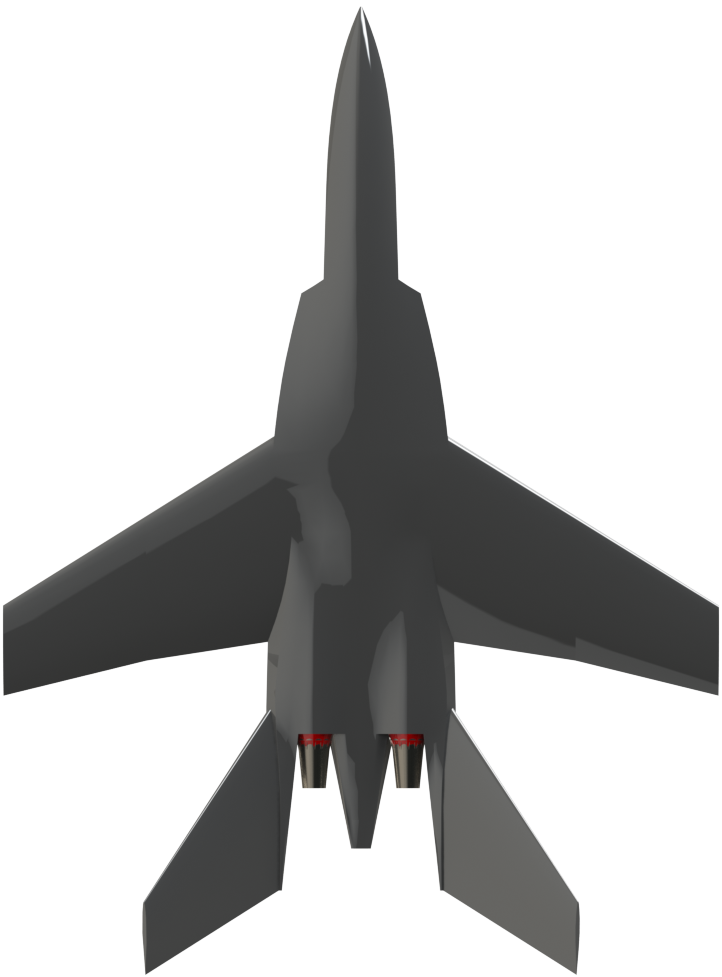
Ravn X Autonomous Launch System
Aevum's autonomous drone carrier aircraft (Ravn X) that air-launches a two-stage orbital rocket — targeting up to 100 kg to SSO with fully autonomous end-to-end operations.
| Carrier vehicle | Ravn X — autonomous jet-powered UAS |
| Launch method | Air-launch from Ravn X aircraft |
| Payload to SSO | Up to 100 kg |
| Key feature | Fully autonomous (no pilots, no ground controllers) |
| Military applications | Tactically Responsive Launch (AFRL, US Space Force contracts) |
Agnikul Cosmos
India · 2017 · 2 productsAgnikul Cosmos designs, manufactures, and launches orbital-class vehicles using 3D-printed engines and a mobile launchpad, providing dedicated and flexible access to space.
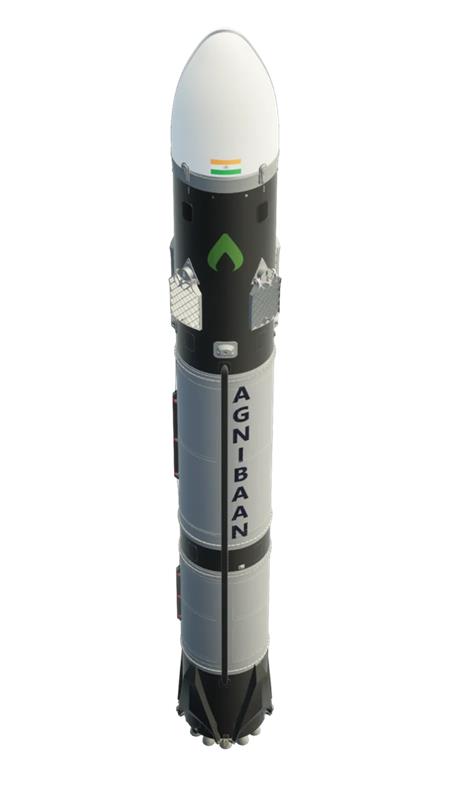
Agnibaan
Agnibaan is Agnikul Cosmos' fully indigenous, customizable small-satellite launch vehicle powered by the world's first single-piece, fully 3D-printed semi-cryogenic engine, Agnilet
| Height | ~18 m |
| Diameter | 1.3 m |
| Liftoff mass | ~14,000 kg |
| Stages | 2, configurable, with optional 'baby stage' inside payload fairing |
| Engine | Agnilet - semi-cryogenic, LOX/kerosene, electric-pump-fed, single-piece fully 3D-printed, |
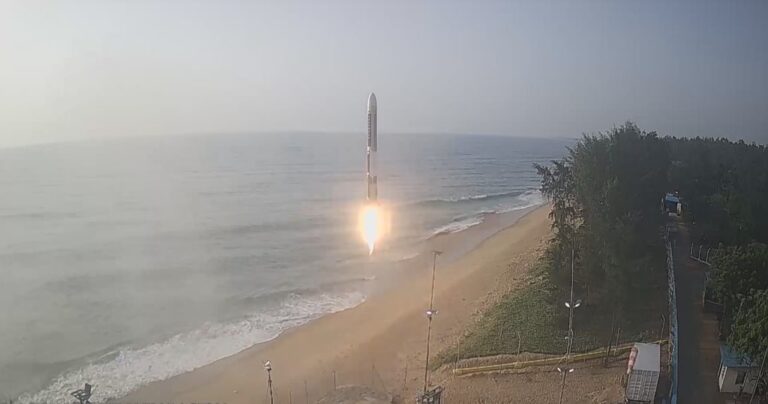
Agnibaan SOrTeD
Agnikul Cosmos's single-stage suborbital demonstrator that became the world's first launch of a single-piece 3D-printed rocket engine.
| Type | Suborbital Technology Demonstrator |
| Engine | Agnilet (single-piece 3D-printed, LOX/Kerosene) |
| Engine thrust | ~6 kN |
| Flight date | May 30, 2024 |
| Achievement | World's first flight of a single-piece 3D-printed engine |
Aphelion Orbitals
United States · 2017 · 1 productAphelion Orbitals is a New Jersey-based launch vehicle company developing the Helios nanosatellite launch system for regular, scheduled orbital access at low cost.
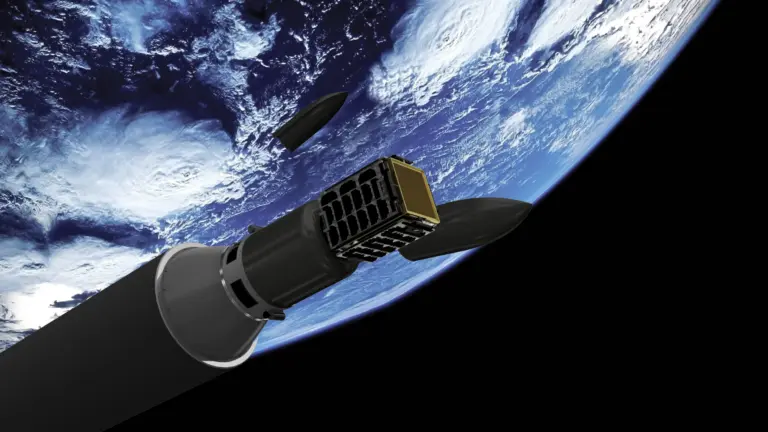
Helios and Trailblazer Launch Vehicles
Helios and Trailblazer are responsive, dedicated launch and suborbital access solutions designed for high cadence and mass production, providing regular, scheduled orbital access f
| Payload to SSO | 20 kg |
| Target orbit | Sun-Synchronous Orbit (SSO) |
| Launch cadence | Regular scheduled launches |
| Configuration | Dedicated nanosatellite launcher |
arianegroup
France · 2015 · 1 productArianeGroup designs and manufactures space transport systems, including launchers and related technologies, for institutional, commercial, and industrial customers in civil and military sectors.
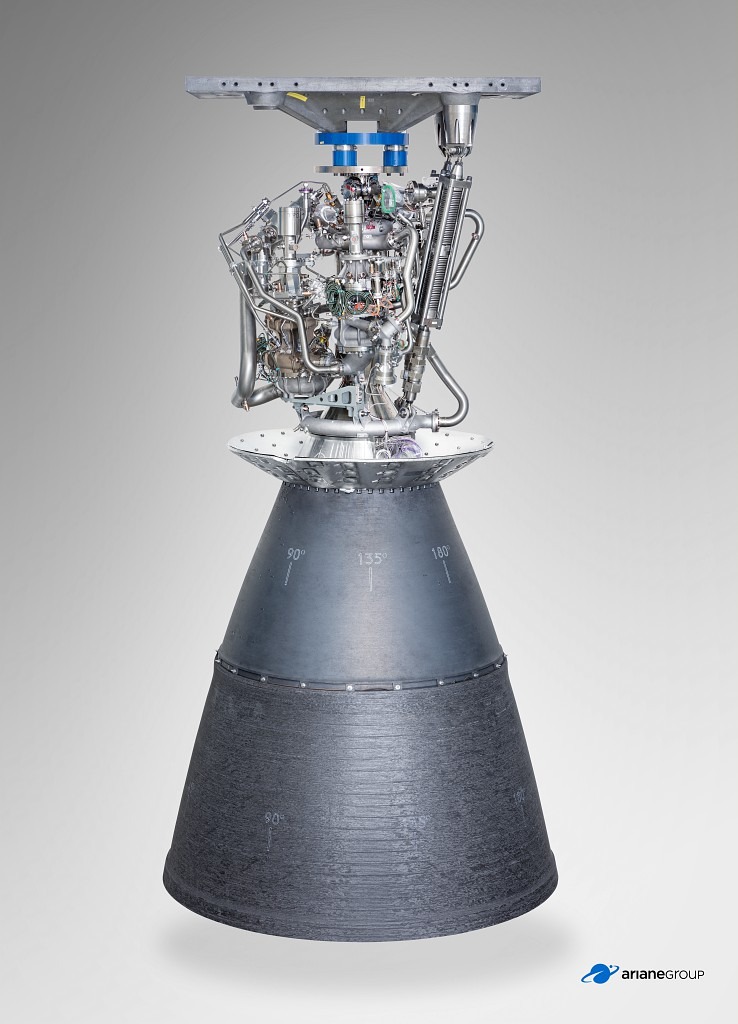
Ariane 6 Launch Vehicle
European heavy-lift launch vehicle — A62 (two boosters, 4.5 t to GTO) and A64 (four boosters, 11.5 t to GTO), Vulcain 2.1 core + Vinci upper stage, first flight July 2024.
| Configurations | A62 (2 boosters), A64 (4 boosters) |
| GTO payload (A62) | 4.5 t |
| GTO payload (A64) | 11.5 t |
| Core engine | Vulcain 2.1 (cryogenic, 136 kN vacuum) |
| Upper stage engine | Vinci (restartable, 180 kN vacuum) |
Astra Space
United States · 2016 · 1 productAstra Space designs and manufactures responsive mobile launch systems (Rocket 4.0) and flight-proven electric propulsion systems for satellites, headquartered in Alameda, California.
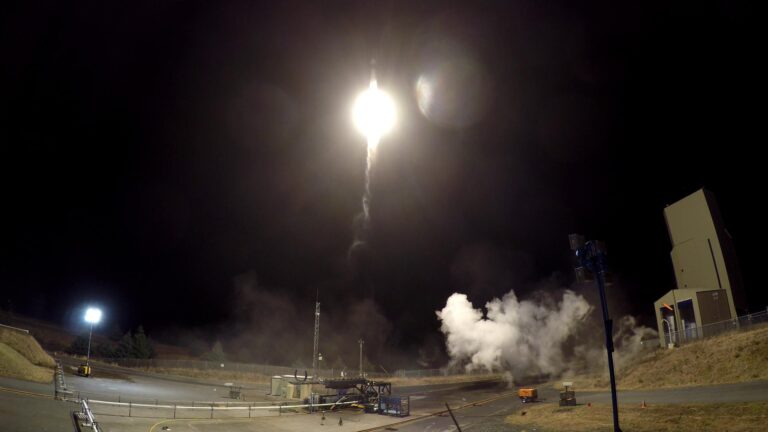
Rocket 4
Rocket 4 is Astra Space’s second-generation orbital launch vehicle, developed after the company retired the smaller Rocket 3.3 following its mixed flight record. Unlike Rocke
| Height | 62 ft (18.9 m) |
| Diameter | 72 in (1.8 m) |
| Stages | 2 |
| Liftoff mass | ~66,000 lb |
| First stage engines | 2x Chiron (derived from Firefly Reaver), combined ~70,000-80,000 lbf thrust |
AVIC (Aviation Industry Corp of China) Space Division
China · 2008 · 1 productChinese state-owned aviation and defense conglomerate with an emerging, narrow space-systems foray via its Chengdu subsidiary's reusable cargo spaceplane program.
KZ Commercial Launch Vehicles
AVIC (Aviation Industry Corporation of China)'s Kuaizhou (KZ) small solid-propellant commercial launch vehicles for low Earth orbit smallsat and constellation deployment.
| Kz-1a payload | 300 kg to 700 km SSO |
| Kz-11 payload | 1,500 kg to 700 km SSO |
| Propulsion | Solid fuel (all stages) |
| Launch mode | Road-mobile, rapid deployment (hours to launch) |
| Launch count | 20+ KZ-1A commercial launches |
Avio S.p.A.
Italy · 1912 · 1 productAvio S.p.A. designs, manufactures, and integrates space launchers and tactical missiles, providing space propulsion solutions and the Vega rocket family for institutional, governmental, and commercial
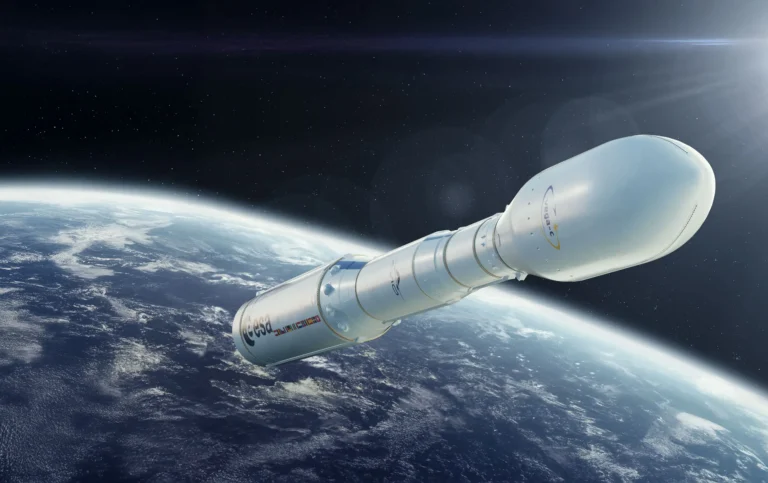
Vega C
Vega C is Avio's single-body, four-stage small/medium-lift launcher, the upgraded successor to Vega, built for ESA/Arianespace to serve institutional and commercial payloads to low
| Height | ~35 m |
| Liftoff mass | ~210 tonnes |
| Fairing diameter | 3.3 m |
| Configuration | Single-body, 4 stages (3 solid + 1 liquid) |
| Stage 1 - p120c | Length 13.5 m, diameter 3.4 m, thrust 4,780 kN, ~141.4 t solid propellant |
b2space
Spain · 2019 · 1 productB2Space develops high-altitude balloon launch systems for deploying small satellites to near-space and low Earth orbit. The Spanish company's Nearspace Launcher platform uses stratospheric balloons to lift rockets to 40 km before ignition.
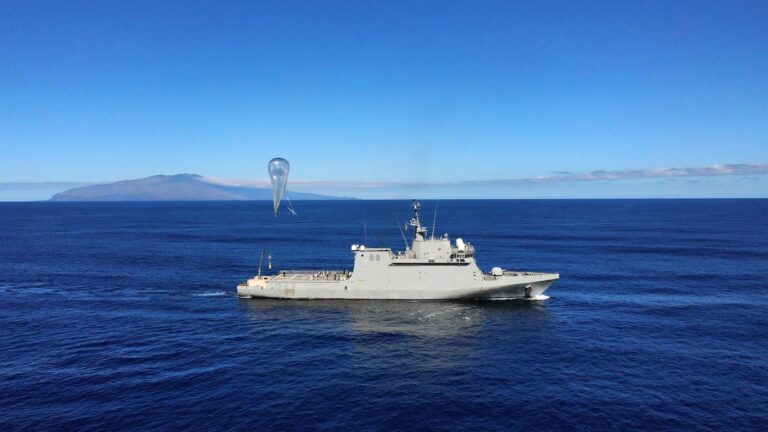
Rockoon
B2Space's Rockoon is a stratospheric balloon-assisted small satellite launch system that lifts a rocket to ~35 km altitude before ignition, cutting propellant needs and cost versus
| Launch concept | Rockoon (stratospheric balloon + rocket) |
| Balloon release/launch altitude | ~35 km |
| Payload capacity | Up to 200 kg |
| Target orbit | Low Earth Orbit, flexible orbit selection |
| Propellant reduction | Up to ~70% less propellant vs. conventional launchers |
Beyond Gravity (ex-RUAG Space)
Switzerland · 1993 · 2 productsSwiss-Swedish space components manufacturer providing satellite structures, thermal control products, payload electronics, and antennas for commercial and institutional programs.
Ariane 5 / Ariane 6 Structural Components and VESPA Satellite Adapter
Beyond Gravity (formerly RUAG Space) is a Swiss-Swedish space technology company providing structural components, avionics, and satellite dispenser systems for European launchers a
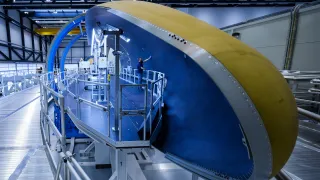
Composite Payload Fairings
Composite payload fairings from 0.7 m to 5.4 m diameter, used on Ariane, Vega, Atlas, Vulcan and H3, with a 100% success rate over 400+ launches.
| Diameter range | 0.7 m to 5.4 m |
| Construction | Aluminium honeycomb core with carbon fibre reinforced composite cover layers |
| Manufacturing | Automated industrial process, no autoclave required |
| Flight record | Over 400 launches, 100% success rate |
| Launch vehicles | Ariane, Vega, Atlas, Vulcan, H3 |
Blue Origin
United States · 2000 · 2 productsHeavy-lift reusable launch — New Glenn; suborbital tourism & research — New Shepard.
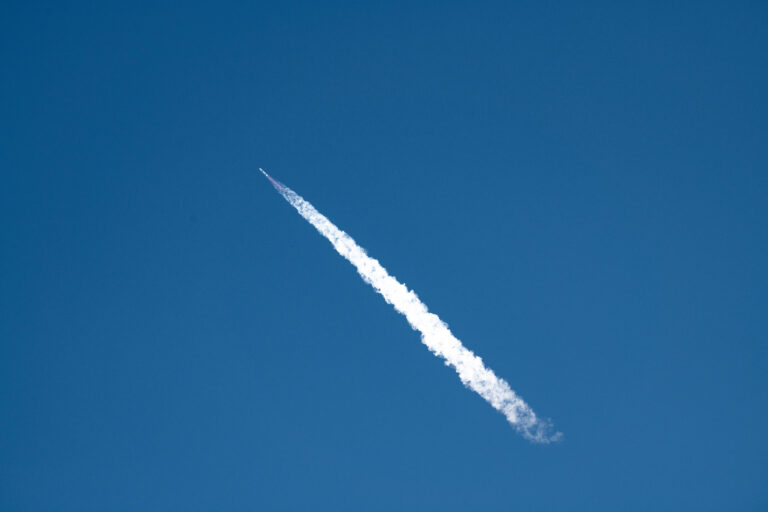
New Glenn
New Glenn is Blue Origin's heavy-lift, partially reusable, two-stage orbital launch vehicle powered by methane-fueled BE-4 engines on its reusable first stage, capable of deliverin
| Height | ~98 m |
| Diameter | 7 m |
| Stages | 2 (reusable first stage, expendable second stage) |
| First stage engines | 7x BE-4 (LNG/LOX methalox) |
| Second stage engines | 2x BE-3U (LH2/LOX hydrolox) |
New Shepard
Fully reusable suborbital launch system for crew and payloads, featuring a pressurized capsule and propulsively-landing booster.
| Max altitude | >100 km (above Kármán line) |
| Crew capacity | 6 passengers |
| Microgravity duration | ~3 minutes |
| Booster engine | BE-3 (LH2 / LOX) |
| Booster thrust | 489 kN |
C6 Launch Systems Inc.
United States · 2017 · 1 productC6 Launch Systems provides launch services and manufactures a dedicated smallsat launch vehicle for payloads up to 100 kg, offering access to all orbits.
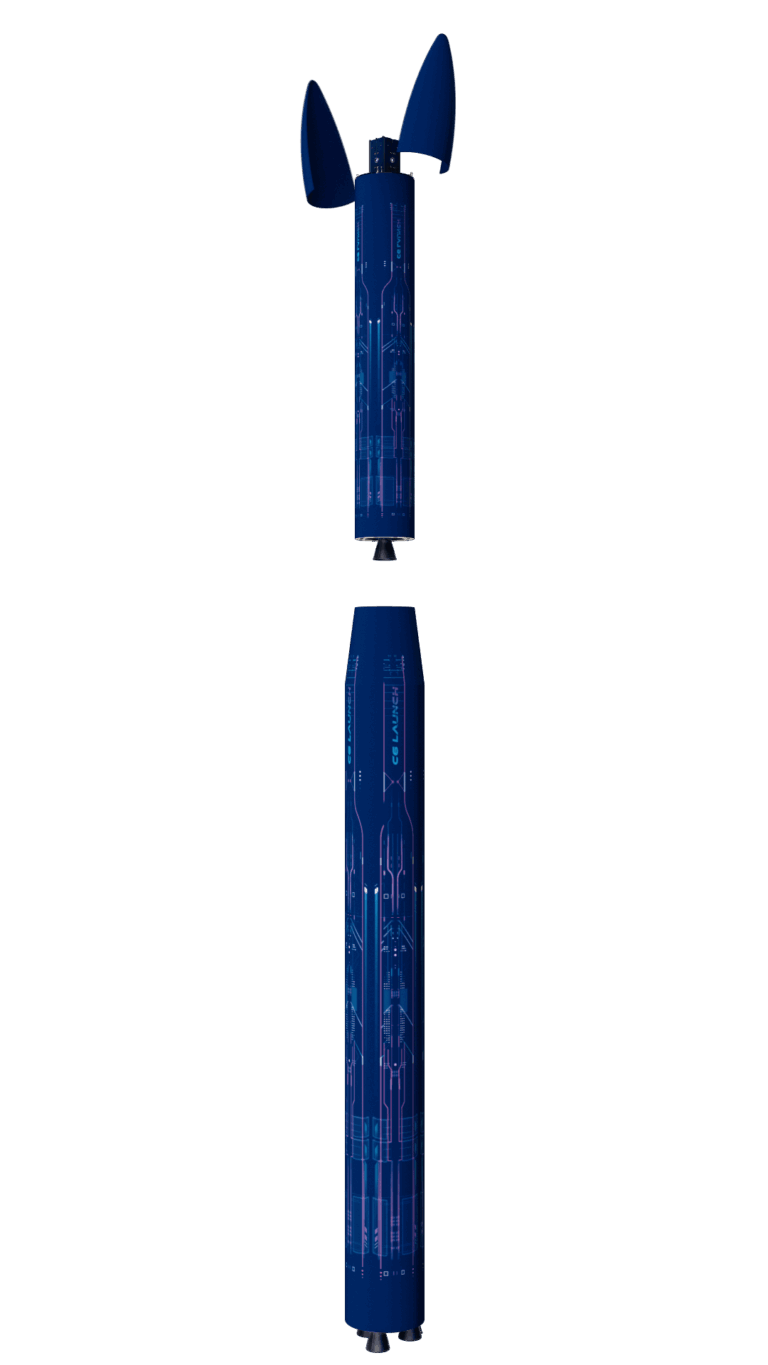
C6 Rocket
Dedicated two-stage smallsat launch vehicle for payloads up to 100 kg
| Height | 13 meters |
| Diameter | 1 meter |
| Number of stages | 2 |
| Stage 1 configuration | Three LOX-kerosene engines |
| Stage 2 configuration | Single LOX-kerosene engine |
CALT (China Academy of Launch Vehicle Technology)
China · 1957 · 5 productsChinese state launch vehicle design organisation in Beijing (CASC subsidiary); Long March 2F (crewed), LM-3B/C, LM-5/5B, LM-7, LM-8 rockets; 130+ launches from 1970; backbone of China's crewed and commercial space.
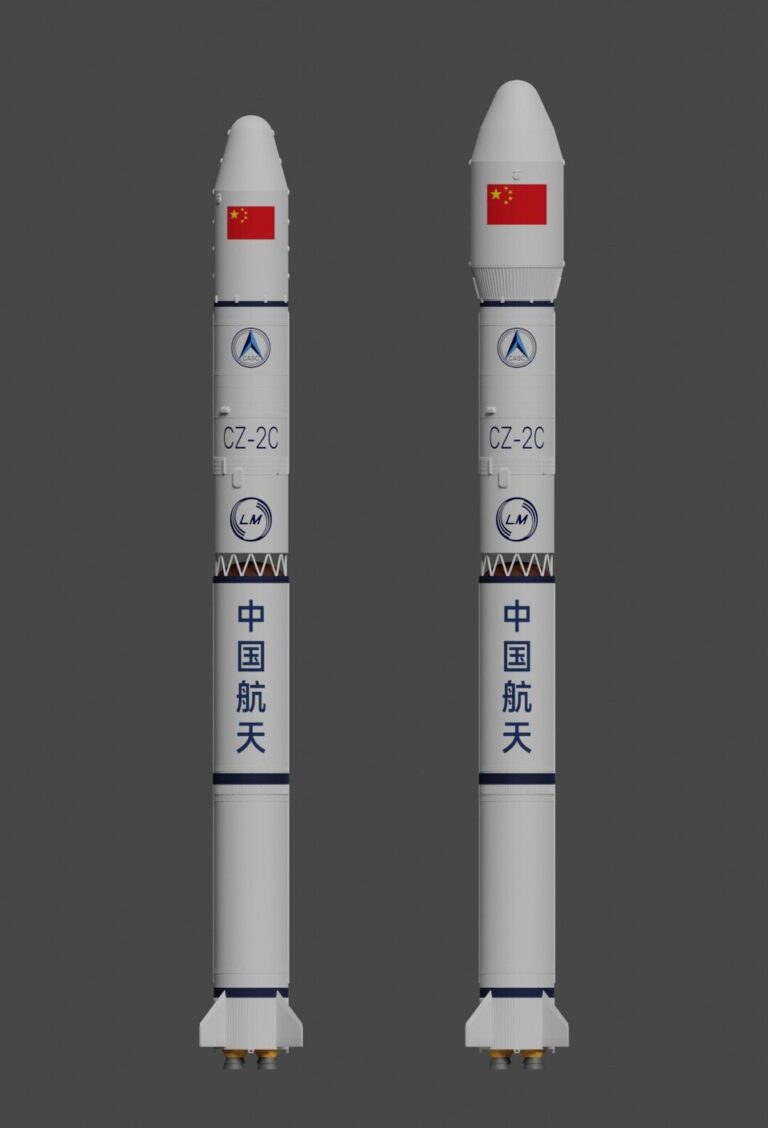
Long March 2C (LM-2C / CZ-2C)
The Long March 2C is a Chinese medium-lift, two-stage orbital launch vehicle developed by the China Academy of Launch Vehicle Technology (CALT). It uses storable N2O4/UDMH propella
| Function | Medium-lift launch vehicle |
| Manufacturer | China Academy of Launch Vehicle Technology |
| Country of origin | China |
| Height | 42 m (138 ft) |
| Diameter | 3.35 m (11.0 ft) |
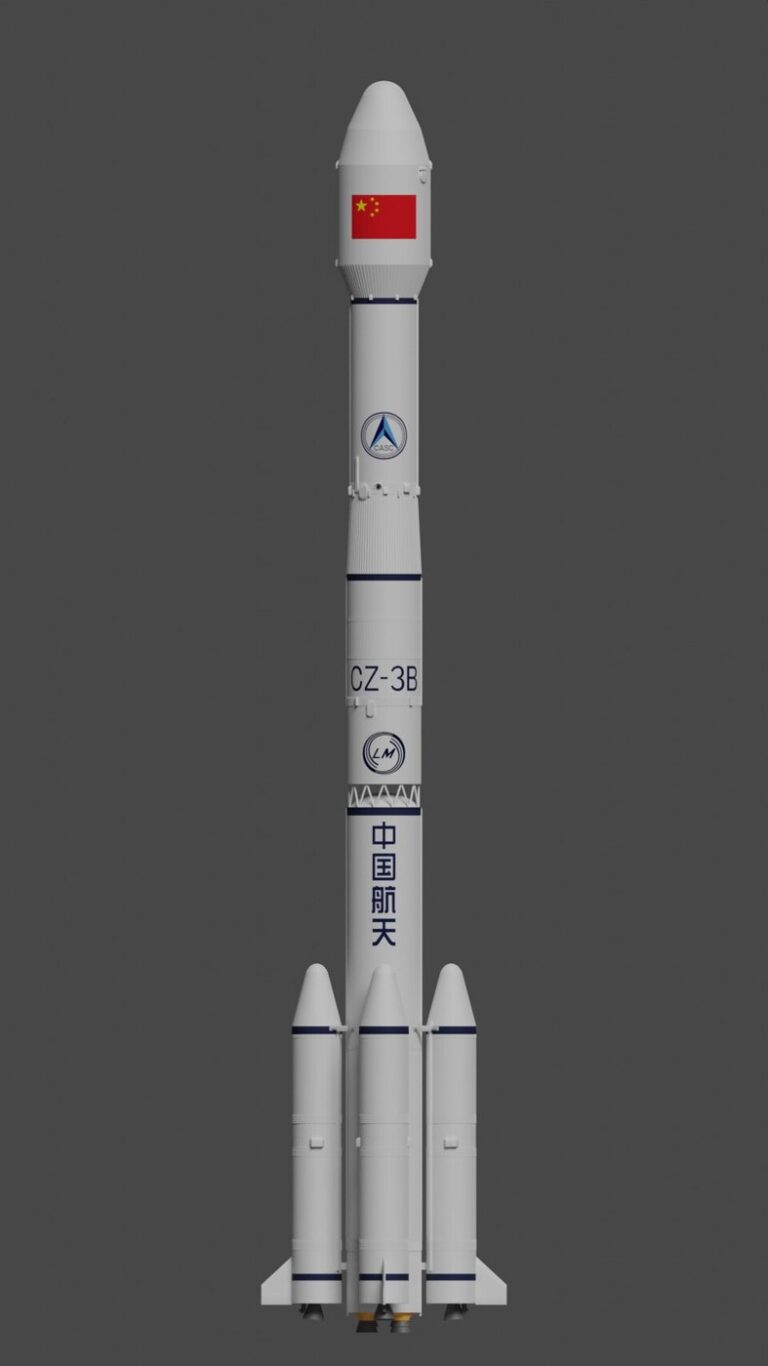
Long March 3B
The Long March 3B (CZ-3B or LM-3B) is a Chinese orbital launch vehicle, the heaviest variant of the Long March 3 family, primarily used for placing communications and navigation sa
| Function | Launch vehicle |
| Manufacturer | China Academy of Launch Vehicle Technology (CALT) |
| Country of origin | China |
| Cost per launch | US$50-70 million |
| Diameter | 3.35 m (11.0 ft) |
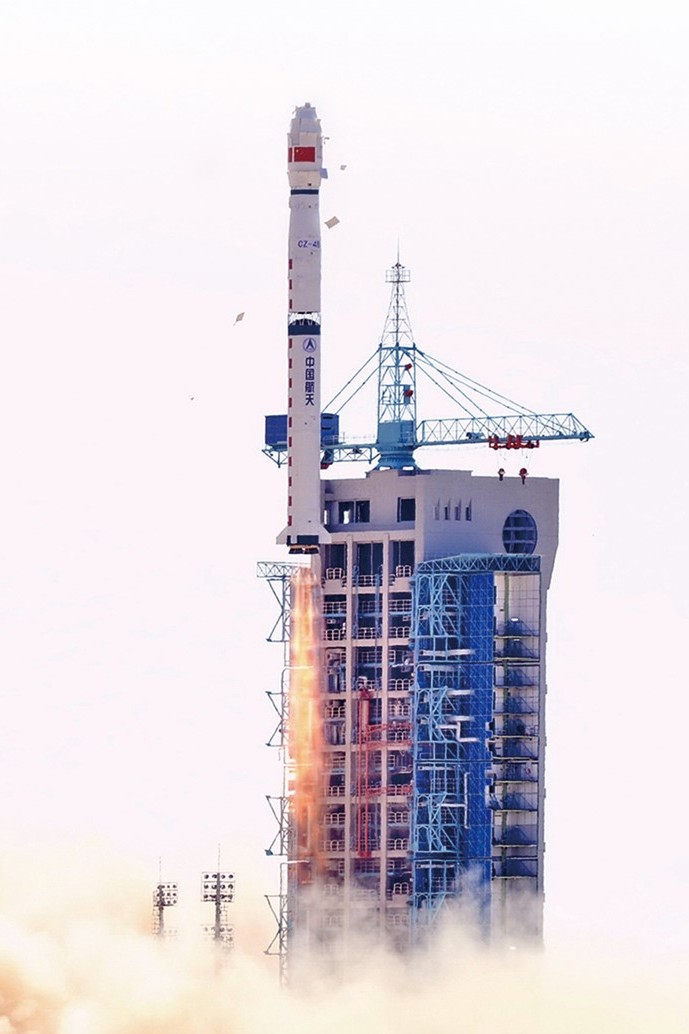
Long March 4B
The Long March 4B (LM-4B) is a Chinese three-stage expendable medium-lift launch vehicle primarily used for deploying satellites into low Earth orbit (LEO) and Sun-synchronous orbi
| Function | Medium-lift launch vehicle |
| Manufacturer | Shanghai Academy of Spaceflight Technology |
| Country of origin | China |
| Cost per launch | US$50 million (2006) |
| Height | 44.1 m (145 ft) |
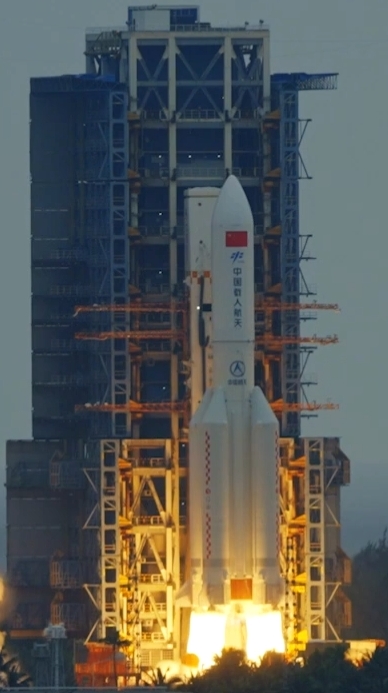
Long March 5
Long March 5 (CZ-5) is China's most powerful heavy-lift orbital launch vehicle, developed by CALT, capable of delivering up to 25,000 kg to LEO or 14,000 kg to GTO.
| Function | Heavy-lift launch vehicle |
| Manufacturer | CALT |
| Country of origin | China |
| Cost per launch | ~US$160 million |
| Height | 56.97 m (186.9 ft) (standard); 63.2 m (207 ft) (extended fairing) |
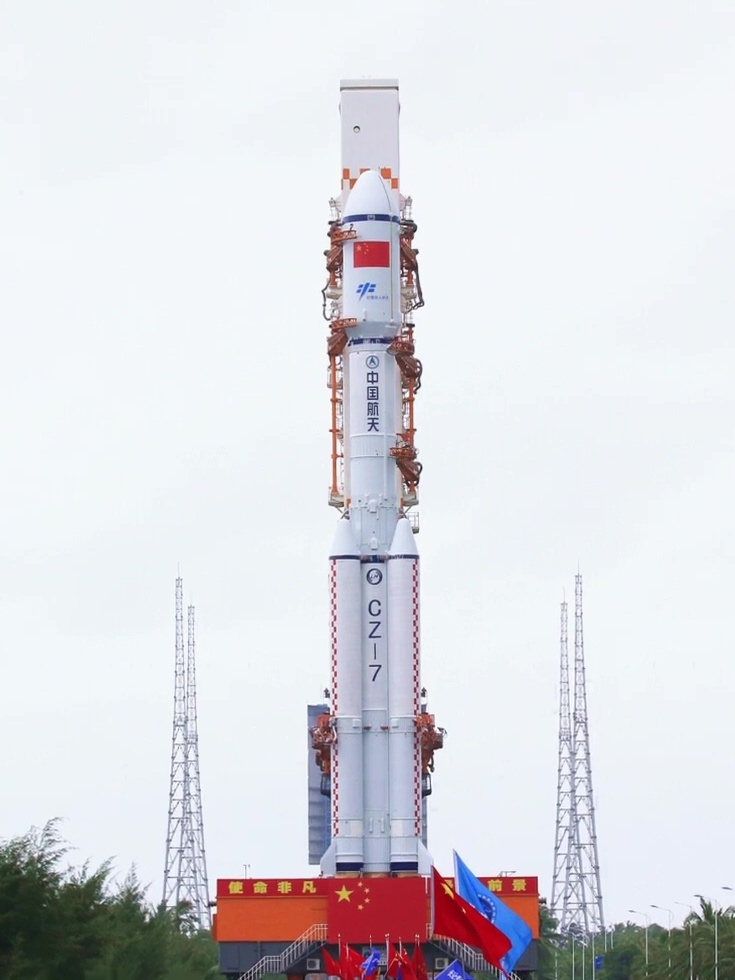
Long March 7
Chinese liquid-fuelled medium-lift launch vehicle of the Long March family, developed by CALT, used primarily to launch Tianzhou cargo spacecraft to the Tiangong space station.
| Function | Medium to heavy-lift launch vehicle |
| Manufacturer | China Academy of Launch Vehicle Technology |
| Country of origin | China |
| Diameter | 3.35 m (11 ft) |
| Payload to LEO - altitude | 200 km × 400 km (120 mi × 250 mi) |
CAS Space
China · 2018 · 3 productsChinese commercial launch company backed by CAS, developing the Kinetica rocket family for rideshare and dedicated missions, headquartered in Guangzhou.
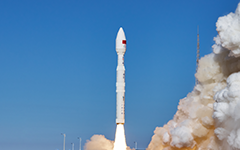
Kinetica-1 (PR-1) Launch Vehicle
Chinese commercial solid-fueled medium-lift launch vehicle for LEO and SSO rideshare missions.
| Propulsion | Solid |
| Target orbit | LEO / SSO |
| Maiden flight | 2022 |
| Missions flown | 14+ |
| Satellites delivered | 108+ |
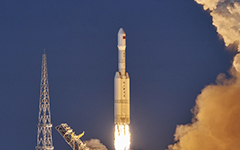
Kinetica-2 (PR-2) Launch Vehicle
Next-generation kerosene/LOX medium-heavy launch vehicle rated at 12 t to LEO and 8 t to 500 km SSO.
| Propulsion | Kerosene / LOX (Kinecore engines) |
| Payload to LEO | 12,000 kg |
| Upper stage | Kinastra restartable stage |
| Status | Flying — inaugural flight of Kinetica-2 Y1 in 2026 |
| Payload to SSO (500 km) | 8,000 kg |
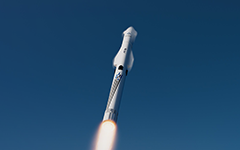
Kinetica-3 Launcher
The Kinetica-3 Launcher (PR-3) is a powerful launch vehicle designed to meet future demands for space access, offering impressive capacity and reusability.
| Height | 91 m |
| Lift-off mass | 1940 t |
| Capacity (LEO) (expendable) | 40 t |
| Capacity (LEO) (single-stage recovery) | 35 t |
| Capacity (LEO) (dual-stage recovery) | 20 t |
CASIC ExPace — Kuaizhou
China · 2016 · 1 productCASIC commercial launch subsidiary; Kuaizhou-1A solid quick-reaction LV (400 kg SSO) and Kuaizhou-11 (1,500 kg SSO); rapid-response launches from Jiuquan and Taiyuan.
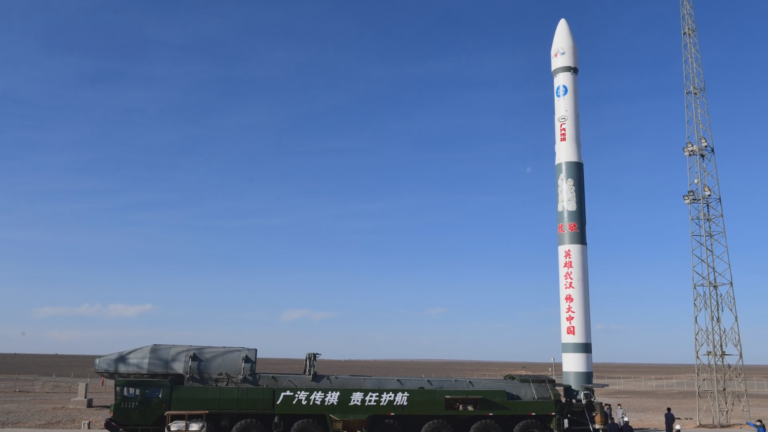
Kuaizhou-1A
Kuaizhou-1A is a small, quick-reaction solid-fuel launch vehicle built by CASIC's ExPace to loft light satellites to low Earth and sun-synchronous orbit from mobile transporter-ere
| Stages | 3 solid-propellant stages plus a liquid-propellant fourth-stage orbital adjustment module |
| Length | ~19.4-20 m |
| Diameter | 1.4 m (stages 1-2); 1.2 m (stages 3-4); fairing up to 1.8 m |
| Liftoff mass | ~30 tonnes |
| Payload to LEO (500 km) | ~300-400 kg (baseline); up to ~450 kg on enhanced variant |
Celestia Aerospace
Spain · 2014 · 2 productsCelestia Aerospace offers turnkey solutions and an airborne launch platform for businesses seeking to access space, leveraging experience in nanosat projects.
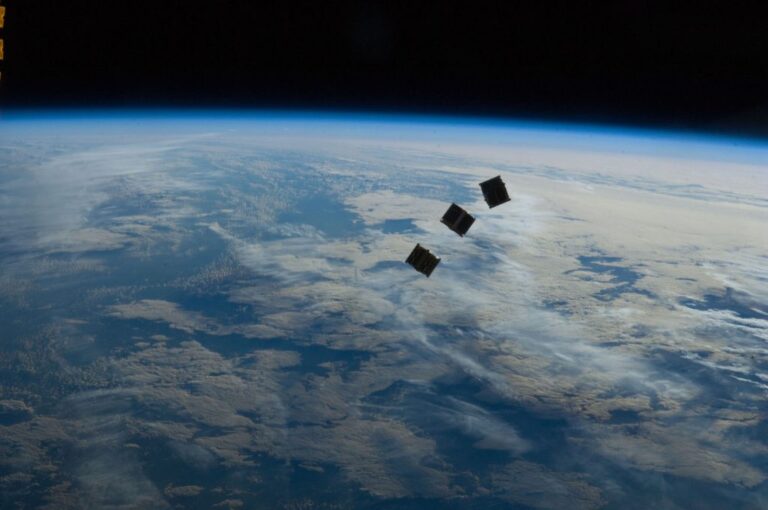
Innovative Launch System
The Innovative Launch System is an airborne launch platform designed to provide fast, reliable, and cost-effective access to space for businesses.
| Platform variants | BioPharmaSat, SemicondSat, TestSat, ClusterSat |
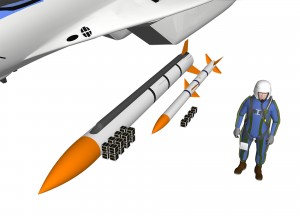
Sagitarius Airborne Launch System (SALS)
Airborne launch system combining a MiG29UB jet with 2-3 stage rockets — delivers 4-16 nanosats to suborbital or orbital flight per operation.
| Archer 1 operational ceiling | 20 km |
| Space arrow sm microgravity duration | 10 minutes (suborbital) |
| Space arrow cm payload to LEO | Up to 16 kg |
| Launch batch size | 4-16 nanosats per operation |
China Rocket Co. (CALT)
China · 1957 · 1 productCALT/CASC commercial arm — solid Smart Dragon (Jielong) rockets for smallsat rideshare, including sea launch.
Smart Dragon (Jielong) Series
China Academy of Launch Vehicle Technology's commercial solid-fuel small launch vehicle series for rapid small satellite deployment.
| Vehicles | Jielong-1 (CZ-11), Jielong-3 |
| Jielong-1 payload to LEO | 700 kg |
| Jielong-3 payload to SSO | 1,500 kg |
| Propulsion | All solid |
| Launch mode | Land-based (Jiuquan) and sea-based platform |
Cosmoleap
China · 1999 · 2 productsDahang Transition develops and operates medium and large reusable launch vehicles and their on-board computers, supporting satellite Internet engineering.
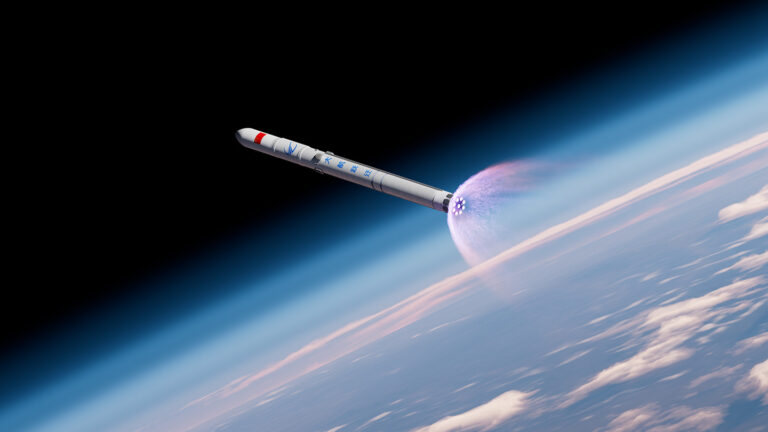
New Generation One-Stage Reusable Rocket
This is a new generation one-stage reusable rocket, featuring tower recovery capabilities for both land and island operations, and designed for high launch frequency and reusabilit
| Launch frequency | 24 rounds/year |
| Total annual payload capacity | 150 tons/year |
| Recovery method | Tower recovery |
| Recovery sites | Both land and island |
| LEO capacity (recovery state) | Not less than 6.28t |
Reuse launch vehicle
The reuse launch vehicle aims to reduce waste and lower production and launch costs by enabling multiple uses of expensive components like arrows, engines, and electrical equipment
Creotech Instruments S.A.
Poland · 2012 · 1 productCreotech Instruments is a Polish space technology company developing satellite platforms (HyperSat), spacecraft subsystems, and manufacturing services for the space industry, science, and other high-tech sectors.
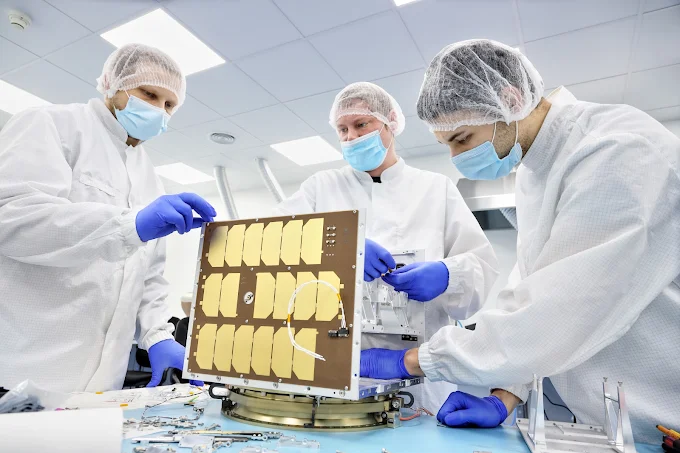
HyperSat Satellite Platform — Polish Space Electronics and Nanosatellite Systems
Creotech Instruments S.A. is a Polish space electronics company founded in 2010 in Piaseczno (near Warsaw), designing and manufacturing satellites, electronics modules, and space h
Dawn Aerospace
New Zealand · 2018 · 1 productNew Zealand and Netherlands aerospace company developing the Mk-II Aurora reusable spaceplane and refuellable in-space propulsion systems for satellite missions.
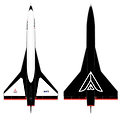
AURORA SPACEPLANE
Aurora is a remotely piloted suborbital spaceplane that combines rocket performance with aircraft reliability to provide routine, affordable access to suborbital space and speeds o
| Top speed | Mach 3.7 |
| Max altitude | 100 km |
| Turnaround time | 4 hr |
| Max payload weight | 15 kg (33 lbs) |
| Suborbital profile max alt | 100+ km |
Deep Blue Aerospace
China · 2016 · 1 productPrivate Chinese reusable launcher — Nebula-1 (~2 t to LEO) nearing first orbital flight; larger Nebula-2 in development.
Nebula-1 (Xingyun-1)
Reusable, kerolox orbital launch vehicle with VTVL first-stage recovery; 4–6 t to LEO, 3 t to SSO.
| Propellant | Kerosene / liquid oxygen (kerolox) |
| Configuration | Three stages (11 + 2 engines + upper stage), reusable first stage (VTVL) |
| Payload to LEO | 4,000–6,000 kg |
| Height | ~30.2 m (orbital variant, Nebula-1A) |
| Diameter | 3.35 m (first stage) |
DELTAV Space Technologies
Turkey · 2018 · 2 productsTurkish aerospace company developing hybrid rocket propulsion, cryogenic systems, composite structures, and in-space propulsion — with a sounding rocket exceeding 200 km altitude and a hybrid propulsion system for Turkey's lunar hard landin
SORS and HİSTEP Sounding Rocket Systems
Sonda rocket systems are suborbital rockets that follow a ballistic trajectory under the influence of gravity, used for low-cost access to space, microgravity experiments, atmosphe
SORS Sounding Rocket System
DeltaV Space Technologies' hybrid-propulsion sounding rocket — Turkey's first vehicle to exceed 200 km altitude and achieve in-space engine ignition.
| Propulsion type | Hybrid (solid fuel + liquid oxidizer) |
| Max altitude achieved | >200 km (June 2025) |
| Key achievement | First hybrid propulsion in-space ignition; first Turkish rocket >200 km |
| Country | Turkey |
| Operator | DeltaV Space Technologies (subsidiary of SSB) |
Destinus
Switzerland · 2021 · 4 productsEuropean defence manufacturer focused on scalable strike and air-defence systems for European and allied armed forces.
Hornet Block 2
The Hornet Block 2 is a dual-role interceptor and precision strike system designed for subsonic aerial threats, and maritime and ground targets.
| Range | 150+ km |
| Payload | 3 kg |
Ruta Block 1
The Ruta Block 1 is a first-generation baseline cruise system designed for precision strike against high-value military targets.
| Range | 300+ km |
| Payload | 150 kg |
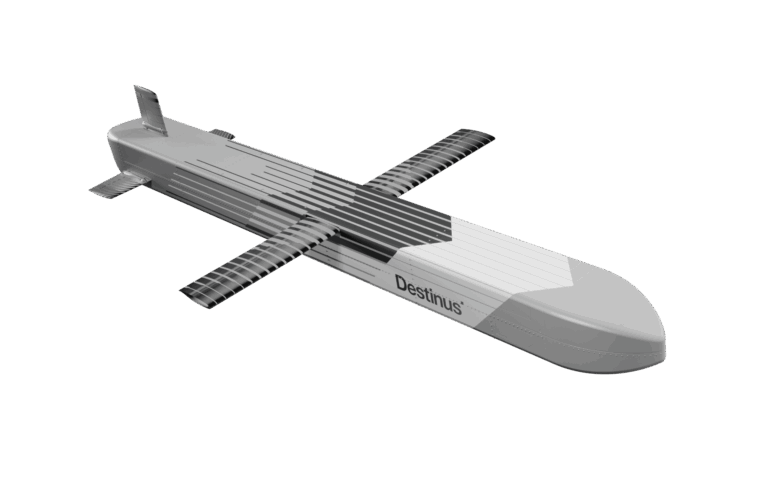
Ruta Block 2
Extended-range cruise system for precision strike against hardened and high-value targets at 700+ km.
| Range | 700+ km |
| Payload | 250 kg |
| Guidance | EO/IR seeker with AI-assisted target recognition |
| Navigation | Low-altitude terrain-following, GNSS-denied capable |
| Launch | Booster-assisted salvo from 40 ft container |
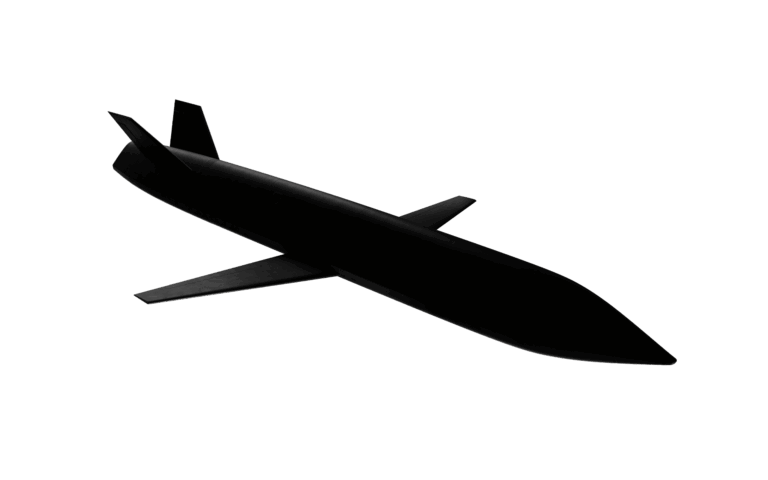
Ruta Block 3
Long-range European deep-strike cruise system with in-house T220 turbojet propulsion at up to 2000 km range.
| Range | up to 2000 km |
| Payload | 250 kg |
| Propulsion | In-house T220 turbojet |
| Navigation | INS + GNSS + VNS + TERCON, GNSS-denied capable |
| Launch | Booster-assisted salvo from 40 ft container |
Ensign-Bickford Aerospace & Defense (EBAD)
United States · 1 productUS manufacturer of non-explosive actuators (TiNi FrangiBolt, pin pullers, ejectors) and energetic hold-down and release systems.
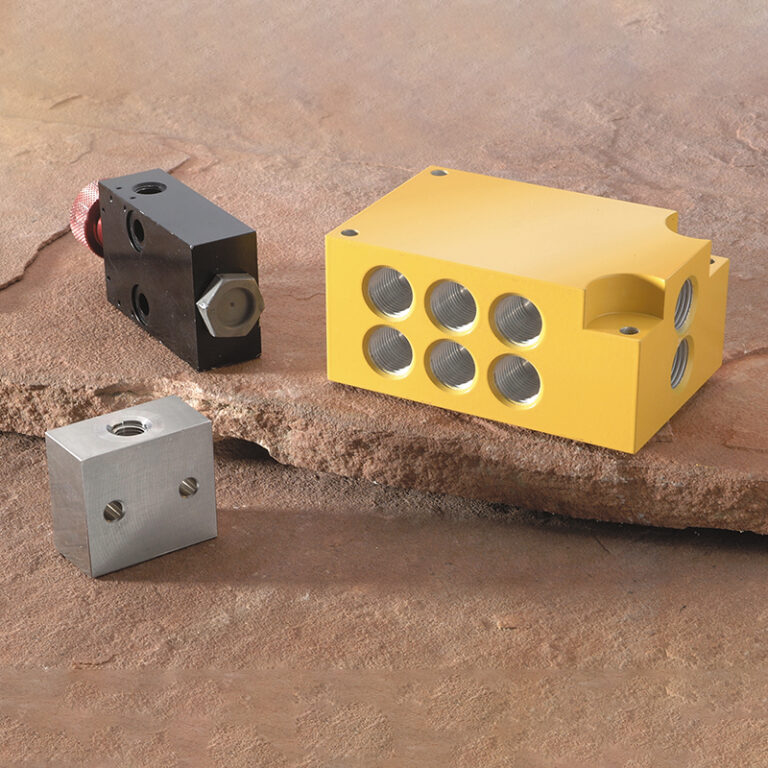
Flight Termination Systems
EBAD Flight Termination Systems (FTS) provide range safety assurance for launch vehicles and missiles by delivering redundant explosive assemblies capable of terminating flight whe
| Type | Flight Termination System (FTS) |
| Components | ESAD, FCDCA transfer lines, destruct charges (bulk, linear, bi-directional, conical) |
| Redundancy | Redundant explosive assemblies |
| Applications | Launch vehicles, tactical missiles, hypersonics, strategic missiles |
| System role | Range safety — vehicle destruction on wayward flight |
Equatorial Space Systems
Singapore · 2017 · 2 productsSingapore-based developer of hybrid-propulsion, explosives-free small-satellite launch vehicles and sounding rockets.
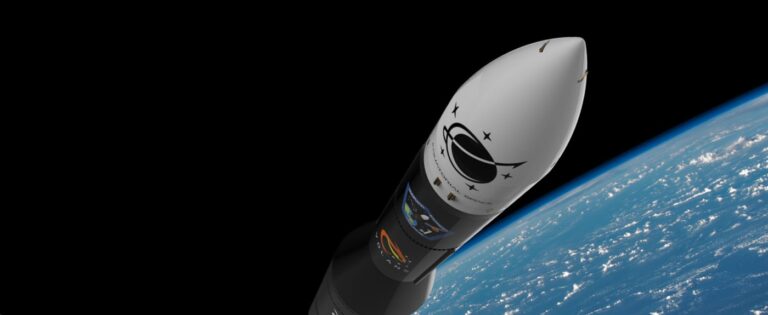
DORADO Sounding Rocket
Responsive, 100% explosives-free hybrid-propulsion suborbital sounding rocket delivering 20 kg to 100 km apogee.
| Propulsion | Hybrid HTP oxidizer / HRF-1 fuel |
| Payload capacity | 20 kg |
| Apogee | 100 km |
| Microgravity access | ~3 minutes |
| Payload volume | 41 L |
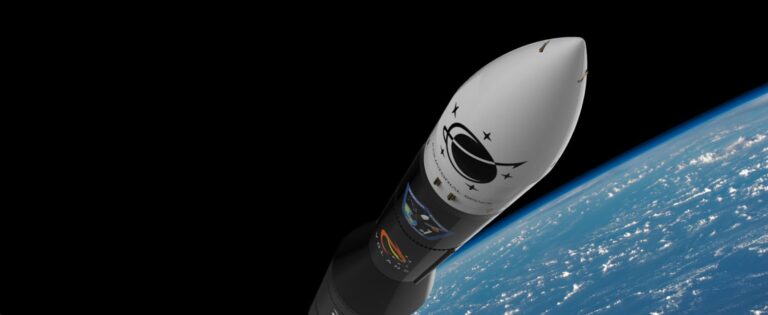
VOLANS Launch Vehicle
Modular, low-cost, 100% pyrotechnics-and-explosives-free hybrid-propulsion launch vehicle carrying up to 750 kg to LEO.
| Propulsion | Hybrid HTP oxidizer / HRF-1 fuel |
| Payload capacity | Up to 750 kg (simulated for 400 km, 40° orbit) |
| Fairing length (main) | 2.40 m |
| Fairing length (total) | 4.77 m |
| Fairing diameter | 21.80 m |
Esrange Space Center (SSC)
Sweden · 1 productSSC Space designs and launches sounding rockets and balloon systems, provides global ground station services, and offers engineering, operations, and consultancy for space missions.
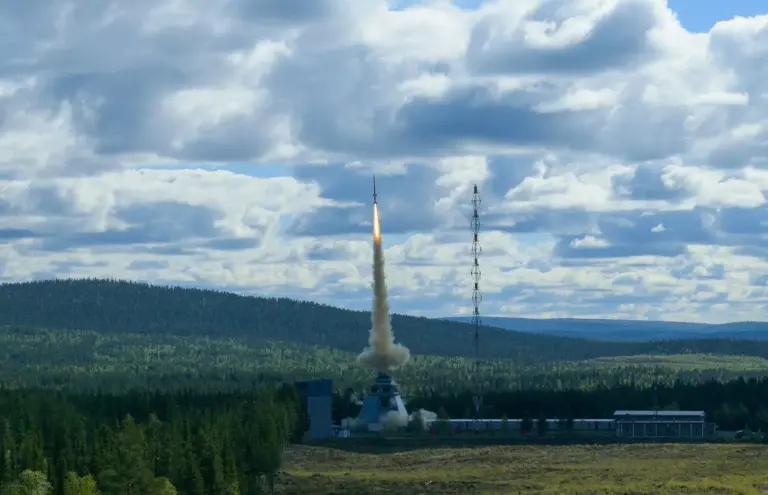
Esrange Suborbital and Small Satellite Launch Services
Esrange Space Center's sounding rocket launch services, stratospheric balloon campaigns, and new small satellite orbital launch infrastructure near Kiruna, Sweden.
| Location | Kiruna, Sweden (68°N, Arctic Circle) |
| Services | Sounding rockets, stratospheric balloons, (new) small satellite orbital launches |
| Science advantage | Aurora access, polar ionosphere, polar vortex balloon trajectories |
| Operator | Swedish Space Corporation (SSC) |
| New capability | SSO and polar orbital launch for small satellites (in development) |
EtherealX (Ethereal Exploration Guild)
India · 1 productIndian reusable launch vehicle startup — developing Razor Crest Mk 1 (RCM1), a fully reusable medium-lift rocket capable of 16 orbital insertions per flight, operating India's largest private rocket test facility.
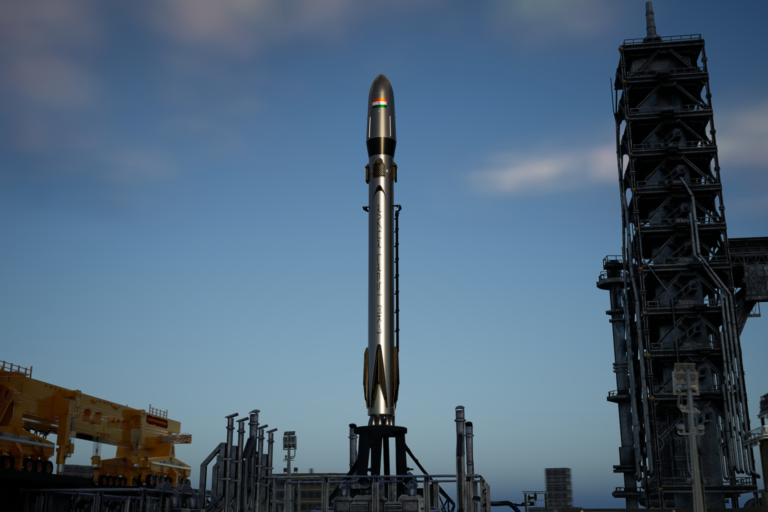
Razor Crest Mk 1 (RCM1) Reusable Medium-Lift Launch Vehicle
Fully reusable medium-lift launch vehicle from EtherealX — up to 16 orbital insertions per flight, 72–96hr turnaround, profitable even when not fully loaded. India's largest privat
| Vehicle type | Fully reusable medium-lift launch vehicle |
| Orbital insertions per flight | Up to 16 (multi-orbit rideshare) |
| Turnaround time | 72–96 hours |
| Configurations | Expendable / Partially Reusable / Fully Reusable |
| Economics | Profitable even at partial load capacity |
Firefly Aerospace
United States · 2017 · 2 productsAlpha small-lift rocket; lunar lander Blue Ghost; Medium Launch Vehicle in development with NG.
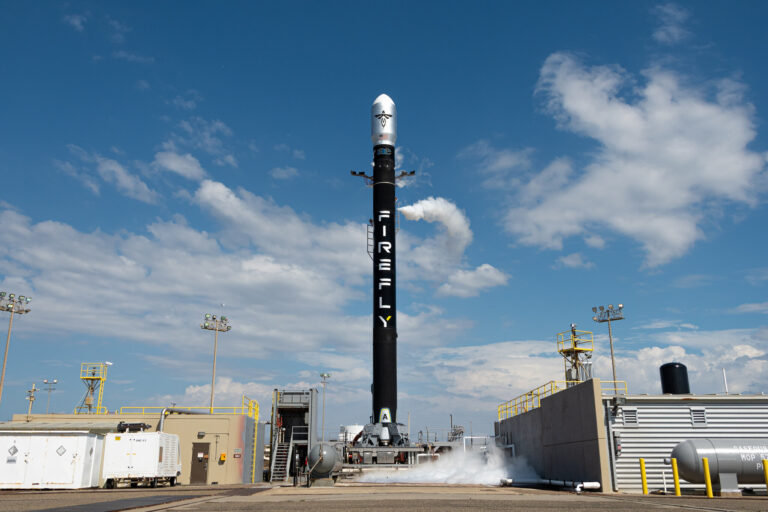
Alpha
Firefly's small-lift orbital launch vehicle delivering up to 1,000 kg to LEO on a dedicated or rideshare basis.
| Payload to LEO (200 km) | 1,000 kg |
| Payload to SSO (500 km) | 630 kg |
| First stage engines | 4× Reaver (RP-1 / LOX) |
| Second stage engine | 1× Lightning (RP-1 / LOX, vacuum-optimized) |
| Height | 29 m |
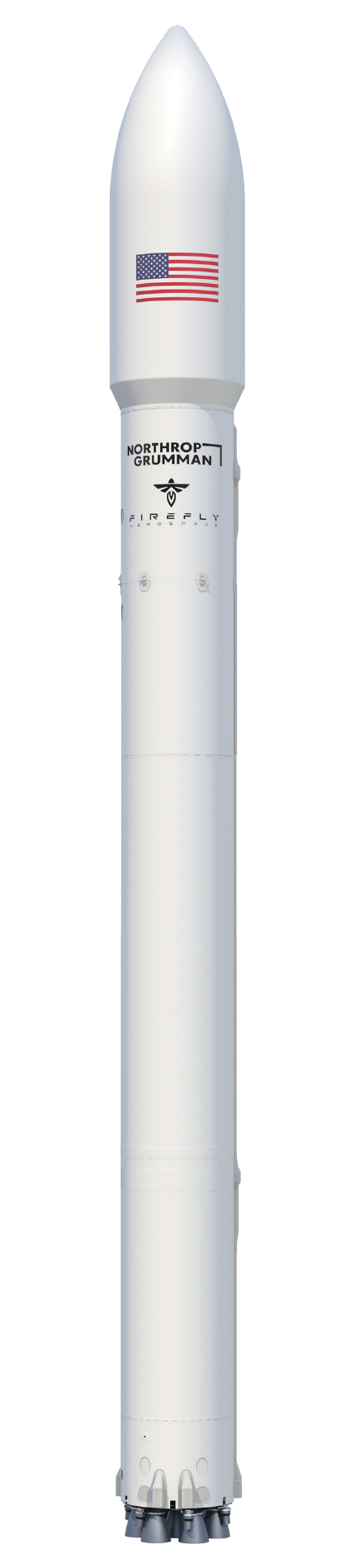
Medium Launch Vehicle (MLV)
Firefly's medium-lift launch vehicle in development, targeting 16,000 kg to LEO using Miranda engines co-developed with Northrop Grumman.
| Payload to LEO | ~16,000 kg |
| Engines | Miranda (LOX / RP-1, oxidizer-rich staged combustion) |
| Development partner | Northrop Grumman |
| Launch site | Cape Canaveral Space Force Station, Florida (planned) |
| Status | In development |
Galactic Energy
China · 2018 · 2 productsChinese commercial launch company; Ceres-1 solid small LV (first flight Nov 2020) and Pallas-1 liquid medium LV in development; multiple successful commercial orbital launches.
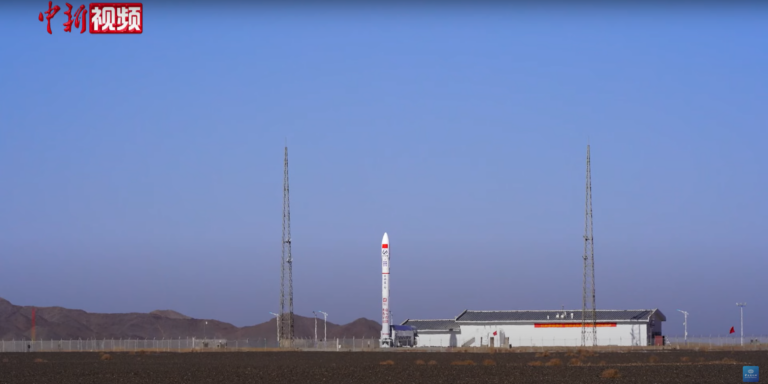
Ceres-1
Galactic Energy's solid-fuel commercial small launch vehicle with a liquid upper stage, delivering 300 kg to SSO from Chinese spaceports.
| Stages | 4 (3 solid stages + liquid upper stage) |
| Payload to LEO | 420 kg |
| Payload to SSO | 300 kg |
| First flight | November 7, 2020 (success) |
| Achievement | First Chinese private company to orbit on first attempt |
Ceres-2
Galactic Energy's larger solid-propellant launch vehicle — three solid stages plus a liquid upper stage — rated at up to 1.6 t to LEO.
| Configuration | 3 solid stages + liquid upper stage |
| Payload to LEO | Up to 1,600 kg |
| Predecessor | Ceres-1 (solid, 300 kg to SSO, multiple successful flights) |
| Company | Galactic Energy (星河动力), founded 2018, Beijing, China |
| Status | Development |
Gilmour Space Technologies
Australia · 2015 · 1 productGilmour Space Technologies builds and operates an integrated launch vehicle, satellite platform, and spaceport for commercial, government, and defence customers.

Eris
Gilmour Space's three-stage hybrid-propulsion launch vehicle — 305 kg to SSO — flying from Bowen, Queensland; first test flight July 2025.
| Stages | 3 |
| Propulsion | Hybrid propulsion system as main engines |
| Payload to SSO | 305 kg at 500 km (Block 1) |
| Launch site | Bowen Orbital Spaceport, Queensland, Australia |
| Status | TestFlight1 flown July 2025 (Australia's first sovereign orbital launch attempt); TestFlig |
HyImpulse Technologies
Germany · 2018 · 2 productsHyImpulse Technologies develops and manufactures hybrid rocket-powered launch vehicles and in-space mobility solutions, offering launch, satellite-as-a-service, and space-data-as-a-service.
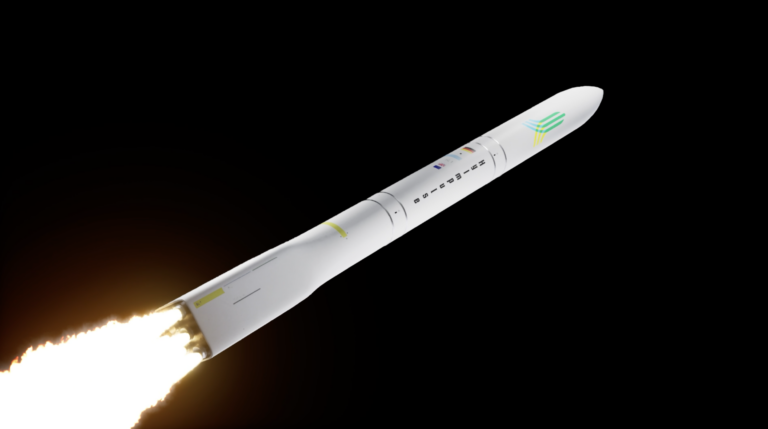
SL1
The SL1 is a revolutionary three-stage smallsat launch vehicle powered by hybrid rocket technology, designed to provide affordable and responsive orbital launch services for payloa
| Diameter | 2.2m |
| Payload to LEO | 600 kg |
| Lift-off mass | 54t |
| Thrust | 90 kN |
| Stages | 3 |
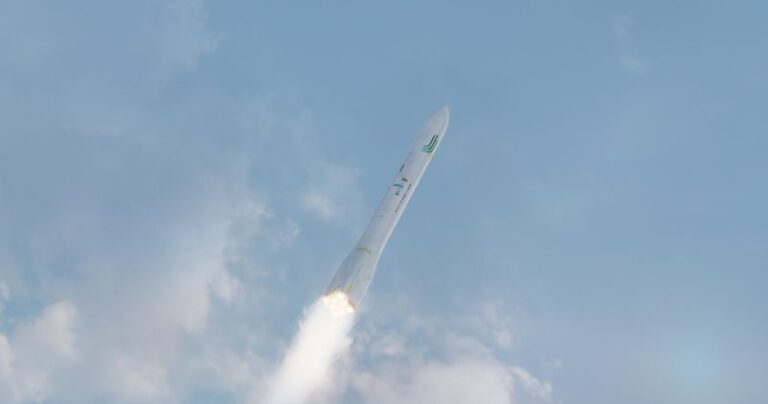
SR75
SR75 offers suborbital launch services capable of deploying payloads up to 250kg to an altitude of 200km, utilizing a hybrid propulsion system.
| Thrust | 75 kN |
| Propulsion | Paraffin/LOX |
| Length | 11m |
| Diameter | 0.64m |
| Recovery capability | 700 kg |
HyPrSpace
France · 2020 · 2 productsFrench hybrid rocket propulsion company developing the OB1 microlauncher (235 kg to LEO) with patented annular combustion chamber technology.
Hype
HyPrSpace's hybrid-propellant small launch vehicle targeting 50 kg to SSO from a European spaceport.
| Propulsion | Hybrid (LOX / solid fuel) |
| Payload to SSO | ~50 kg |
| Target orbit | Sun-synchronous |
| Country | France |
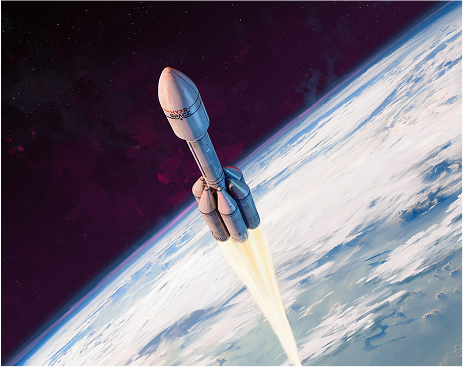
Orbital Baguette One
OB-1 is HyPrSpace's orbital micro-launcher under development in France, using a turbopump-free hybrid rocket engine to deliver up to 235 kg of payload to low Earth orbit.
| Height | ~16 m |
| Propulsion | Hybrid rocket engine ('Terminator'): solid HDPE fuel grain + liquid oxidizer, helium-press |
| Engine thrust (demonstrator) | ~100 kN |
| Payload to LEO | Up to 235-250 kg |
| Target orbit | LEO, up to ~400 km altitude |
Independence-X Aerospace
Malaysia · 2013 · 1 productMalaysian NewSpace launch and re-entry services company developing the DNLV (Domino Next Launch Vehicle) — Malaysia's first commercially developed orbital small launch vehicle — and the MERCAP microgravity experimental re-entry capsule.
DNLV — Dedicated Nano Launch Vehicle
Malaysian indigenous LOX/RP-1 small launch vehicle — 200 kg to 500 km LEO/SSO, US$4.5M per mission, equatorial launch site, 24 missions/year target. Only Malaysian/SE Asian team in
| Propulsion | Liquid oxygen (LOX) + RP-1 kerosene (cryogenic) |
| Payload to 500 km LEO | 200 kg |
| Payload to SSO | 200 kg |
| Launch price | US$4.5 million per mission |
| Target launch cadence | 24 launches/year |
INNOSPACE
South Korea · 2017 · 4 productsSouth Korean developer of hybrid-propulsion small satellite launch vehicles, offering dedicated orbital launches from 90 kg to 1,300 kg to SSO.

BLACK BIRD Sounding Rocket Series
Customer-configurable hybrid-propulsion sounding rockets for microgravity and atmospheric research, using liquid nitrous oxide (LN₂O) and HDPE propellants.
| Black bird-1 — length | 1,485 mm |
| Black bird-1 — diameter | 105 mm |
| Black bird-1 — mass | 8.5 kg |
| Black bird-1 — payload | 1 kg |
| Black bird-1 — apogee | ~1 km |
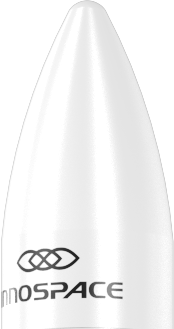
HANBIT-Micro Launch Vehicle
Two-stage + kick stage small satellite launcher delivering up to 170 kg to 500 km SSO, with dual methane upper-stage engines and a precision kick stage.
| Payload capacity | 170 kg (500 km SSO) |
| Height | 22.5 m |
| Diameter | 1.4 m |
| Target orbit | 500 km SSO |
| Stage 1 engine | 1× 245 kN hybrid (paraffin/LOx), 130 sec burn |
HANBIT-Mini Launch Vehicle
Three-stage small satellite launcher delivering up to 1,300 kg to 500 km SSO, powered by nine 25-ton hybrid engines in the first stage.
| Payload capacity | 1,300 kg (500 km SSO) |
| Height | 39.6 m |
| Diameter | 3.7 m |
| Stage 1 engines | 9× 245 kN hybrid (paraffin/LOx) |
| Stage 1 total thrust | ~2,205 kN |
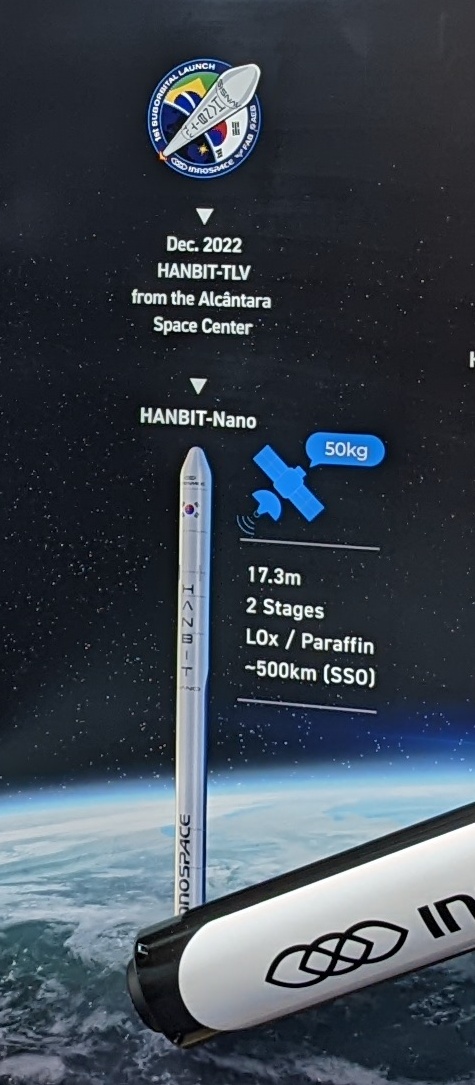
HANBIT-Nano Launch Vehicle
Two-stage hybrid-propulsion small satellite launch vehicle delivering up to 90 kg to 500 km SSO, with HyPER hybrid and LiMER methane upper-stage variants.
| Payload capacity | 90 kg (500 km SSO) |
| Height | 21.7 m |
| Diameter | 1.4 m |
| Target orbit | 500 km SSO |
| Stage 1 engine thrust | 245 kN (25 ton-class hybrid) |
Innovative Space Carrier (ISC)
Japan · 2022 · 2 productsJapanese aerospace startup developing ASCA, a reusable single-stage-to-orbit launch vehicle targeting daily space transportation with turnarounds of once per day and 1,000+ repeat flights.

ASCA Project
Innovative Space Carrier (ISC) is developing ASCA, a reusable rocket, alongside spaceports, P2P high-speed transport, and affordable space travel to create a new core industry.
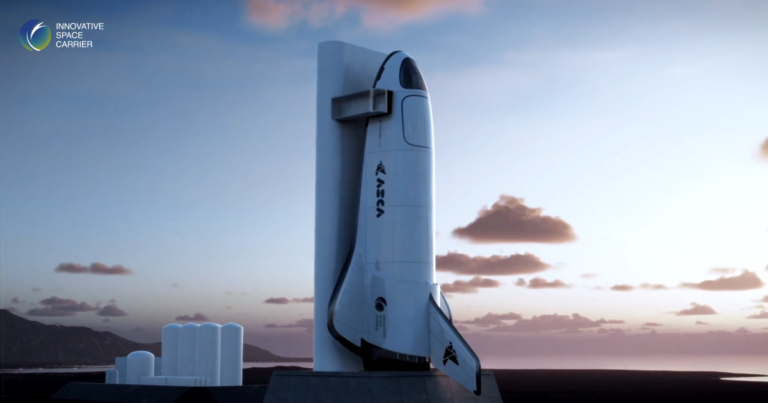
ASCA Reusable Launch Vehicle
Reusable rocket system designed for daily operations — the full ASCA, aimed at the 2040s, is to carry 10 t to 400 km LEO or 50 passengers, with 1,000+ flights and once-per-day turn
| Vehicle type | Reusable rocket system (two-stage from ASCA 1.2 on) |
| Payload to LEO (400 km) | 10,000 kg (full ASCA, aimed at the 2040s) |
| Passenger capacity | 50 people |
| Reuse lifetime | >1,000 flights |
| Turnaround time | 1 day (target) |
Interorbital Systems
United States · 1996 · 3 productsUS private aerospace company developing the NEPTUNE and TRITON low-cost orbital launch vehicles, TubeSat and CubeSat personal satellite kits, a commercial LunarStation lander, and orbital tourism expeditions.
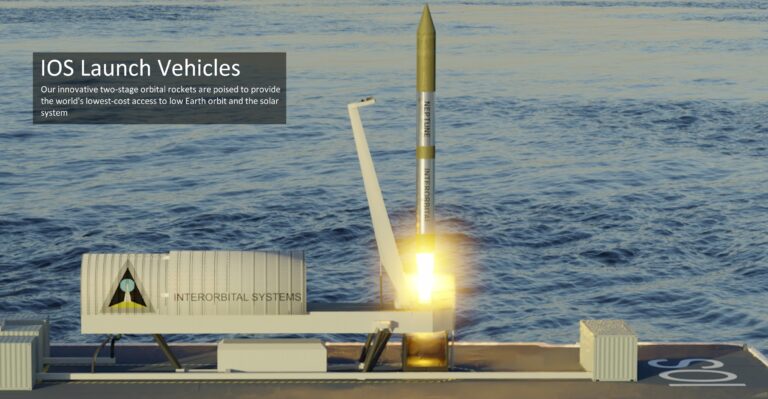
NEPTUNE_100 / TRITON_4500 Launch Vehicles
Small-lift and medium-lift two-stage orbital launch vehicles using storable bipropellant — NEPTUNE_100 (100kg payload) and TRITON_4500 (4,500kg payload) to 500km polar orbit.
| Neptune_100 payload | 100 kg to 500 km polar orbit |
| Triton_4500 payload | 4,500 kg to 500 km polar orbit |
| Propellants | White Fuming Nitric Acid (WFNA) + Turpentine |
| Engine cooling | Ablative (filament-wound composite) |
| Max engine burn time | 40 minutes |
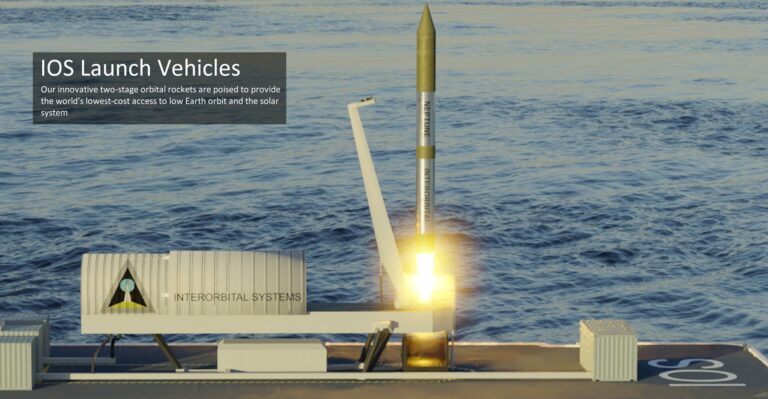
NEPTUNE_100 Launch Vehicle
Low-cost small-lift two-stage orbital rocket delivering 100 kg to 500-km polar orbit at $599,999 per dedicated launch.
| Vehicle class | Small-lift orbital |
| Stages | 2 |
| Payload to 500 km polar orbit | 100 kg |
| Dedicated launch price | $599,999 |
| Price per kg to orbit | $4,918/kg |
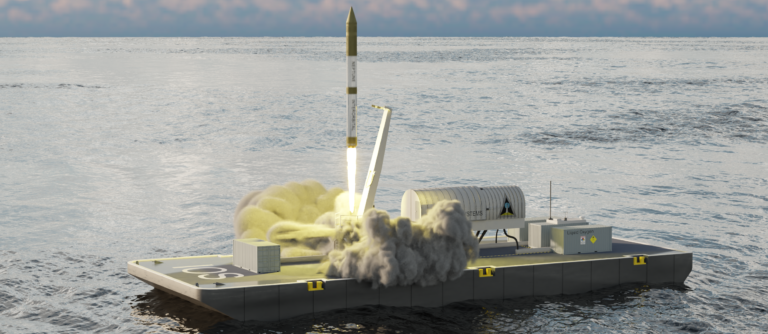
TRITON_4500 Launch Vehicle
Medium-lift two-stage orbital launch vehicle delivering up to 4,500 kg to 500-km polar orbit at $12M per dedicated launch.
| Vehicle class | Medium-lift orbital |
| Stages | 2 |
| Payload to 500 km polar orbit | 4,500 kg |
| Dedicated launch price | $12,000,000 |
| Price per kg to orbit | $2,667/kg |
Interstellar Technologies
Japan · 2013 · 2 productsInterstellar Technologies designs and manufactures orbital launch vehicles and satellite communication systems, aiming to provide space infrastructure.
MOMO / ZERO Sounding Rockets
Interstellar Technologies' commercial sounding rockets — MOMO (suborbital) and ZERO (orbital target) — launched from Taiki, Hokkaido Japan.
| Momo type | Single-stage suborbital |
| Momo propellants | Ethanol/LOX |
| Momo altitude | >100 km (above Kármán line) |
| Zero payload to SSO | ~150 kg (target) |
| Launch site | Taiki-cho, Hokkaido, Japan (private) |
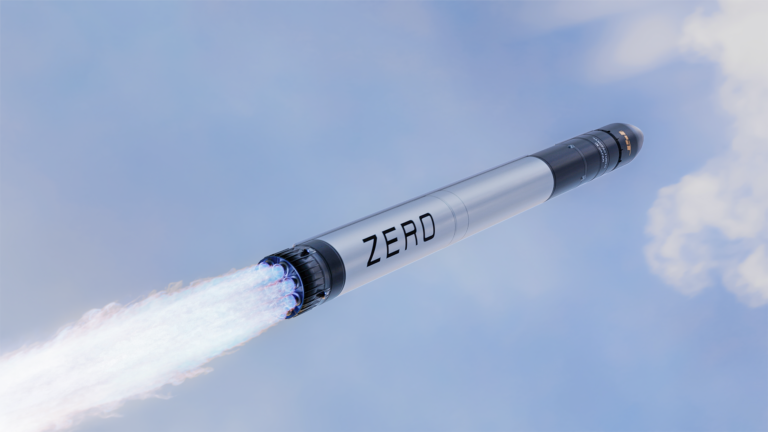
ZERO
ZERO is an expendable, two-stage small-satellite launch vehicle developed by Interstellar Technologies Inc. (IST), a Japanese private space company based in Taiki, Hokkaido, the fo
| Height | 32 m |
| Diameter | 1.7 m |
| Mass | 71 t |
| Stages | 2 (expendable) |
| 1st stage engines | 9x Cosmos engine |
iRocket
United States · 2018 · 1 productiRocket designs and manufactures next-generation reusable small launch vehicles and provides advanced propulsion technology for aerospace and defense applications.
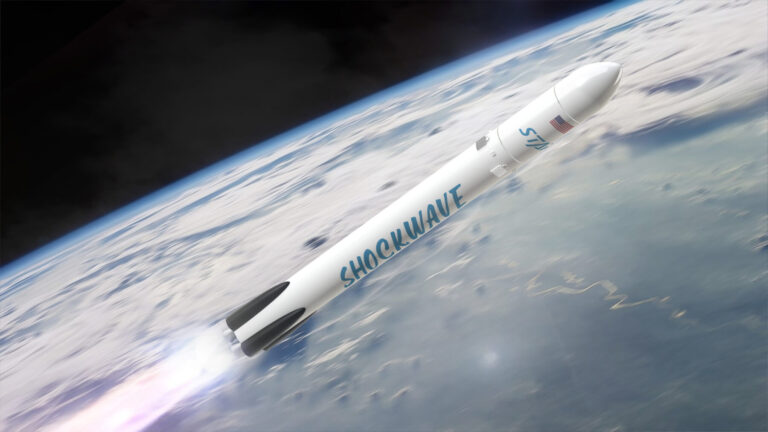
Shockwave
Fully autonomous, two-stage, 100%-reusable launch vehicle targeting 300-1,500 kg payloads to LEO/GEO with 24-hour turnaround.
| Configuration | Two-stage-to-orbit, vertical takeoff / vertical landing (VTVL) |
| Height | ~125 ft (~38 m) |
| Diameter | 9 ft (~2.7 m) |
| Payload capacity | 300-1,500 kg to LEO |
| Target orbits | LEO, GEO, translunar |
Isar Aerospace
Germany · 2018 · 1 productIsar Aerospace designs and manufactures the 'Spectrum' two-stage launch vehicle for small and medium satellites and constellations, providing launch services to global customers.

Spectrum
Isar Aerospace's two-stage orbital launch vehicle targeting 1,000 kg to LEO using LOX/propane, launching from Andøya Space Center in Norway.
| Stages | 2 |
| Propellants | LOX/Propane |
| First stage engines | 9× Aquila |
| Payload to LEO | ~1,000 kg |
| Payload to SSO | ~700 kg |
iSpace (Beijing Interstellar Glory)
China · 2016 · 1 productChinese commercial launch company; Hyperbola-1 first private orbital success July 2019; Hyperbola-2 reusable liquid LV in development; founded 2016, Beijing.
Hyperbola-1
Hyperbola-1 (SQX-1) is a four-stage, all-solid-propellant small-lift launch vehicle developed by iSpace; its July 2019 maiden flight made it the first Chinese private company to su
| Height | 20.8 m |
| Diameter | 1.4 m |
| Liftoff mass | ~31 tonnes |
| Stages | 4 (all solid-fuel stages with liquid-fuel attitude control on upper stage) |
| Payload to LEO | ~300 kg |
JAXA - Japan Aerospace Exploration Agency
Japan · 2003 · 1 productJapan Aerospace Exploration Agency (JAXA) is Japan national aerospace and space agency, responsible for research, technology development, and launch of satellites and space missions.
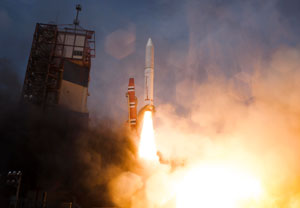
Epsilon Launch Vehicle
The Epsilon is a solid-propellant launch vehicle developed by JAXA to provide cost-effective and flexible access to space for small satellites and scientific payloads. Derived from
| Height | 26 m |
| Mass | 95.4 t |
| Diameter | 2.6 m |
| Payload to LEO | 1,200 kg (250 × 500 km, standard configuration) |
| Stages | 3 solid + optional liquid |
LandSpace
China · 2015 · 2 productsLandSpace is a space transportation company founded in 2015, specializing in the development, manufacturing, testing, and launching of medium and large reusable liquid oxygen-methane launch vehicles.
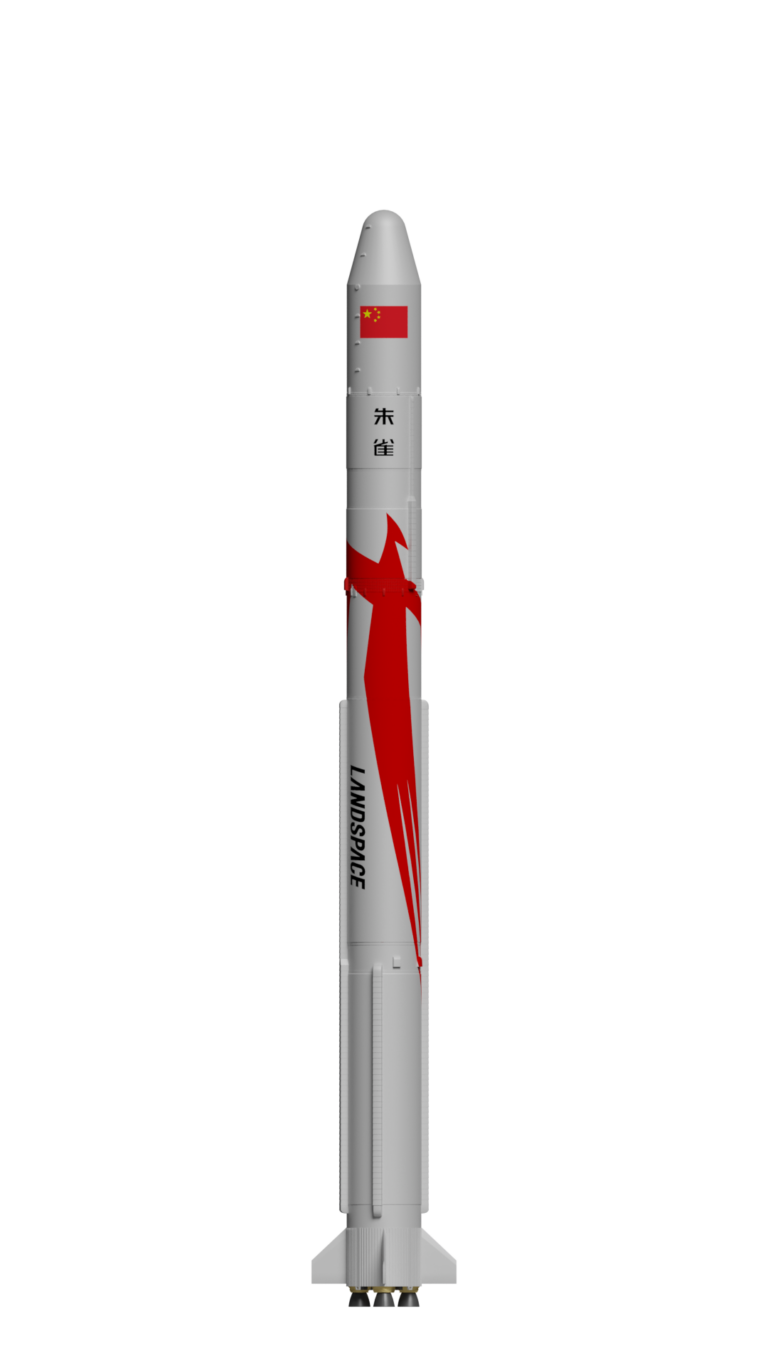
Zhuque-2 (LOX/Methane)
LandSpace's LOX/methane launch vehicle — the world's first methane-fueled rocket to reach orbit, achieving success on its third flight in July 2023.
| Propellants | LOX/Methane (both stages) |
| First stage engines | 4× TQ-12 |
| Payload to LEO | ~6,000 kg |
| Payload to SSO | ~4,000 kg |
| Historical achievement | World's first methane-fueled rocket to reach orbit (July 12, 2023) |
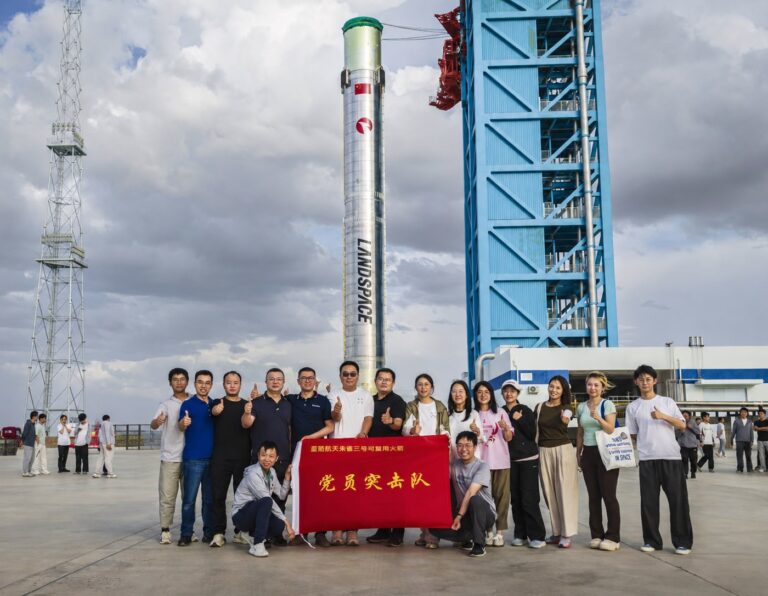
Zhuque-3 (Reusable Medium Launch Vehicle)
LandSpace's fully reusable medium launch vehicle under development, targeting 21,000 kg to LEO using its Tianque-12 LOX/methane engine.
| Propellants | LOX/Liquid Methane (LCH4) |
| First stage engines | 9× Tianque-12 (~1,000 kN each) |
| Payload to LEO | ~21,000 kg (reusable configuration) |
| Reuse method | Propulsive landing (both stages) |
| Predecessor | Zhuque-2 — world's first methane rocket to orbit (July 2023) |
Latitude
France · 2019 · 1 productLatitude designs and manufactures a multi-configurable launcher in France for dedicated SmallSat launch services, offering frequent and affordable access to orbit.
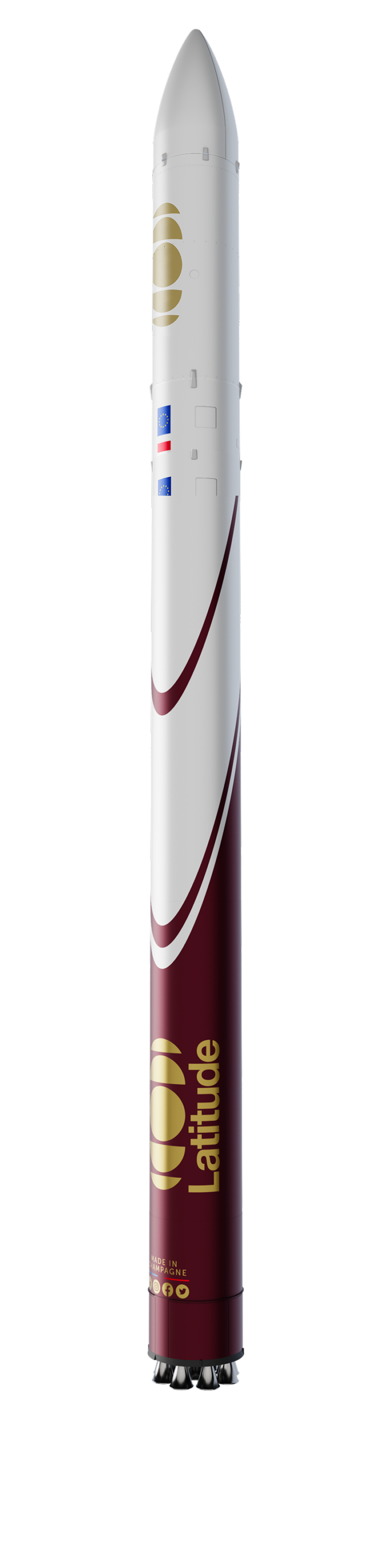
Zephyr Launch Vehicle
Latitude's launcher is a compact yet powerful rocket, designed and built in France, capable of carrying up to 300 kg to SSO.
| Length | 30 meters |
| Diameter | 2 meters |
| Capacity | Payloads up to 300 kg SSO |
| Propellant | LOX & RP-1 |
| Fairing height | 2.3 m |
LinkSpace
China · 2014 · 4 productsLinkSpace (翎客航天) is China's first private reusable rocket company, developing VTVL launch vehicles and liquid rocket engines.
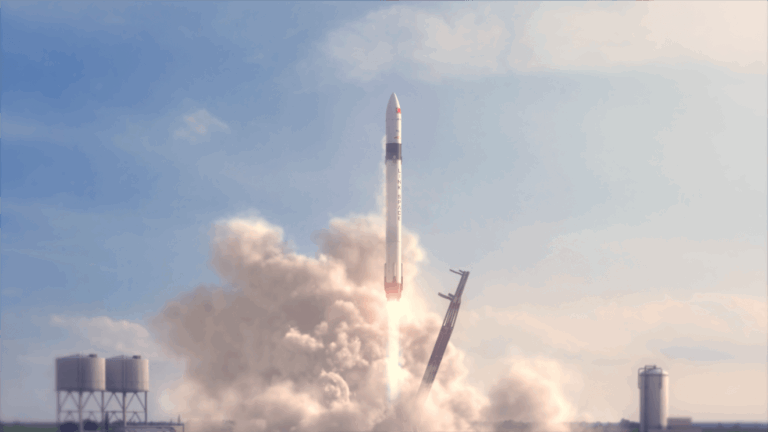
NewLine-1
LinkSpace's orbital-class reusable launch vehicle, targeting small commercial satellite launches to sun-synchronous orbit with a reusable first stage rated for 10+ launches.
| Height | 24 m |
| Diameter | 1.8 m |
| Payload to orbit | 200 kg |
| Target orbit | 500 km SSO (sun-synchronous) |
| Take-off weight | 42 t |
RLV-T Series
Family of VTVL (vertical take-off, vertical-landing) reusable rocket test vehicles used by LinkSpace to develop and validate its reusability technology.
| Prototypes developed | RLV-T1 - RLV-T5 |
| Test flights conducted | 300+ |
| Wind tolerance for soft landing | up to 10 m/s |
| Engine thrust variability | 20%-100% (variable thrust) |
| Total engine ignition time | 30,000+ seconds |
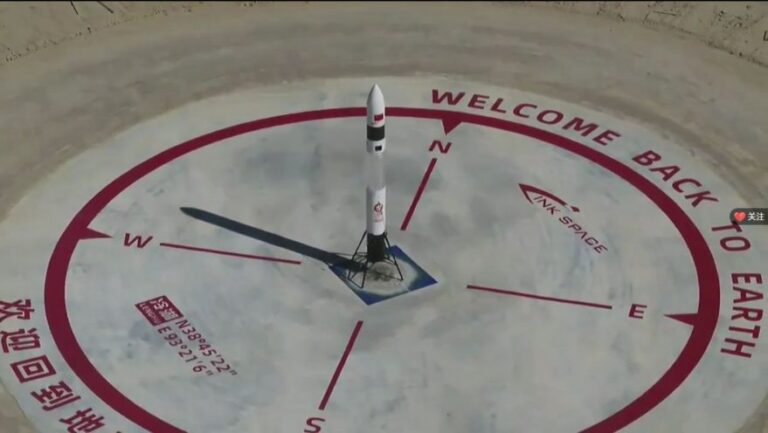
RLV-T5 (NewLine Baby)
Sub-scale VTVL reusable rocket technology demonstrator used by LinkSpace to validate powered descent and precision vertical landing.
| Height | 8.1 m |
| Diameter | 0.65 m |
| Liftoff mass | 1.5 metric tons |
| Propulsion | 5x variable-thrust ethanol / liquid-oxygen engines |
| Max altitude achieved | 300.2 m (Aug 9, 2019 flight) |
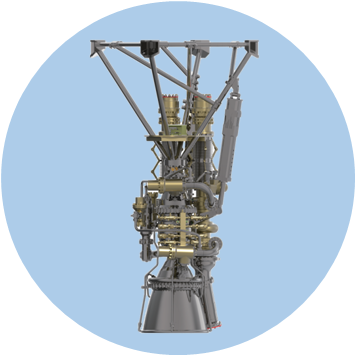
SRV-1 (RLV-T6)
China's first suborbital reusable vehicle (test code RLV-T6), a multi-purpose LOX/methane VTVL rocket for microgravity, atmospheric and payload testing missions.
| Test designation | RLV-T6 |
| Diameter | 1.2 m |
| Height | 15 m |
| Take-off weight | 8.5 t |
| Propellant | LOX / Methane |
Long Wall Space (formerly ABL Space Systems)
United States · 2017 · 1 productFormerly ABL Space Systems; now Long Wall, developing containerized missile defense systems, hypersonic test vehicles, and the RSX liquid booster, building on its RS1 orbital launch vehicle heritage.
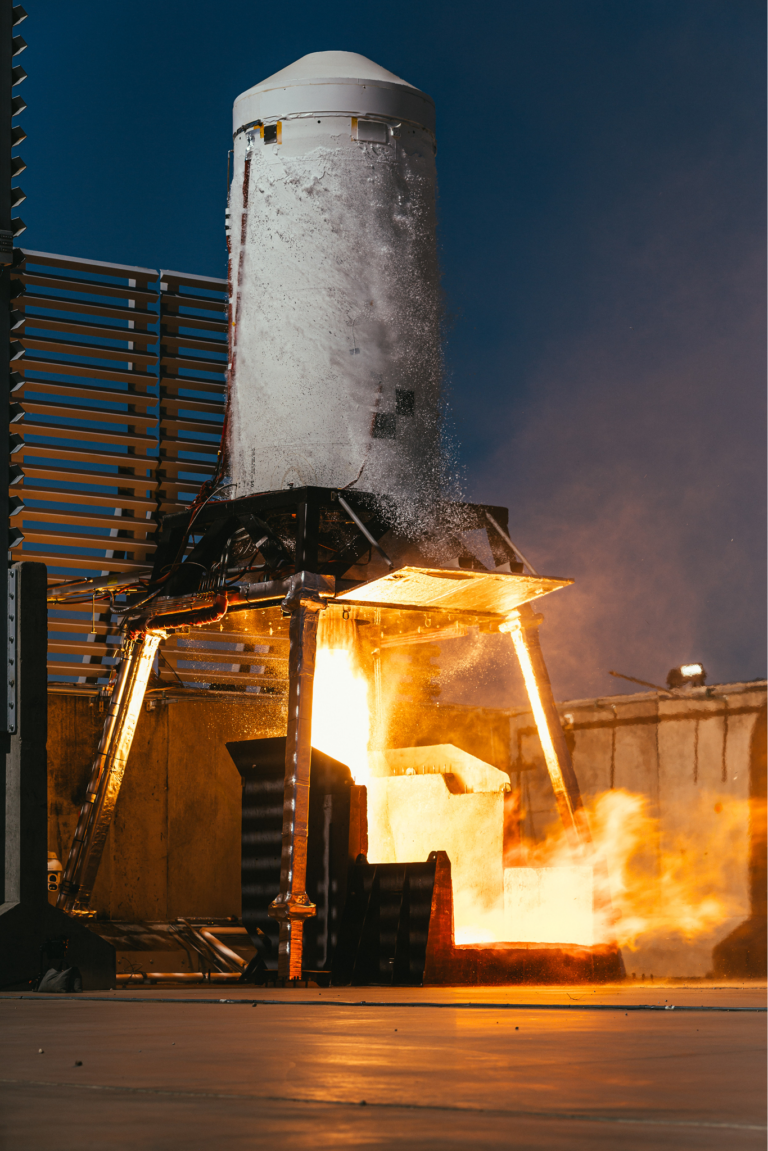
RSX
RSX is Long Wall’s small launch vehicle, carrying years of design iteration, subsystem testing, and flight operations experience derived from ABL Space Systems’ RS1 pro
Magellan Aerospace
Canada · 1996 · 1 productCanadian global aerospace manufacturer delivering complex aeroengine and aerostructure assemblies, Black Brant sounding rockets, and small satellite bus platforms for civil and defence markets worldwide.
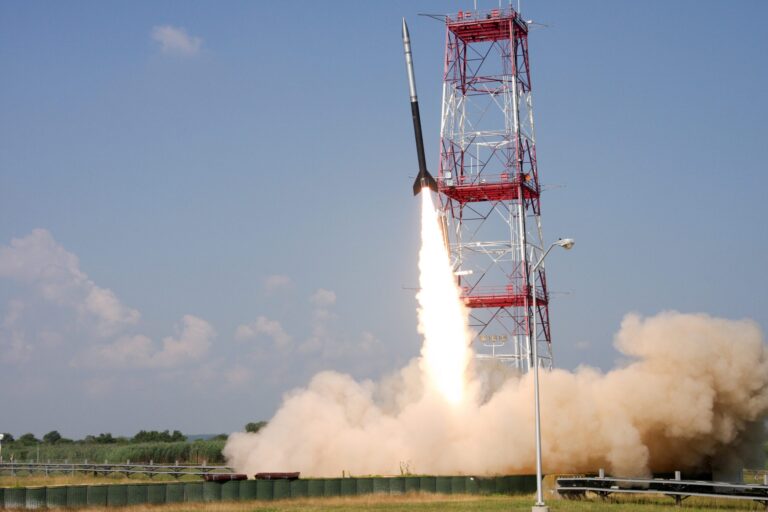
Black Brant Sounding Rocket
Family of solid-propellant sounding rockets launching scientific payloads since 1962 — 70–850 kg payload, 150–1,500+ km altitude, >98% mission success rate, 1,000+ launches.
| Payload capacity | 70–850 kg |
| Altitude range | 150–1,500+ km |
| Mission success rate | >98% |
| Total launches | >1,000 |
| Propellant | Aluminized HTPB solid propellant |
MaiaSpace
France · 2022 · 1 productMaiaSpace designs, manufactures, operates, and commercializes reusable mini launchers and space mobility solutions for various orbits, serving customers like Eutelsat.
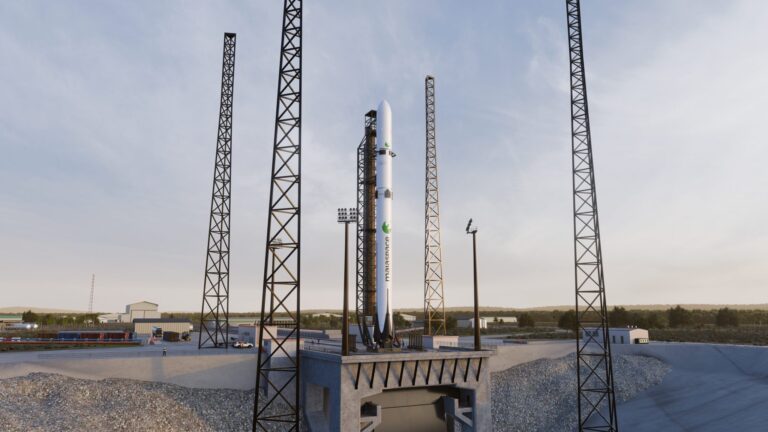
Maia
Maia is MaiaSpace's two-stage, methane/oxygen orbital launcher, billed as Europe's first reusable, eco-responsible mini launcher, designed to serve LEO/SSO smallsat constellations
| Height | 50 m |
| Diameter | 3.5 m |
| Stages | 2 stages (plus optional Colibri third stage/kick stage) |
| First stage engines | 3x Prometheus engines |
| Second stage engines | 1x Prometheus engine (re-ignitable) |
Miles Space / RocketStar
United States · 2014 · 2 productsRocketStar is a U.S. aerospace technology company developing reusable aerospike rocket engines, water-fueled and fusion-enhanced electric propulsion for spacecraft, and a suite of digital signal processing (DSP) software for secure communic
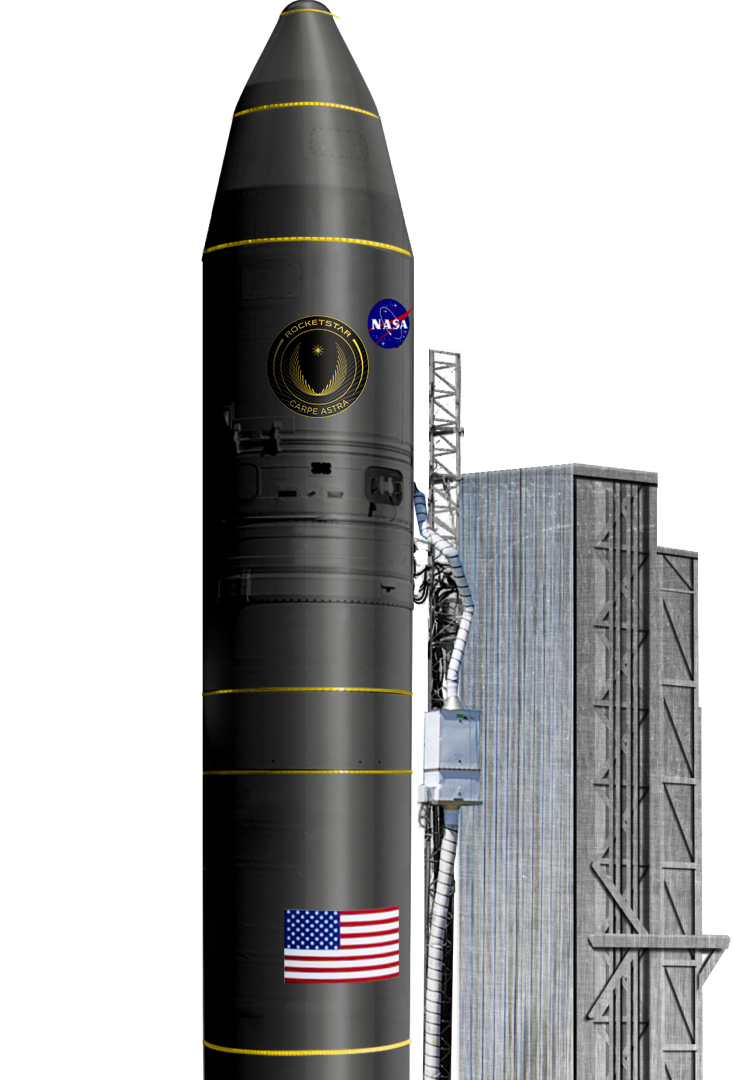
Cowbell Suborbital Test Rocket
12-meter aerospike-powered developmental suborbital test rocket intended to fly from Cape Canaveral's Launch Complex 48.
| Length | 12 meters |
| Target test altitude | ~21,000 meters (suborbital) |
| Propulsion | RocketStar Aerospike Engine |
| Launch site | Launch Complex 48, Cape Canaveral, Florida |
| Vehicle class | Single-stage-to-orbit (SSTO) developmental test rocket |
RocketStar Aerospike Engine
Patent-pending 3D-printed aerospike rocket engine producing 25-35% more thrust than conventional bell-cone engines with built-in thrust vectoring.
| Thrust gain vs. bell-cone | 25-35% more thrust, no extra fuel |
| Performance gain | ~20% better than conventional rocket engines |
| Thrust vectoring | Individually controlled combustion chambers; no gimbals/actuators needed |
| Altitude compensation | Adjusts to changing atmospheric pressure at any altitude |
| Manufacturing | 3D-printed, patent-pending design |
Mitsubishi Heavy Industries Launch Services
Japan · 2007 · 2 productsH3 next-generation Japanese launch vehicle (heir to H-IIA); commercial GTO/SSO missions.
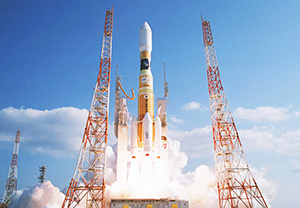
H-IIB
Japan's retired heavy-lift launch vehicle used exclusively to launch the HTV (Kōnotori) cargo spacecraft to the ISS, with a perfect 9-for-9 success record.
| Payload to LEO | 19,000 kg |
| Payload to iss orbit | 16,500 kg |
| Height | 56.6 m |
| First stage diameter | 5.2 m |
| Launch mass | 531,000 kg |
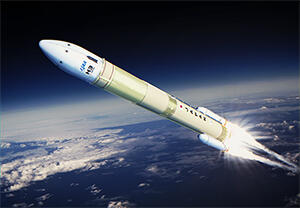
H3 Launch Vehicle
Japan's next-generation medium-heavy lift expendable launch vehicle, replacing H-IIA with lower cost and improved performance.
| Payload to GTO | 6,500 kg (ΔV 1,500 m/s to GSO) |
| Payload to SSO (500 km) | 4,000 kg |
| First stage engine | LE-9 (LH2 / LOX, expander bleed cycle) |
| Second stage engine | LE-5B-3 (LH2 / LOX) |
| Fairing diameter | 5.4 m (large) / 4 m (medium) |
MT Aerospace
Germany · 1995 · 1 productGerman aerospace components manufacturer producing satellite tanks, CFRP structures, and antenna dishes for European satellite programs.
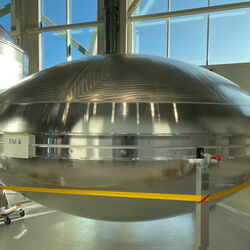
Hydrogen Technology
MT Aerospace develops innovative solutions for the storage of liquid and gaseous hydrogen, as well as for the supply of fuel cells and direct combustion, leveraging decades of expe
Nammo
Norway · 1998 · 1 productNammo is an aerospace and defense company that designs and manufactures rocket motors for military and space applications, ammunition, and shoulder-launched munitions systems.
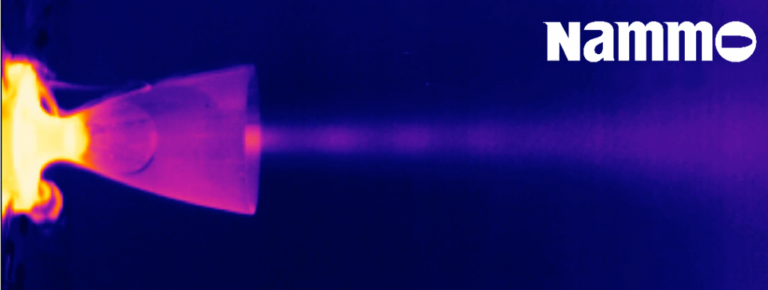
M-10 / DM-1650 Solid Rocket Booster Motors for Ariane 5 and Ariane 6
Nammo (Nordic Ammunition Group) is a Norwegian-Finnish defense and aerospace company headquartered in Raufoss, Norway, specializing in solid rocket propulsion and ammunition. In th
NewSpace India Limited (NSIL)
India · 2019 · 4 productsISRO's primary commercial arm; manages PSLV/SSLV production, provides international launch services, and facilitates Indian private space industry growth.
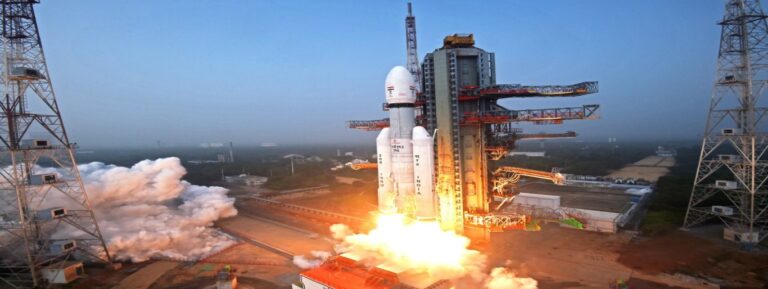
NSIL Commercial Launch Services
NewSpace India Limited's commercial launch services on ISRO's PSLV and GSLV rockets — India's government-owned commercial space company for satellite launches.
| Launch vehicles | PSLV (1,750 kg SSO), GSLV Mk3 / LVM3 (4,000 kg GTO) |
| Pslv record | 104 satellites in single launch (2017 world record) |
| Pslv flights | 57+ (high success rate) |
| Customer types | Commercial satellite operators, government agencies, rideshare |
| Additional services | Satellite manufacturing, technology transfer |
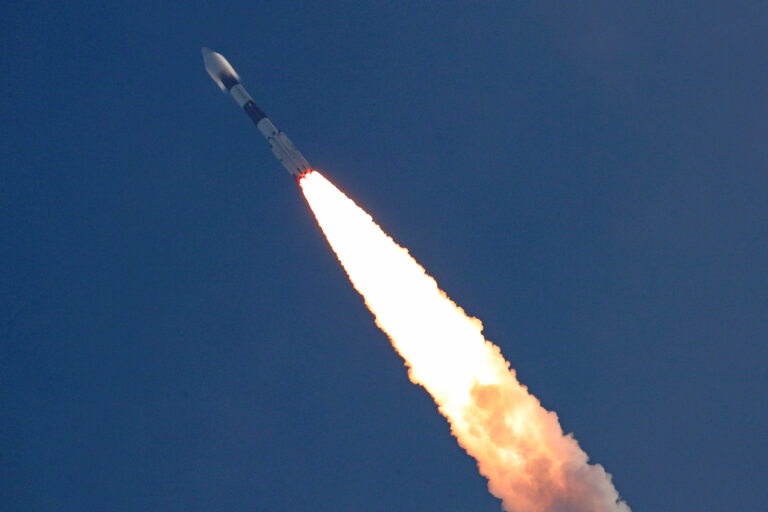
PSLV
The Polar Satellite Launch Vehicle (PSLV) is ISRO's proven four-stage workhorse rocket, commercially marketed by NewSpace India Limited (NSIL) for launching satellites into sun-syn
| Height | 44 m |
| Core diameter | 2.8 m |
| Stages | 4 stages, alternating solid and liquid propulsion |
| Lift-off mass (PSLV-XL) | 320,000 kg |
| Payload to LEO (PSLV-XL, 200 km) | 3,800 kg |
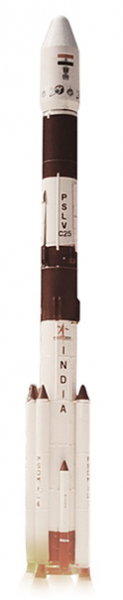
PSLV Production
NewSpace India Limited (NSIL) is the nodal agency for carrying out Polar Satellite Launch Vehicle (PSLV) production through Indian Industry under a consortium route.
| Height | 44 m |
| Diameter | 2.8m |
| Number of Stages | 4 |
| Lift Off Mass | 320 tonnes (XL) |
| Variants | 2 (PSLV - CA, PSLV - XL) |
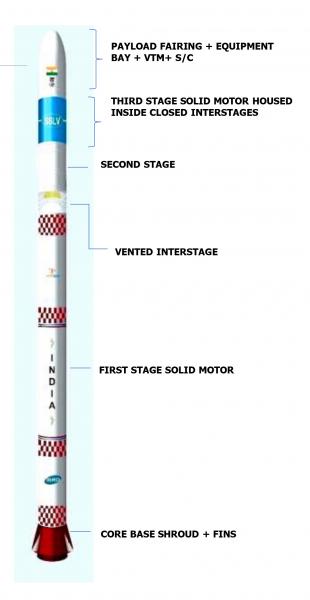
Small Satellite Launch Vehicle (SSLV)
The Small Satellite Launch Vehicle (SSLV) is a three-stage all-solid vehicle designed to meet "Launch on Demand" requirements for small satellites in a cost-effective manner.
| Stages | 3 (all solid) |
| Payload Capacity | up to 500 kg |
| Orbit | 500 km LEO |
Northrop Grumman Space Systems
United States · 1939 · 1 productMinotaur family, Pegasus XL, Antares (legacy); MLV co-development with Firefly.
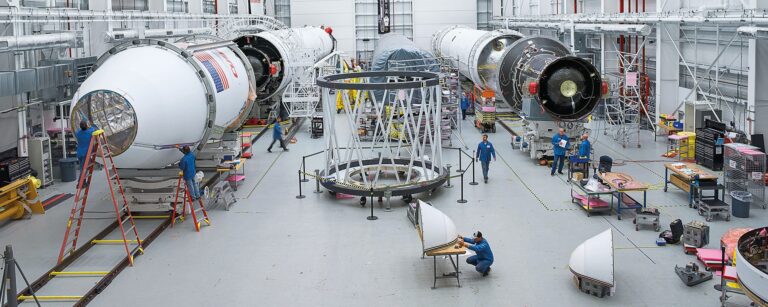
Antares 330
Antares 330 is Northrop Grumman's next-generation, two-stage expendable rocket designed to launch Cygnus cargo spacecraft to the ISS, replacing the retired Antares 230+ with a new
| Stages | Two-stage: liquid-fueled first stage + solid-fueled second stage |
| First stage engines | 7x Firefly Aerospace Miranda engines (RP-1/LOX) |
| First stage thrust | ~7,200 kN combined |
| Second stage | Castor 30XL solid rocket motor |
| Diameter | 3.9 m (payload fairing / core) |
Omspace Rocket and Exploration
2020 · 1 productOmspace Rocket and Exploration designs and manufactures reusable rockets for small and nano satellites, operating from Ahmedabad, Gujarat, India.
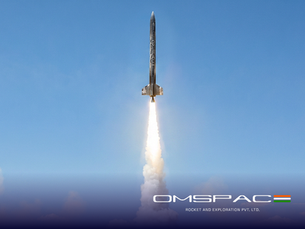
Infinity One
Infinity One is a reusable launch vehicle designed for dedicated, on-demand orbital insertion of small payloads to Low Earth Orbit.
| Payload to LEO | Up to 500 kg (dedicated mission; Omspace's rocket page also shows 150 kg) |
| Orbit | Up to 500 km LEO |
| Reusability | Reusable first stage — relaunch within 24–48 hours |
| Engine | Cryogenic liquid engine, 3D-printed |
| Structure | Composite airframe, carbon-fibre fairing, integrated kick stage |
OneSpace Technologies
China · 2015 · 2 productsChinese private launch-vehicle developer building the OS-X suborbital and OS-M orbital solid-fuel rocket families, and China's first privately funded company authorized to develop and manufacture launch vehicles.
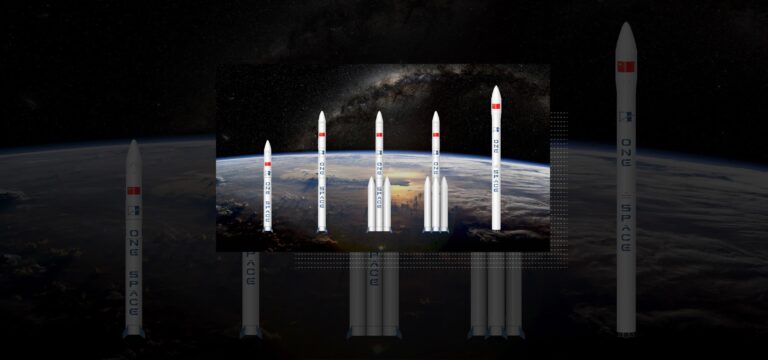
OS-M Orbital Launch Vehicle
Four-stage solid-fuel orbital small-satellite launcher targeting sun-synchronous orbit.
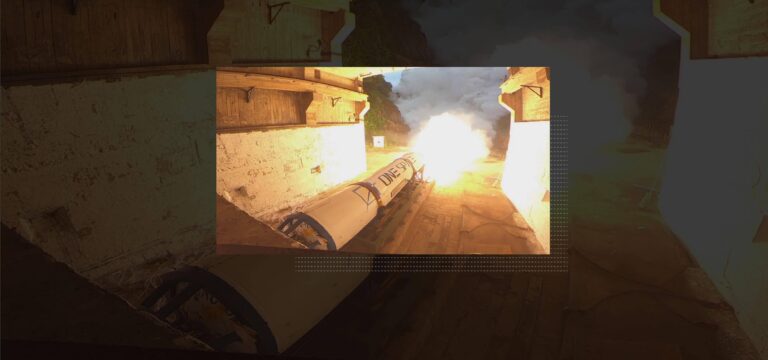
OS-X Suborbital Sounding Rocket
Solid-fuel suborbital sounding rocket family; OS-X0 was China's first privately developed commercial suborbital rocket to fly.
Orienspace (Orient Space)
China · 2020 · 1 productChinese commercial launch company developing the Gravity Series medium and heavy-lift rockets, headquartered in Yantai, Shandong.
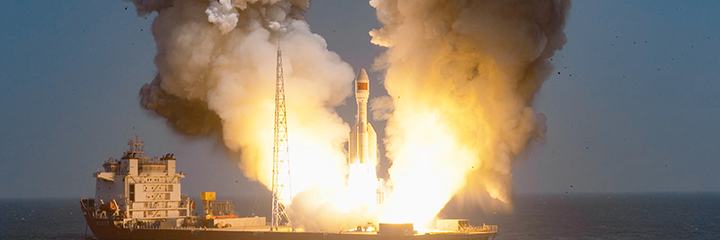
Gravity-1 (Yinli-1)
Orienspace's all-solid medium-lift launch vehicle — 6.5 t to LEO and 4.2 t to 500 km SSO; first flew from a sea platform in January 2024.
| Configuration | All solid: 3.5 stages, solid core with 4 solid boosters (a LOX/kerosene third stage is off |
| Payload to SSO | 4,200 kg (500 km) |
| Payload to LEO | 6,500 kg |
| First flight | January 11, 2024 (success from sea launch) |
| Achievement | World's first all-solid bundled medium-lift launch vehicle (Orienspace) |
PacSci EMC
United States · 1975 · 1 productPacSci EMC designs and manufactures mission-critical pyrotechnic and energetic material devices and integrated systems for aerospace, defense, energy and space applications.
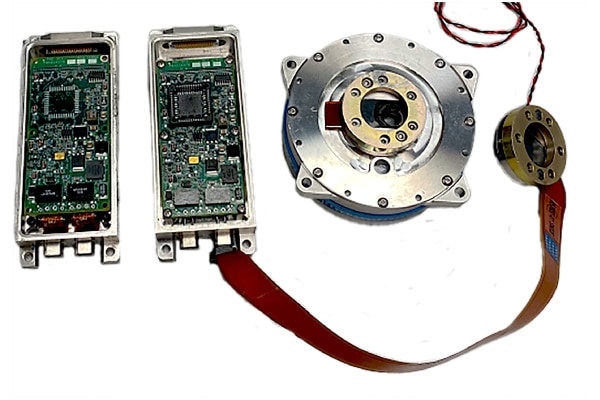
Flight Termination System
The Flight Termination System (FTS) is a safety-critical product designed to prevent inadvertent initiation of a destruct sequence and to terminate the flight of missiles, rockets,
| Redundant ordnance events | 5 |
| Interface | High Speed serial Bus with Mission Computer |
| Fiber optic optical block compliance | MIL-STD-1901A |
| Sequencer assembly qualification | MIL-STD-1901A |
| Flight termination assembly qualification | RCC319 |
Perigee Aerospace
South Korea · 2018 · 3 productsSouth Korean small launch vehicle company developing the liquid-methane Blue Whale rocket family and in-house propulsion systems.
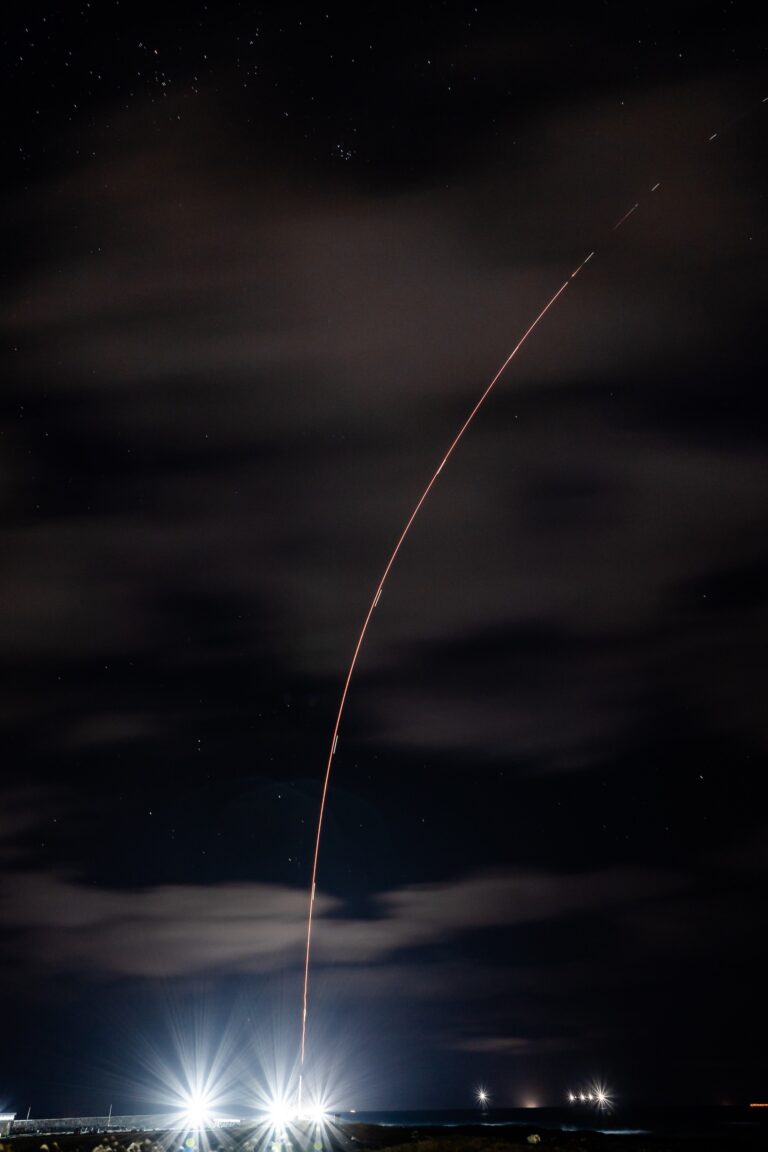
Blue Whale 0.1
Educational sounding rocket - South Korea's first civilian liquid-propellant rocket.
| Vehicle type | Educational sounding rocket |
| Height | 3.2 m |
| Diameter | 190 mm |
| Launch mass | 52 kg |
| Propulsion | Pressure-fed LOX/Ethanol |
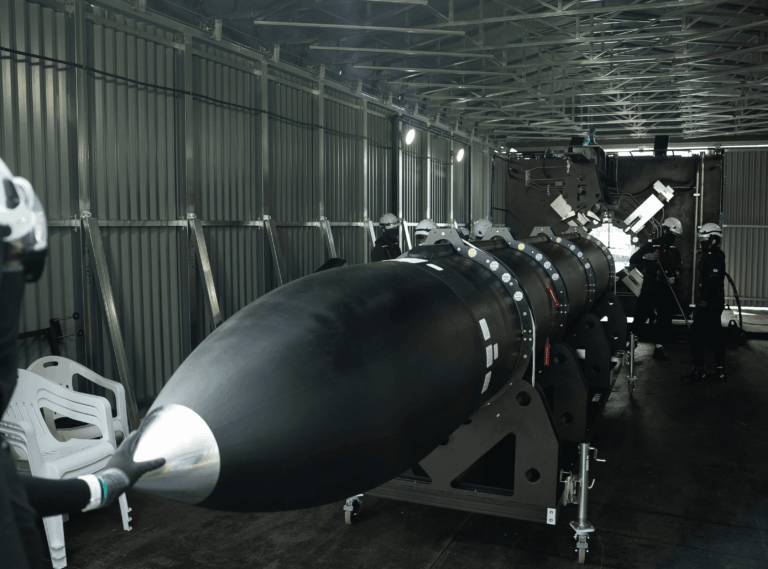
Blue Whale 0.4
Suborbital research vehicle for microgravity payloads and technology demonstrations.
| Vehicle type | Suborbital research vehicle |
| Height | 7.5 m |
| Diameter | 760 mm |
| Launch mass | 800 kg |
| Payload capacity | 20 kg to suborbital trajectory |
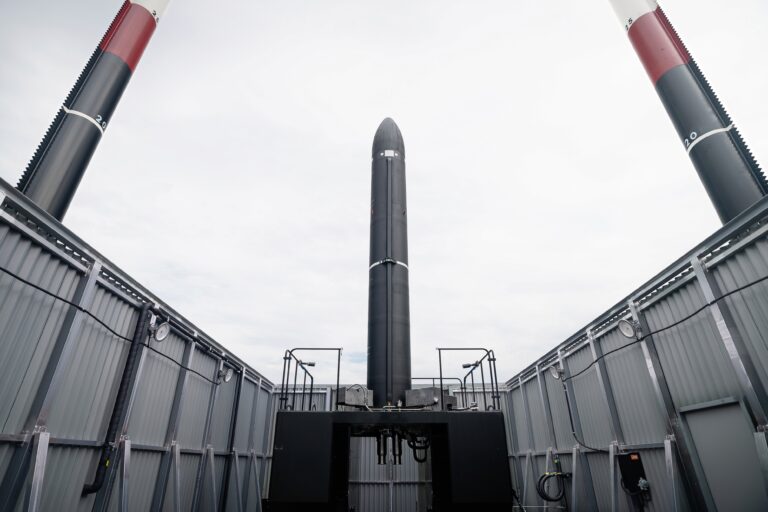
Blue Whale 1
Two-stage orbital launch vehicle delivering up to 200 kg to 500 km SSO.
| Vehicle type | Two-stage orbital launch vehicle |
| Height | 21 m |
| Diameter | 1,600 mm |
| Launch mass | 19,800 kg |
| Payload capacity | Up to 200 kg to 500 km SSO |
Phantom Space
United States · 2019 · 2 productsPhantom Space Corporation provides satellite manufacturing, launch services, and develops data constellations, with a focus on revolutionizing space commerce.

Daytona
Phantom Space's small orbital launch vehicle — Daytona II carries 306 kg to 500 km SSO on LOX/RP-1 — built for high launch cadence at low cost.
| Payload to SSO (500 km) | 306 kg (Daytona II) |
| Propellants | LOX/RP-1 (both stages) |
| Target price | $2–3M per launch |
| HQ | Tucson, Arizona, USA |
| Status | Daytona II — booking launches for 2027 |
Tucson Medium Launch Vehicle
Phantom Space's Tucson — a medium liquid-propellant orbital launch vehicle targeting 3,000 kg to LEO, positioned above the small Daytona rocket.
| Propellants | Liquid (specific propellant TBD) |
| Payload to LEO | ~3,000 kg (target) |
| Market | Mid-market constellation deployment (between small and Falcon 9 class) |
| Founder | Jim Cantrell (former SpaceX founding team member) |
| Predecessor | Daytona (small launch vehicle; Daytona II: 306 kg to 500 km SSO) |
PION Labs
Brazil · 2019 · 1 productBrazilian NewSpace startup building PocketQube/CubeSat nanosatellites, sounding rockets, and STEM space-education programs to democratize access to space.
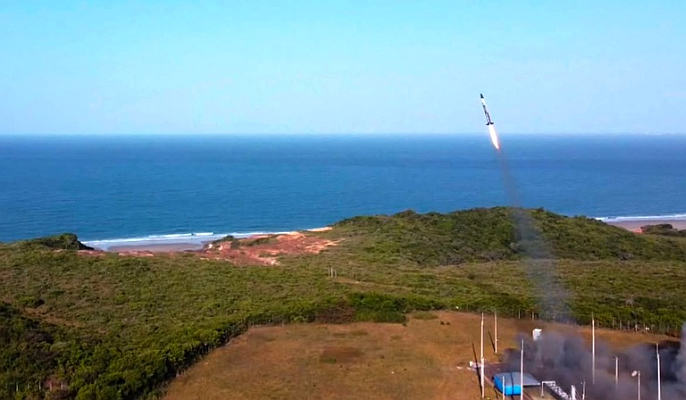
PION Educational Satellite Launcher (PESL)
The PION Educational Satellite Launcher (PESL) is a suborbital rocket developed by PION Labs, designed to carry educational satellites like CanSats and CubeSats.
| Launch site | Centro de Lançamento da Barreira do Inferno (CLBI), Rio Grande do Norte |
| Payload capacity | Seven payloads (CanSat and CubeSat formats) |
| Maximum altitude | 3,000 meters |
| Recovery method | Parachute deployment, sea recovery |
PLD Space
Spain · 2011 · 2 productsMiura 5 partially-reusable small-lift rocket; suborbital Miura 1 — first European commercial reusable launcher.
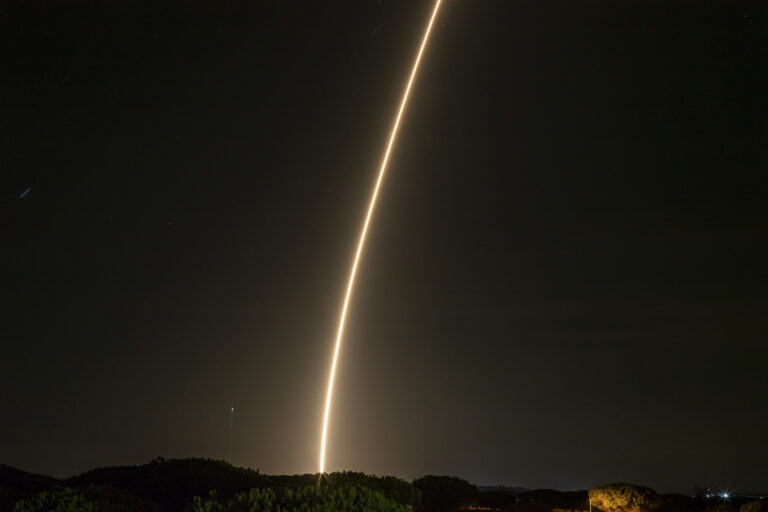
Miura 1
Miura 1 is PLD Space's single-stage, reusable suborbital sounding rocket that became the first privately developed European rocket to reach space on 7 October 2023.
| Length | 12.5 m |
| Diameter | 0.7 m |
| Stages | 1 |
| Structure material | Aluminium 2014 Series, monohull |
| Mass at liftoff | 2,620 kg |
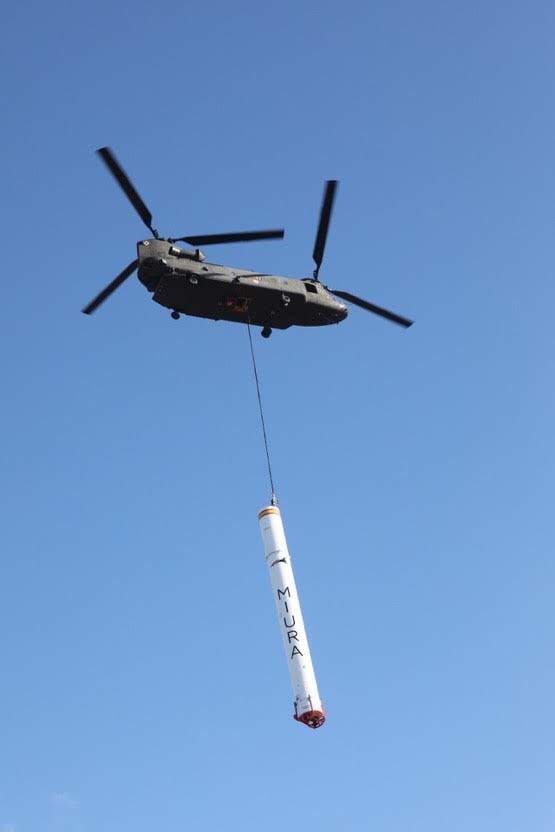
Miura 5
Miura 5 is PLD Space's two-stage, reusable orbital launch vehicle for small satellites, currently in development to offer dedicated, rideshare and piggyback launch services at high
| Height | 35.7 m |
| Diameter | 2 m |
| Stages | 2 stages + optional kick stage |
| Propellant | Biokerosene (RP-1) + Liquid Oxygen |
| Structural material | Aluminium 2014 / Composite (CFRP) |
POLARIS Raumflugzeuge
Germany · 2019 · 4 productsGerman developer of reusable, horizontal-takeoff-and-landing spaceplanes for orbital launch and hypersonic transport.
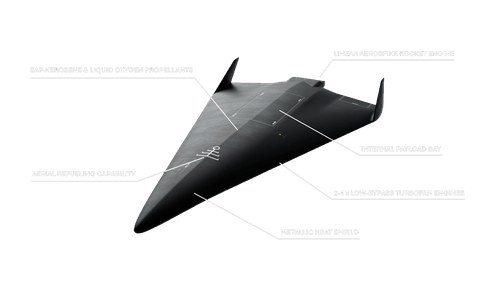
Aurora Light Spaceplane
Aurora is POLARIS Raumflugzeuge's flagship two-stage, fully reusable spaceplane, designed for aircraft-like runway operations to deliver small/medium satellites to orbit and suppor
| Length | ~28 meters |
| Stages | Two-stage (reusable turbofan+aerospike main stage; rocket-powered upper stage) |
| Orbital payload capacity | 1,000 kg to low Earth orbit |
| Suborbital payload capacity | up to 10,000 kg |
| Peak altitude | >100 km |
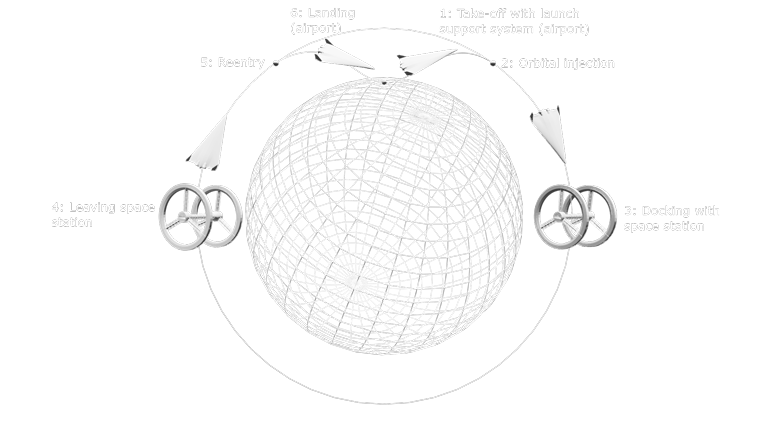
Future Heavy Spaceplane
Roadmap concept for a fully reusable heavy orbital spaceplane, evolving step-by-step toward a single-stage-to-orbit (SSTO) vehicle.
| Target timeframe | Early 2030s |
| Configuration | Semi-SSTO ('1.5-stage'), evolving toward full SSTO |
| Target cost reduction | At least an order of magnitude vs. traditional rockets |
| Applications | Crew/cargo transport, satellite launch, debris removal, lunar/interplanetary payloads (wit |
| TRL | 2-3 (concept/roadmap stage) |
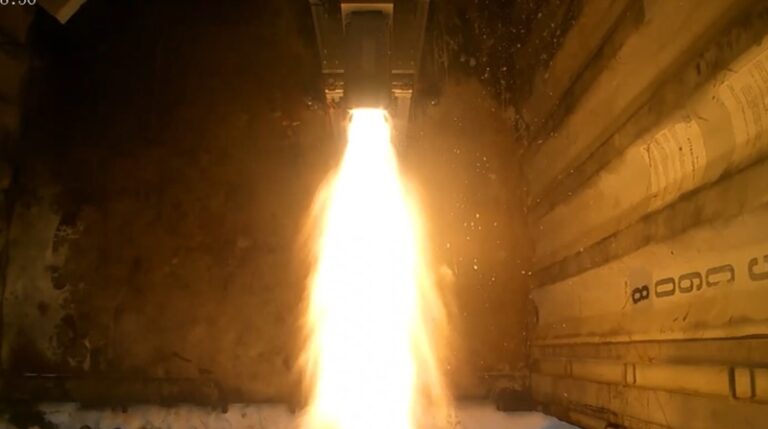
Hypersonic Platform VEGA
VEGA is a fully reusable, two-stage, horizontally launched spaceplane designed as a hypersonic testbed that can also serve as a small-satellite launcher.
| Configuration | Two-stage, fully reusable, horizontal launch |
| Primary role | Hypersonic research and experimental testbed |
| Secondary role | Small-satellite launcher (with expendable upper stage) |
| Program sponsor | German Federal Office of Bundeswehr Equipment (BAAINBw) |
| TRL | 4-5 (design contract awarded, follow-on manufacturing/flight-test options) |
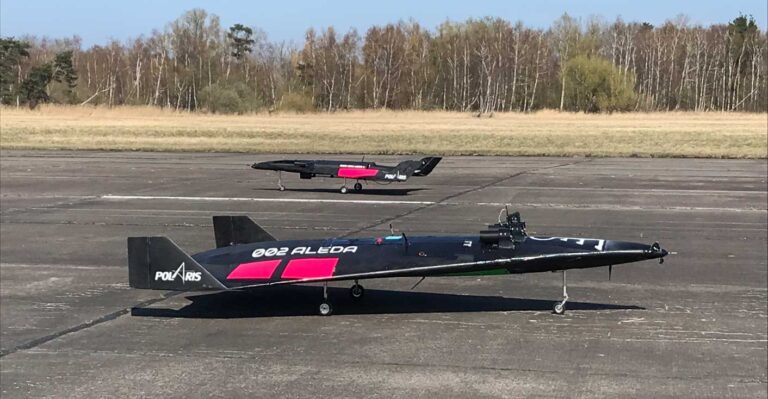
Spaceplane Aerial Refueling System
Optional aerial-refueling capability for POLARIS spaceplanes and hypersonic aircraft, plus dedicated uncrewed tanker aircraft.
| Refuel media | Kerosene, potentially liquid oxygen |
| Program sponsor | BAAINBw (since 2024) |
| Demonstrators | ALEDA (simulated tanker), Mini MIRA II (receiver), ORCA (scaled tanker, in manufacturing) |
| Flight heritage | Numerous fully automated formation test flights completed |
| TRL | 5 (formation test flights conducted, tanker demonstrator in manufacturing) |
Promin Aerospace
Ukraine · 2021 · 1 productUkrainian small-launch startup developing Promin 1 (Zaarbird), an ultra-light autophagic rocket that burns its own solid-fuel airframe to orbit pico- and nanosatellites.
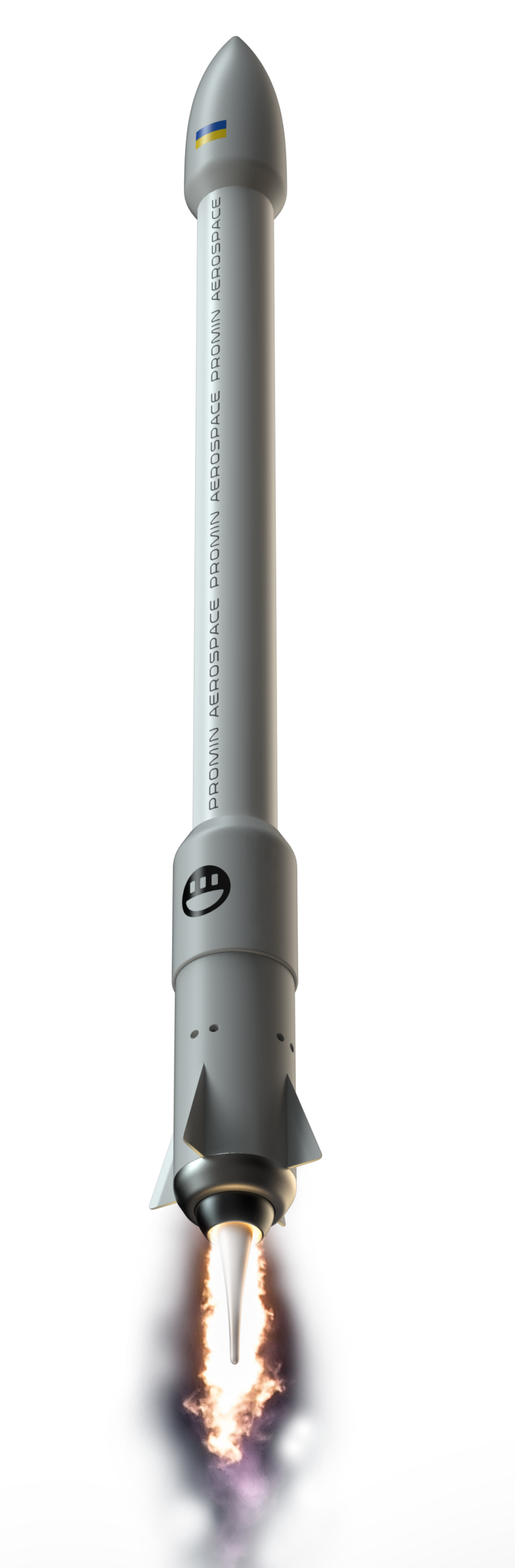
Promin 1 (Zaarbird)
Ultra-light autophagic small-satellite launch vehicle carrying pico/nanosatellite payloads to orbit.
| Vehicle mass (approx.) | ~100 kg |
| Payload class | Pico/nanosatellites, target ~0.1-3 kg to LEO (launcher family spans 100-500 kg mass class) |
| Propulsion technology | Autophagic (self-devouring) solid-fuel engine; fuel tank doubles as airframe, gasified and |
| Orbital debris | Designed to leave no spent stage/tank structure in orbit |
| Turnaround time | As little as ~1 month from order to launch (company target) |
Radian Aerospace
United States · 2015 · 1 productRadian Aerospace designs and manufactures fully-reusable orbital mission platforms and reentry vehicles for routine and affordable space access.
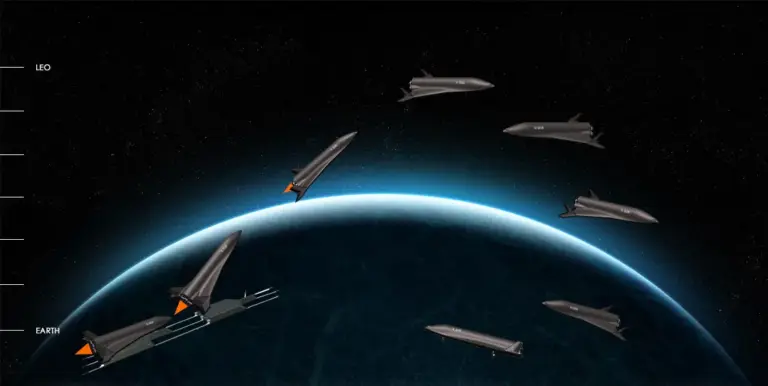
Radian One
Radian One is a planned single-stage-to-orbit, fully reusable spaceplane designed for rapid, on-demand access to Low Earth Orbit from compatible runways.
| Reusability | Fully reusable for up to 100 missions |
| On-demand capability | 90-minute |
| Turnaround between flights | 48-hour |
| Downmass capability | Industry-leading |
| Applications | Dual-use |
Reaction Dynamics
Canada · 2017 · 2 productsReaction Dynamics designs and manufactures hybrid rockets, including the RDX Aurora, for small satellite launch services, aiming for cost-effective and reliable access to Low Earth Orbit.
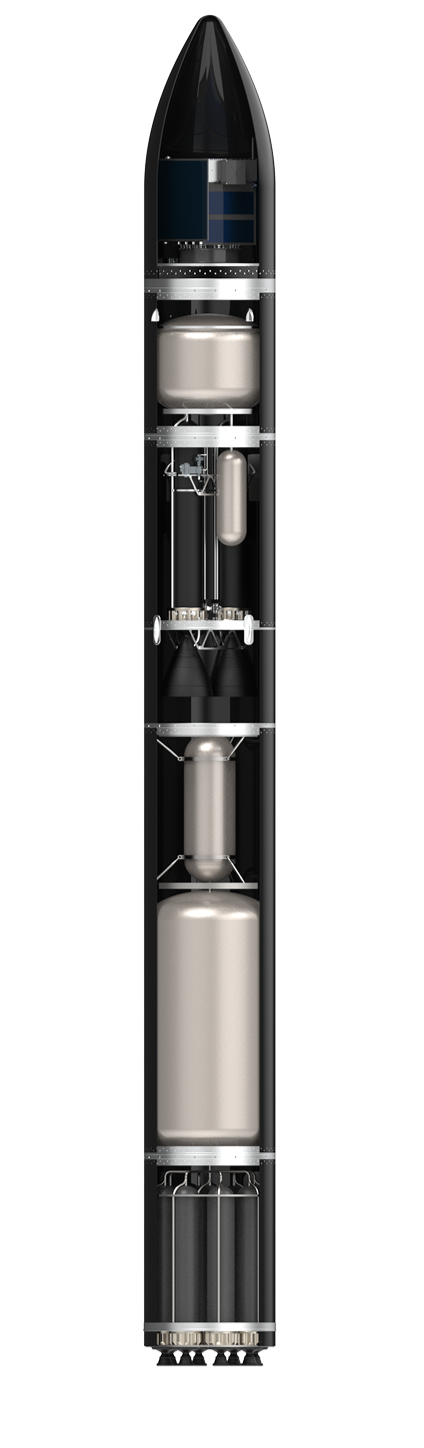
Aurora
Aurora is a two-stage hybrid rocket designed to provide responsive, on-demand, and affordable launch capabilities for small satellites, ensuring sovereign and ITAR-free space acces
| Powered by | RE-202C |
| Payload capacity | up to 200 kg |
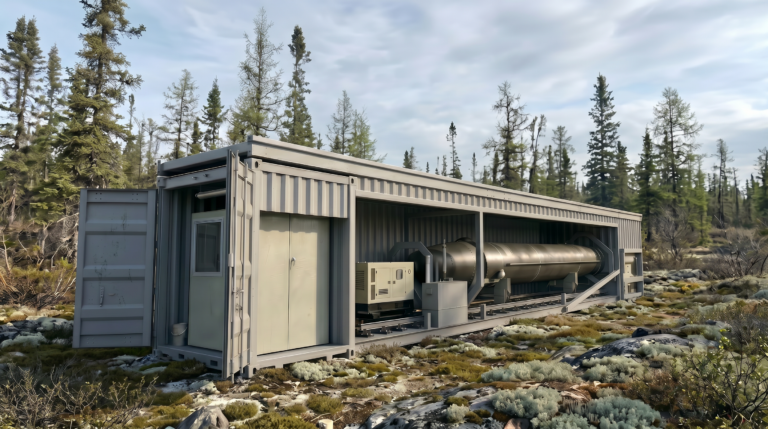
RDX Aurora
RDX Aurora is a two-stage rocket providing dedicated, small-satellite launch capability using hybrid rocket technology for reliable and cost-effective access to Low Earth Orbit.
| Payload to SSO | up to 250 kg |
Relativity Space
United States · 2016 · 2 productsRelativity Space builds reusable medium-to-heavy-lift rockets, such as the Terran R, to provide access to space for a range of customers including companies and government entities.
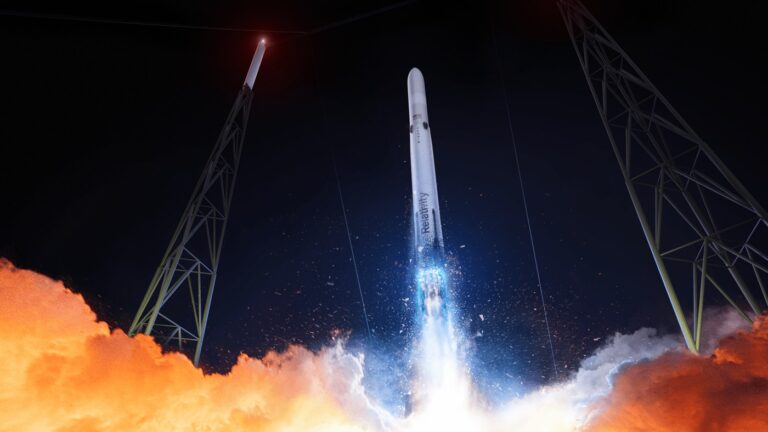
Terran 1
Relativity Space's debut orbital launch vehicle — the world's first 3D-printed rocket — retired after its inaugural flight attempt in March 2023.
| Height | 33.5 m |
| Propellants | LOX/Liquid Methane (LNG) |
| First stage engines | 9× Aeon 1 |
| Payload to LEO | 1,250 kg (designed) |
| Manufacturing | 85%+ mass 3D-printed (Stargate printers) |

Terran R
Relativity Space's two-stage reusable rocket — 23,500 kg to LEO with a downrange landing, 33,500 kg expendable, 5,500 kg to GTO.
| Stages | 2 (reusable rocket; downrange landing) |
| Propellants | LOX/Liquid Methane |
| Engines | 13 Aeon R engines |
| Payload to LEO | 23,500 kg (downrange landing) |
| Manufacturing | Cost-effective, high-strength aluminium alloys |
Rocket Factory Augsburg
Germany · 2018 · 1 productGerman launch company developing RFA ONE small satellite launch vehicle with staged-combustion Helix engines and Redshift OTV for last-mile delivery.
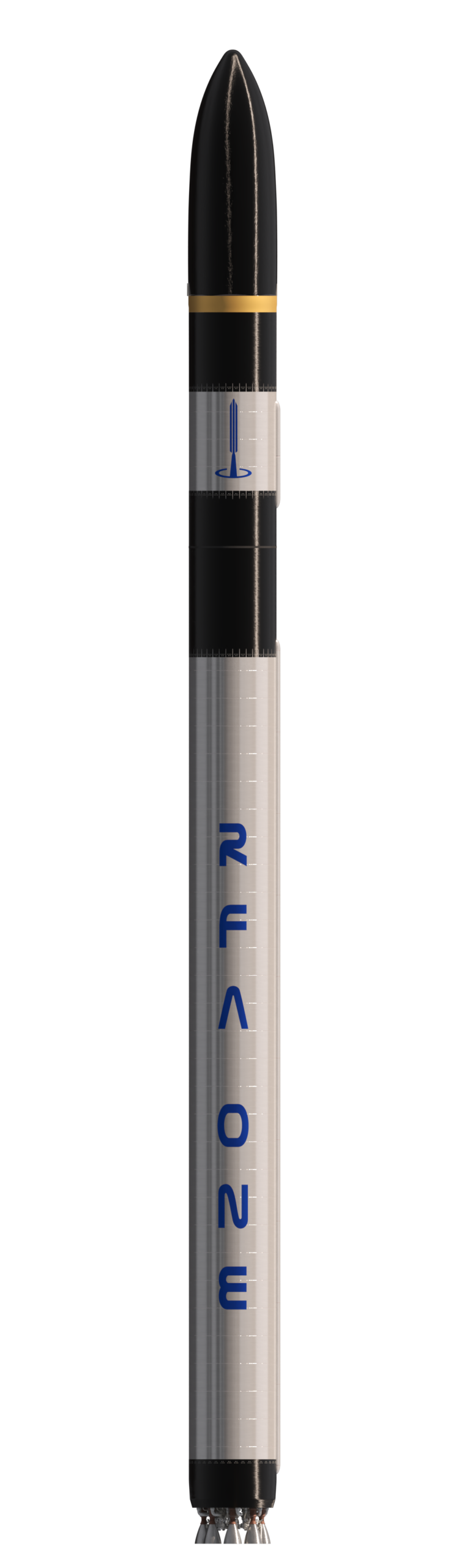
RFA ONE
RFA ONE is a German three-stage small-lift orbital launch vehicle developed by Rocket Factory Augsburg to deliver payloads of up to about 1,600 kg to LEO.
| Height | 30 m |
| Diameter | 2 m |
| Stages | 3 (first stage, second stage, Redshift orbital transfer third stage) |
| First stage engines | 9x Helix engines, ~900 kN total, RP-1/LOX, staged combustion |
| Second stage engine | 1x Helix Vac, RP-1/LOX, Isp ~350 s |
Rocket Lab
United States · 2006 · 2 productsDedicated small-satellite launches to LEO/SSO via Electron; Neutron medium-lift in development.

Electron
Electron is an expendable, two-stage orbital launch vehicle developed and operated by Rocket Lab, designed to deliver small satellites to LEO and SSO on dedicated, frequent, low-co
| Height | 18 m |
| Diameter | 1.2 m |
| Mass | 13.0 t |
| Stages | 2 (plus optional Curie kick stage) |
| First stage engines | 9x Rutherford (electric pump-fed, RP-1/LOX) |
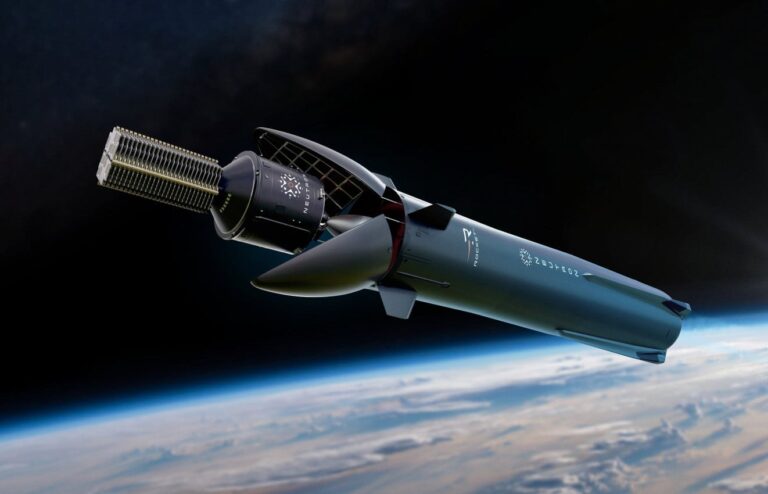
Neutron
Neutron is Rocket Lab’s medium-lift launch vehicle currently in development, targeting payloads up to 13,000 kg to low Earth orbit in reusable configuration (or up to 15,000
| Payload to LEO (reusable) | 13,000 kg |
| Payload to LEO (expendable) | 15,000 kg |
| Propellant | Liquid oxygen / liquid methane (methalox) |
| Engines | Archimedes (first stage: 7 engines; second stage: 1 engine) |
| Height | ~40 m |
Rocket Propulsion Systems (RPS)
United States · 2019 · 1 productDesigns, builds, and tests reusable LOX/methane rocket engines and orbital transfer vehicles
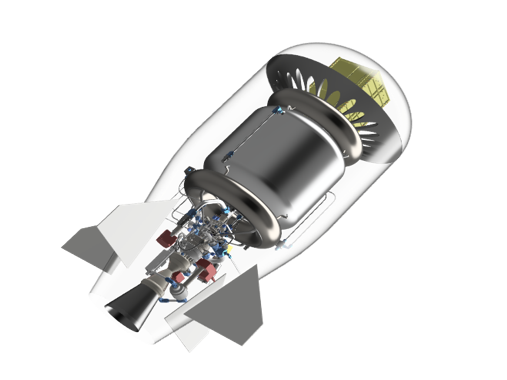
RPS Suborbital Launch Vehicle
The RPS Suborbital Launch Vehicle is a single-stage, reusable, liquid-fueled, vertical takeoff rocket designed for suborbital flights for commercial, government, and defense applic
| Stages | single-stage, VTVL |
| Target apogee | 50-100 km |
| Prototype testing | targeted 2026 |
Roketsan
Turkey · 1988 · 1 productTurkish defense company developing missiles, rockets, and space launch systems including sounding rockets and orbital launch vehicle development programs.
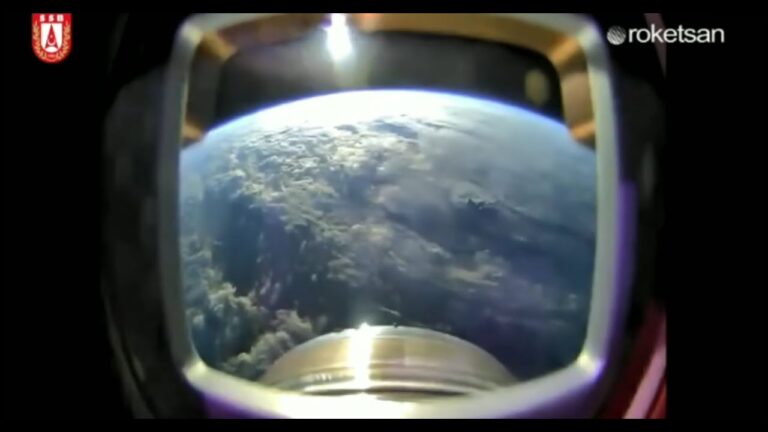
Sounding Rocket Systems
Turkish sounding rocket systems for atmospheric research and microgravity experiments — foundational technology for Turkey's planned indigenous orbital launch vehicle program.
| Vehicle type | Suborbital sounding rocket |
| Propulsion | Solid rocket motor |
| Applications | Atmospheric research, microgravity experiments, tech demonstration |
| Program context | Turkish National Space Program (2021) |
| Customer | Turkish Space Agency (TUA), research institutions |
SAST (Shanghai Academy of Spaceflight Technology)
China · 1961 · 2 productsThe Shanghai Academy of Spaceflight Technology (SAST) is a major Chinese aerospace research and manufacturing organization founded in 1961, responsible for developing Long March launch vehicles, Fengyun weather satellites, Tianzhou cargo sp
Long March 2D Launch Vehicle
Workhorse Chinese medium-lift launch vehicle with over 80 launches, placing satellites into LEO and SSO since 1992.
| Propellants | N2O4 / UDMH |
| Payload to SSO | 1,300 kg |
| Payload to LEO | 3,500 kg |
| First flight | 1992 |
| Stages | 2 |
Long March 6 Launch Vehicle
Chinese new-generation medium-lift launch vehicle using LOX/kerosene propellants, first flight 2015, capable of delivering approximately 1,000 kg to SSO.
| Propellants | LOX / RP-1 kerosene |
| Payload to SSO | ~1,000 kg |
| First flight | September 20, 2015 |
| Stages | 3 |
Shaanxi Zhongtian Rocket Technology Co., Ltd.
China · 2002 · 1 productChinese developer and manufacturer of small solid rockets, weather-modification rocket systems, sounding rockets, guided rockets, and advanced aerospace materials.

Small Solid Rocket Service
Shaanxi Zhongtian Rocket Technology Co., Ltd. offers comprehensive services for small solid rockets, including full process project tracking, international transport, and technical
Sirius Space Services
France · 2020 · 2 productsFrench startup developing a family of reusable small-satellite launch vehicles.
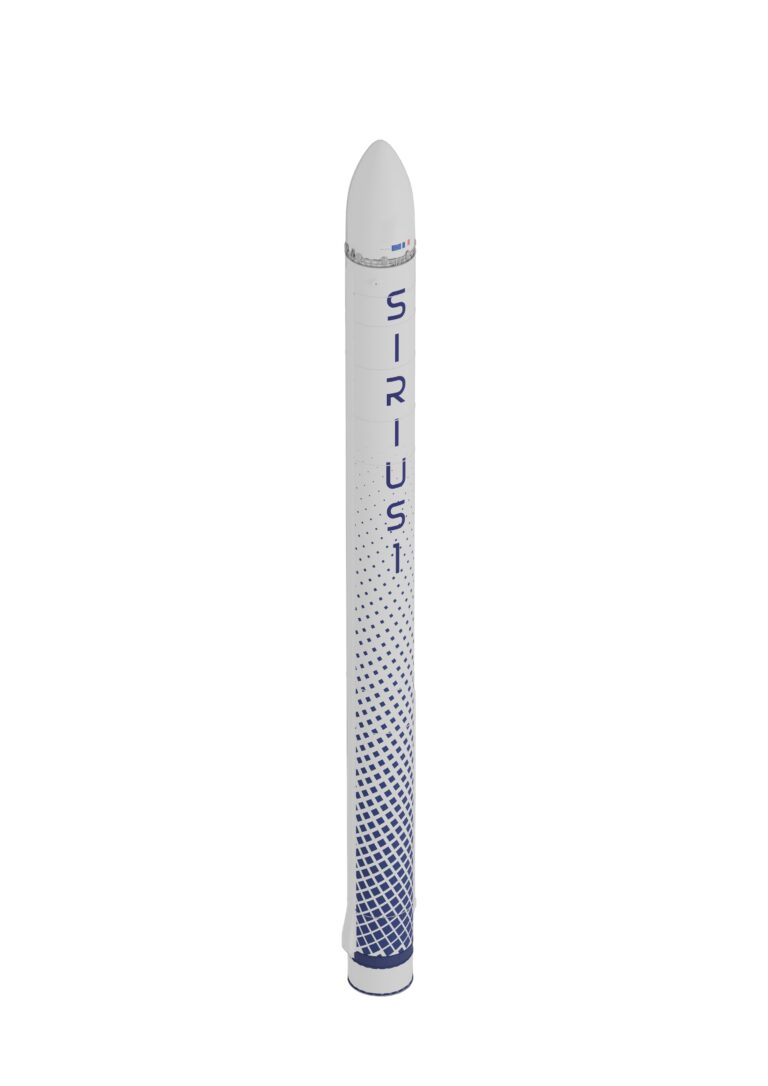
SIRIUS 1
SIRIUS 1 is Sirius Space Services' flagship dedicated small-satellite launch vehicle, a two-stage rocket powered by the company's in-house methalox STAR-1 engine, designed as the f
| Payload to SSO 500 km @ 50° | 300 kg |
| Height | 34.9 m |
| Stages | 2 |
| Liftoff mass | 180 tons |
| Engine | STAR-1 (methalox, 9 on stage 1, 1 on stage 2) |
SIRIUS Launch Vehicle Family
Family of reusable dedicated small-satellite launch vehicles from Sirius Space Services, scaling from 180 kg to 1100+ kg payloads.
| Configuration | SIRIUS 1: single central core, 2 stages |
| Sirius 1 payload to SSO 500 km | 180 kg |
| Sirius 1 payload at 50° inclination | 300 kg |
| Sirius 1 height | 26.6 m |
| Configuration (2) | SIRIUS 13: central core + 2 boosters, 2 stages |
Skyroot Aerospace
India · 2018 · 4 productsIndia's first private launch company; developing Vikram family of rockets (350–900 kg to LEO); India's first space-tech unicorn (May 2026).
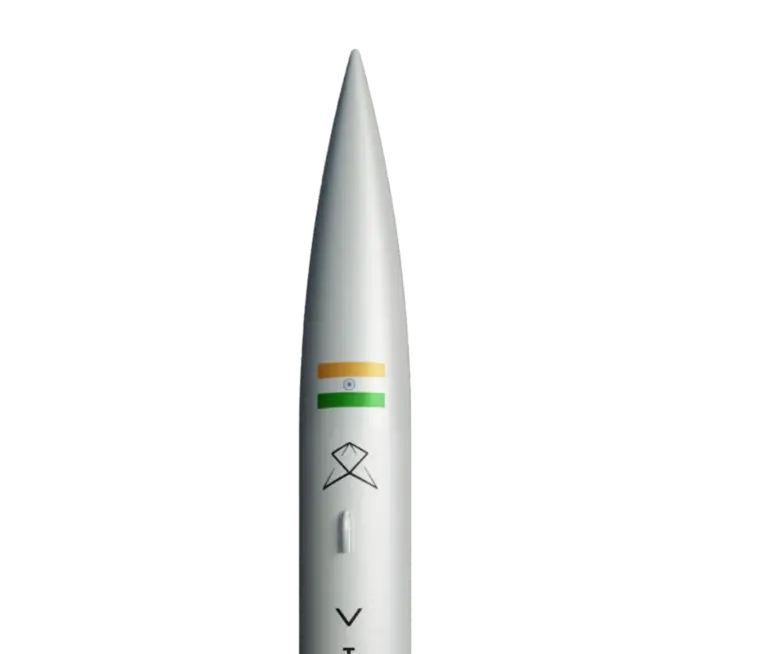
Mission Prarambh
Mission Prarambh marked India's first-ever private rocket launch, successfully deploying Vikram-S on its maiden suborbital test flight.
| Peak Altitude | 88.8 km |
| Range At Splashdown | 125 km |
| Peak Velocity | 5.07 Mach |
| Total Flight Duration | 301.4 Sec |
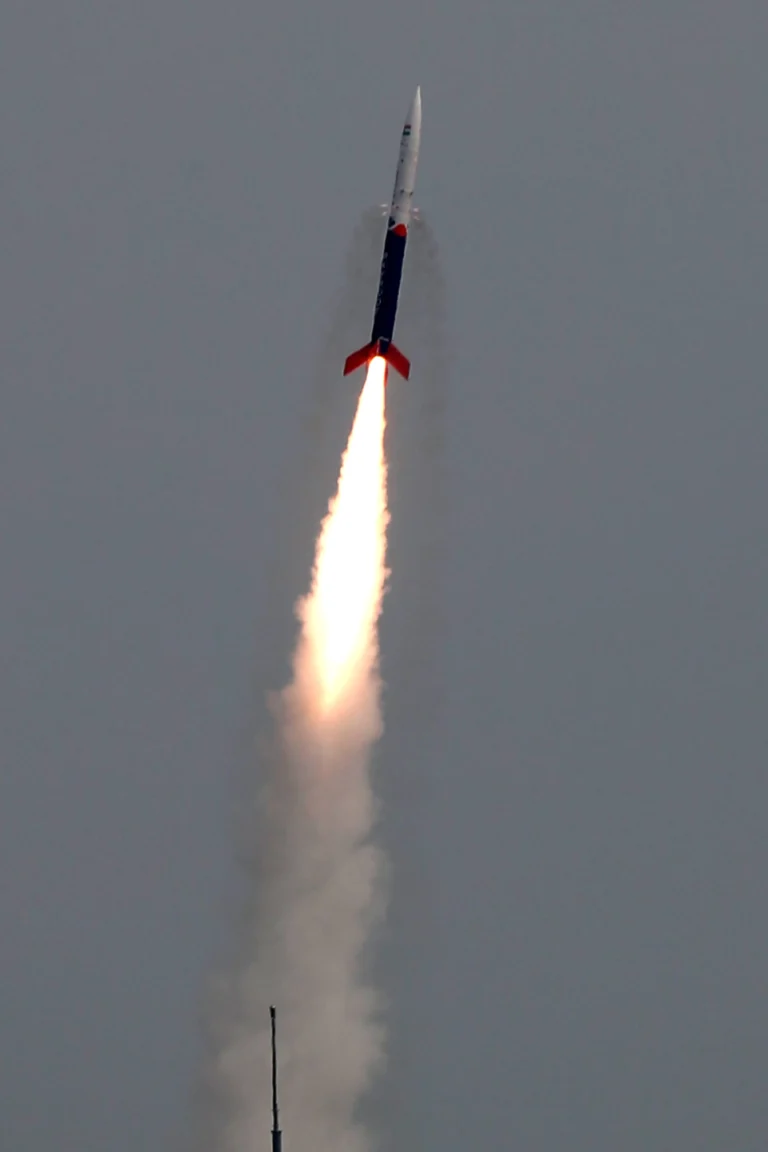
Vikram-1
Vikram-1 is Skyroot Aerospace's orbital small-satellite launch vehicle, a four-stage rocket designed to deliver small satellites to low Earth orbit affordably and on demand.
| Height | ~20 m |
| Stages | 4 (3 solid stages + 1 liquid propulsion upper stage) |
| Stage 1 | Kalam-1000, solid propellant, 1,000 kN thrust |
| Stage 2 | Kalam-250, solid propellant, 250 kN thrust |
| Stage 3 | Kalam-100, solid propellant, 100 kN thrust |
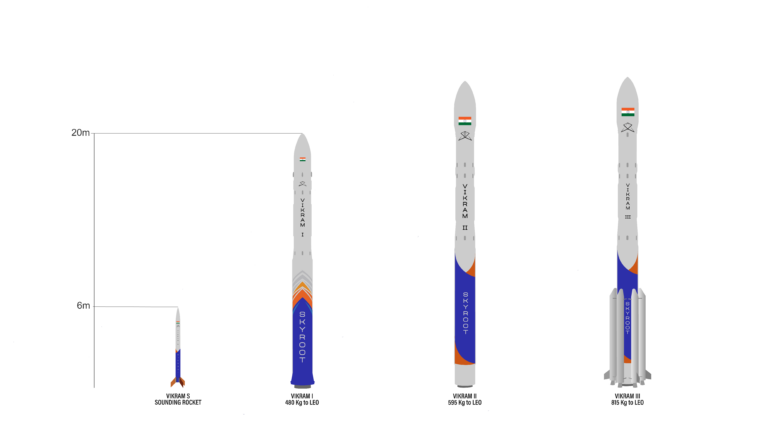
Vikram-I
Vikram-I is a small satellite launch vehicle optimal for small satellites and constellations, with a payload capacity of up to 400 kg.
| Payload capacity | Up to 400 kg |
| Optimal for | Small satellites and constellations |
| Launch window | Available from 2025 |
| Payload capacity (alternative) | Upto 500KG |
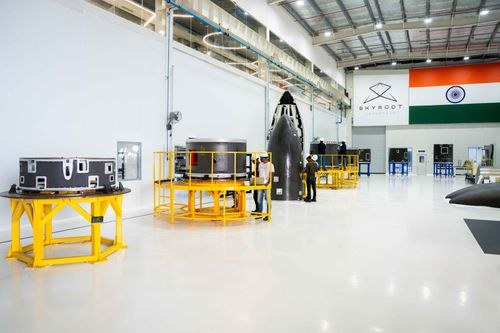
Vikram-II Launch Vehicle
India's next-generation small satellite launch vehicle with a cryogenic engine, targeting up to 900 kg to LEO and 600 kg to SSO, launching in 2027.
| Payload to LEO | Up to 900 kg |
| Payload to SSO | Up to 600 kg |
| Propulsion | Advanced cryogenic engine |
| Structure | Carbon composite |
| Launch modes | Dedicated and rideshare |
Skyrora
United Kingdom · 2017 · 5 productsSkyrora designs, manufactures, and deploys rockets and provides space services for small satellite manufacturers and orbital spacecrafts.
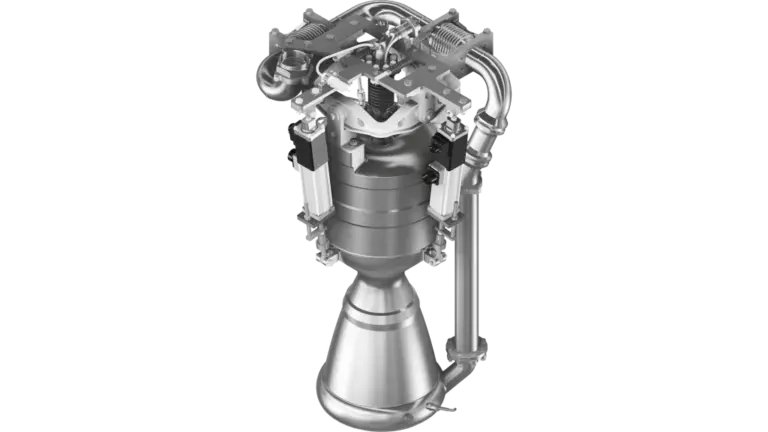
Skylark L
Skylark L is a guided suborbital launch vehicle designed to carry payloads to an apogee altitude of 102 km.
| Length | 11.65 m |
| Diameter | 0.7 m |
| Lift-off mass | 2,466 kg |
| Payload mass | 50 kg |
| Propellant | HTP / KEROSENE |
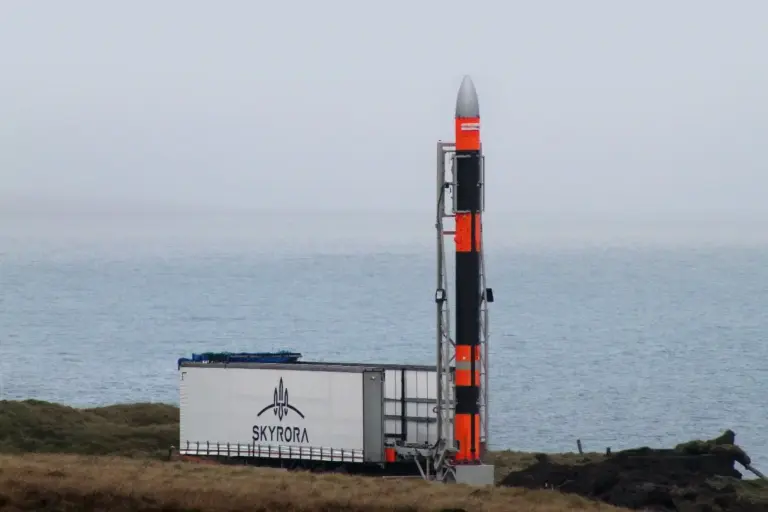
Skylark Micro
Skylark Micro is a suborbital launch vehicle designed for testing electrical systems under g-force, evaluating payload material construction and thermal coatings, and launching sma
| Length | 3.32 m |
| Propellant | HTPB |
| Airframe diameter of the first stage | 0.102 M |
| Thrust of the first stage | 1.56 kN |
| Airframe diameter of the second stage | 0.075 M |
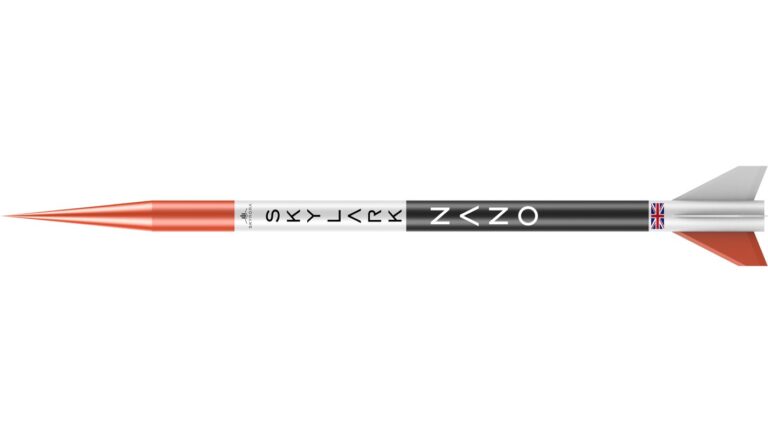
Skylark Nano
Skylark Nano is a suborbital launch vehicle designed for research and data collection, featuring simple pre-launch and launch operations.
| Diameter | 0.102 M |
| Propellant | HTPB |
| Lift-off mass | 13.325 KG |
| Payload mass | UP TO 1 KG |
| Maximum thrust | 1 825 N (182.5 KG) |
Skyrora XL
Skyrora XL is a three-stage orbital launch vehicle designed to deliver payloads of up to 315 kg to orbit.
| Length | 22.7 m |
| Diameter | 2.2 m |
| Lift-off mass | 55,838 kg |
| Payload mass | Up to 315 kg |
| Propellant | HTP / kerosene |
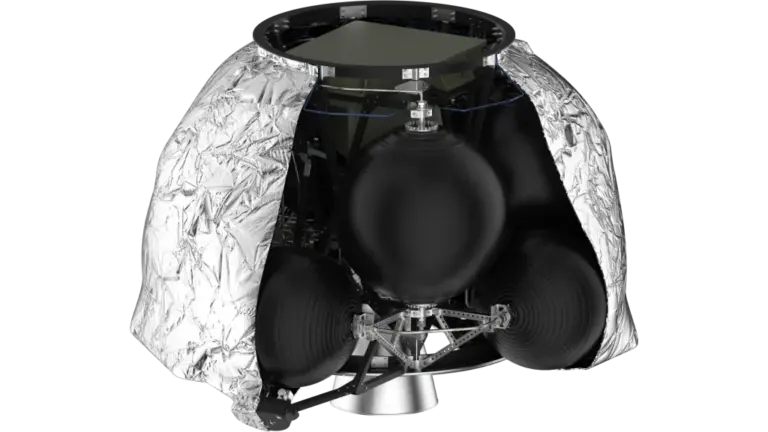
Third Stage
The third stage of the Skyrora XL launch vehicle is a versatile orbital installation vehicle designed to deliver payloads to their chosen orbital inclination.
| Length | 1.4 M |
| Diameter | 1.9 M |
| Dry mass | 314 KG |
| Loading mass | 590 KG |
| Propellant | HTP / KEROSENE |
Space One — KAIROS
Japan · 2018 · 1 productJapanese commercial launch company; KAIROS four-stage solid-propellant small launch vehicle; Kii Spaceport in Wakayama; Canon Electronics, IHI, and Shimizu backed.
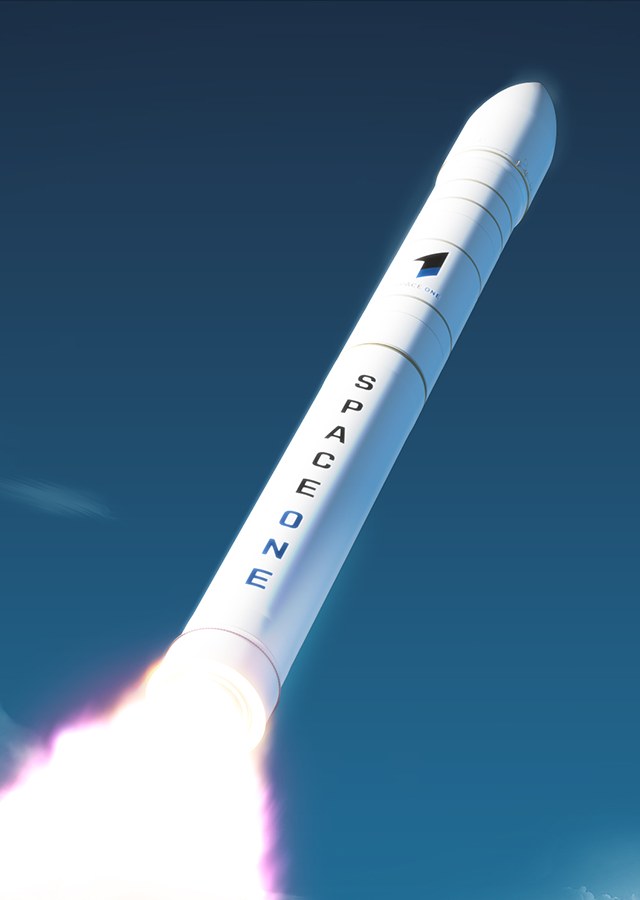
KAIROS
Space One's four-stage solid/liquid commercial small launch vehicle — Japan's first domestically developed private orbital rocket.
| Stages | 4 (3 solid + 1 liquid) |
| Payload to SSO | ~250 kg |
| Launch site | Kii Spaceport, Kushimoto, Wakayama, Japan (private) |
| First attempt | March 13, 2024 (anomaly at T+5s) |
| Operators | Space One Co., Ltd. (Canon Electronics, IHI Aerospace) |
Space Pioneer (Tianbing Technology)
China · 2019 · 4 productsChinese commercial launch company and developer of the Tianlong rocket family, the first Chinese private firm to reach orbit with a liquid-propellant rocket.
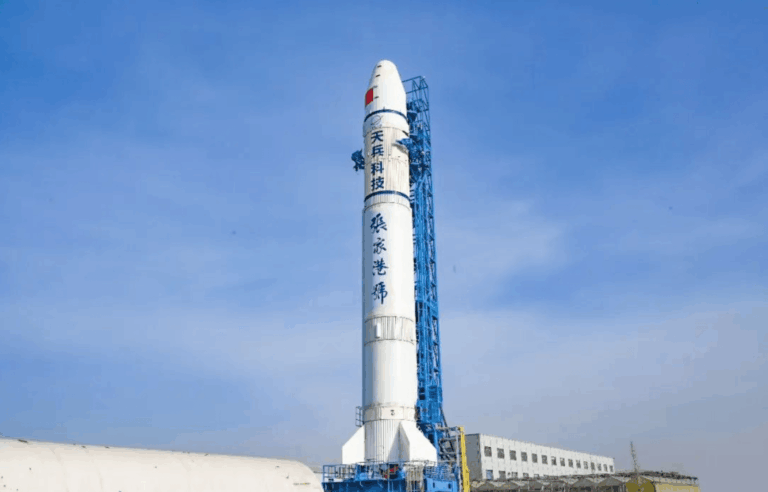
Tianlong-2
Kerosene-liquid oxygen orbital rocket; first Chinese private liquid-propellant vehicle to reach orbit (April 2023).
| Propellant | Kerosene / liquid oxygen (kerolox) |
| Height | 32.8 m |
| Payload to LEO | ~2,000 kg |
| Payload to 500 km SSO | ~1,500 kg |
| Maiden flight | April 2, 2023 (success) |
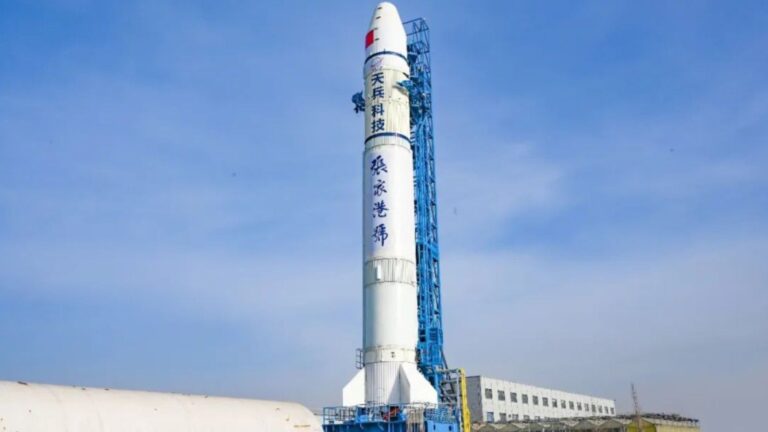
Tianlong-3
Larger, partially reusable Falcon 9-class rocket in development, targeting ~17,000 kg to LEO.
| Propellant | Kerosene / liquid oxygen (kerolox) |
| Configuration | Two-stage, reusable first stage |
| Payload to LEO | ~17,000 kg |
| Payload to 500 km SSO | ~14,000 kg |
| Class | Falcon 9-class |

TL-3H Carrier Rocket
The TL-3H is a liquid-propellant launch vehicle from Space Pioneer's Tianlong series, featuring a universal core stage parallel bundling scheme and reusability for its first stage
| Rocket diameter | 3.8 m |
| Rocket length | 85.2 m |
| Take-off mass | 1742 t |
| Take-off thrust | 2520 t |
| LEO payload capacity | 68 t |

TL-3M
The TL-3M is a liquid-fueled launch vehicle from Space Pioneer (Tianbing Technology), designed for crewed missions with a reusable first stage.
| Crew capsule diameter | 3.8 m |
| Crew capsule length | 11 m |
| Body diameter | 3.8 m |
| Total length | 67 m |
| Crew capacity (LEO) | 60 people (as stated by Space Pioneer) |
SpaceForest
Poland · 2004 · 1 productSpaceForest designs and manufactures synthetic aperture radars, advanced electronics, microwave filters, and suborbital and supersonic rockets, offering flight services and technology testing for vari
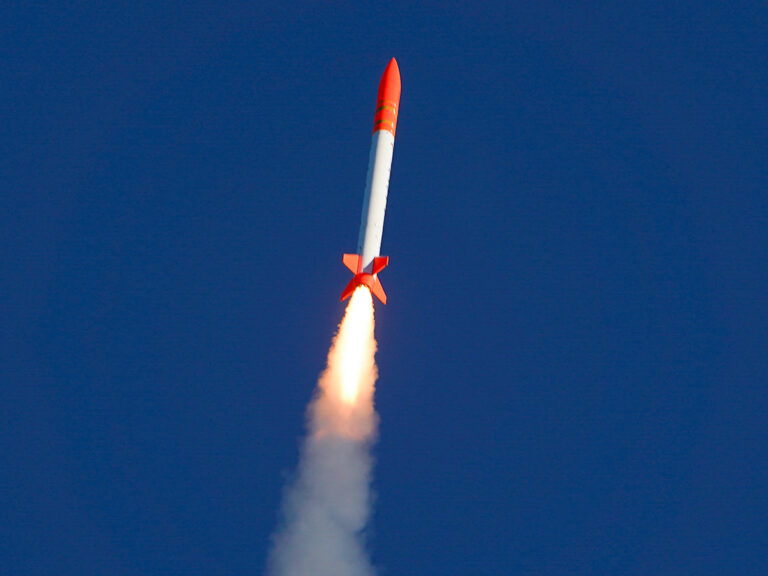
Perun Small Orbital Launch Vehicle
SpaceForest's Perun — Poland's planned first orbital launch vehicle, using hybrid propulsion to target 50–100 kg to LEO from European spaceports.
| Vehicle type | Small orbital launch vehicle (hybrid propulsion) |
| Payload to LEO | 50–100 kg (target) |
| Flight heritage | SRT-2 sounding rocket + Bursztyn hybrid engine (>100 km achieved) |
| Propulsion | Hybrid (liquid oxidizer / solid fuel grain) |
| Launch site | European spaceport (SaxaVord, Andøya candidates) |
SpaceX
United States · 2002 · 3 productsFully-reusable launch services to LEO, GTO, GEO, TLI and beyond — Falcon 9, Falcon Heavy, Starship.
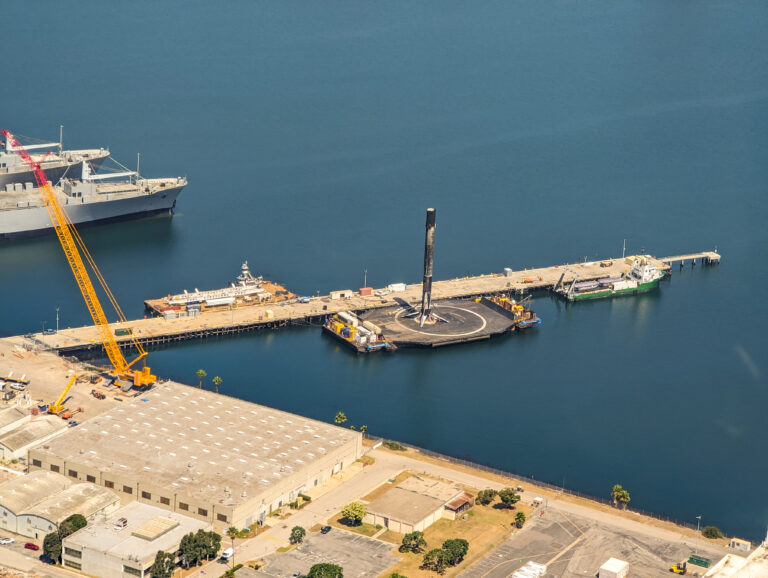
Falcon 9
Partially reusable two-stage orbital rocket and the world's first commercially successful reusable orbital launch vehicle.
| Payload to LEO | 22,800 kg |
| Payload to GTO | 8,300 kg |
| Payload to GEO (direct) | 3,500 kg |
| First stage engines | 9× Merlin 1D (sea-level) |
| Second stage engine | 1× Merlin 1D Vacuum |
Falcon Heavy
SpaceX's heavy-lift partially reusable launch vehicle combining three Falcon 9 first-stage cores.
| Payload to LEO | 63,800 kg (expended) |
| Payload to GTO | 26,700 kg (expended) / 16,800 kg (reusable) |
| Total first-stage engines | 27× Merlin 1D |
| Height | 70 m |
| Liftoff thrust | 22,819 kN |
Starship
SpaceX's fully reusable super-heavy-lift launch system designed to carry humans and cargo to the Moon, Mars, and beyond.
| Payload to LEO (reusable) | >100,000 kg |
| Payload to LEO (expendable) | ~150,000 kg |
| Super heavy engines | 33× Raptor 2 (methane/LOX) |
| Starship engines | 6× Raptor (3 sea-level + 3 vacuum) |
| Total liftoff thrust | >74,000 kN |
SpinLaunch
United States · 2014 · 1 productSpinLaunch develops a kinetic (non-combustion) launch system that uses a rotating vacuum-sealed accelerator to hurl launch vehicles toward space, and operates Meridian Space, a low-cost LEO satellite communications constellation business.
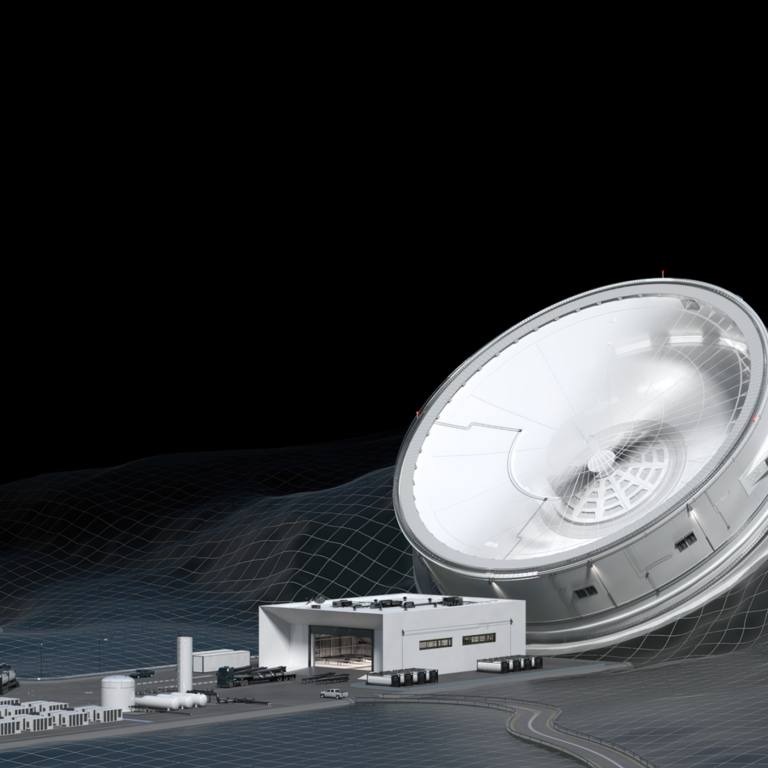
SpinLaunch Orbital Launch System
A kinetic (non-combustion) orbital launch system that uses a rotating carbon-fiber arm inside a 100-meter vacuum chamber to accelerate a launch vehicle to 8,000 kph before a small
| Launch method | Kinetic (rotating carbon-fiber arm in vacuum chamber) |
| Vacuum chamber diameter | 100 meters |
| Release velocity | Up to 8,000 kph |
| Fuel/structure reduction vs. typical rocket | Up to 70% |
| Orbital insertion | Small propulsive upper stage completes ascent to orbit |
Stoke Space
United States · 2019 · 1 productStoke Space designs and manufactures 100% reusable Nova rockets and their components for affordable access to and from orbit.
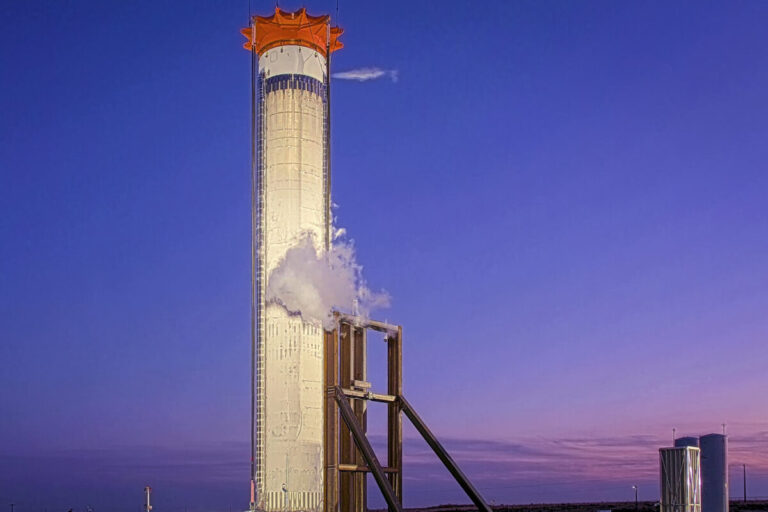
Nova
Stoke Space's medium-lift launch vehicle built for full reuse: 2,500 kg to LEO on Nova Pathfinder, 15,000 kg fully reusable on Nova Block 2.
| Payload to LEO | 2,500 kg (Nova Pathfinder, first flight configuration) |
| Propellants | Stage 1: LNG/LOX (7× Zenith, full-flow staged combustion); stage 2: LH2/LOX (Andromeda, ex |
| Upper stage | Andromeda engine with an actively cooled metallic heat shield; full reuse with Nova Block |
| Test site | Moses Lake, Washington |
| Status | Nova Pathfinder — technology demonstrator and first flight configuration; Nova Block 2 to |
T-Minus Engineering
Netherlands · 2011 · 1 productDutch manufacturer of solid-propellant suborbital sounding rockets and hypersonic test vehicles
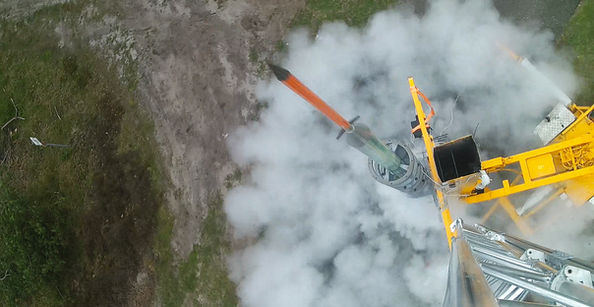
T-Minus DART
The T-Minus DART is a low-cost, rapidly deployable sounding rocket system designed for probing the upper atmosphere (50-120 km altitude) and launching small scientific payloads abo
| Booster motor diameter | 0.118 [m] (Viper IIA compatible) |
| Booster motor length | 2.3 [m] |
| Booster motor burn time | 5 [s] |
| Booster motor average thrust | 8 [kN] |
| Booster motor propellant mass | 22 [kg] |
TiSPACE (Taiwan Innovative Space)
Taiwan · 2016 · 2 productsTiSPACE (Taiwan Innovative Space) is a private Taiwanese company specializing in hybrid-propulsion space launch vehicles and dedicated small-satellite launch services.
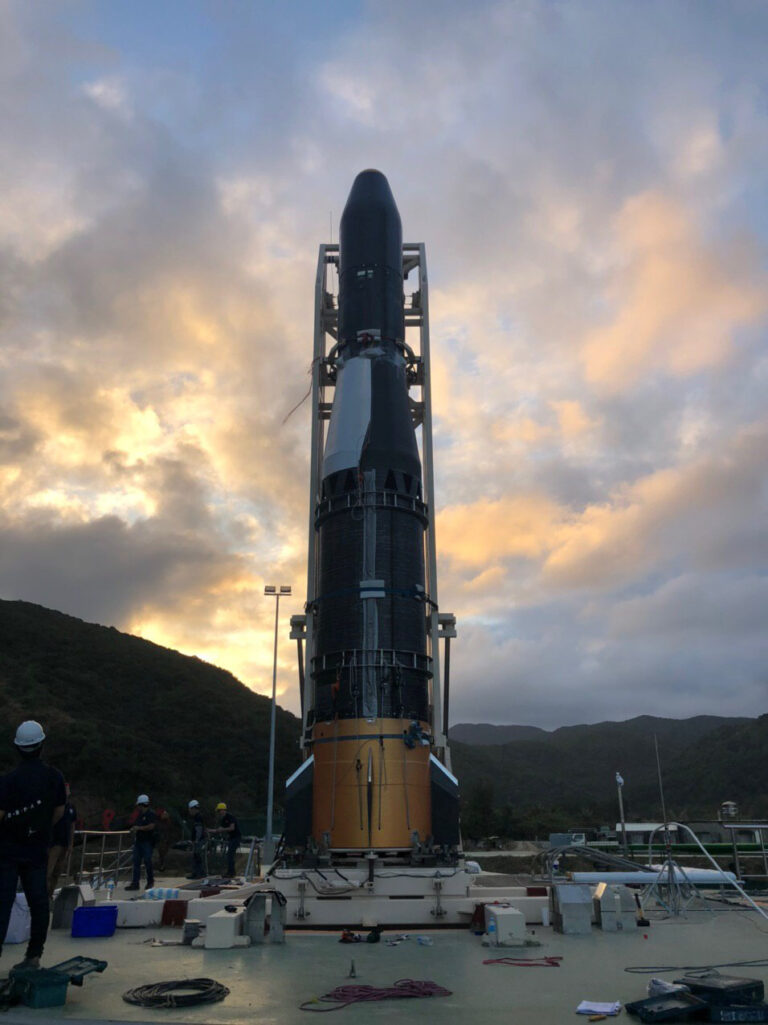
Hapith I
TiSPACE's first-generation hybrid-propulsion launch vehicle, flight-tested from Australia under the company's first international launch permit.
| Propulsion type | Non-explosive hybrid rocket propulsion |
| First launch permit | Granted by the Australian Government, 9 August 2021 |

Hapith V
Three-stage orbital launch vehicle using TiSPACE's non-explosive hybrid rocket propulsion technology, designed for dedicated launch of micro and small satellites to LEO and SSO.
| Max. LEO payload mass | 390 kg |
| Max. SSO payload mass | 350 kg |
| Target altitude | 600-700 km |
| Height | 20 m |
| Diameter | 2.2 m |
United Launch Alliance (ULA)
United States · 2006 · 2 productsHeavy-lift national-security launch services — Vulcan Centaur, Atlas V.
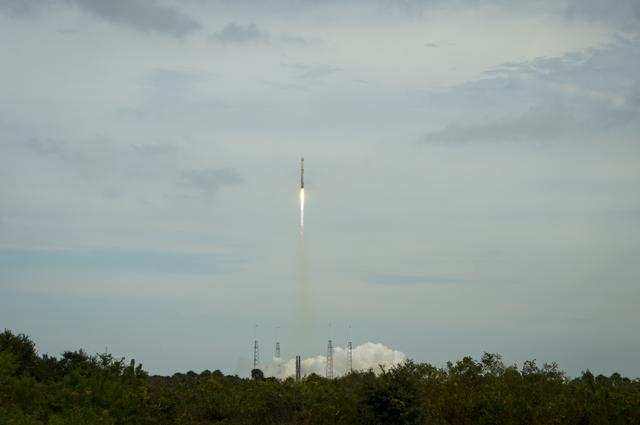
Atlas V
Atlas V is United Launch Alliance’s proven medium-to-heavy launch vehicle with a 100% mission success record across over 100 flights. Powered by a single RD-180 engine on its
| First stage engine | 1× RD-180 (LOX/RP-1) |
| Upper stage | Centaur, 1 or 2× RL-10 |
| Payload to LEO | up to 18,850 kg (HLV config) |
| Payload to GTO | up to 8,900 kg |
| Mission success rate | 100% (100+ flights) |
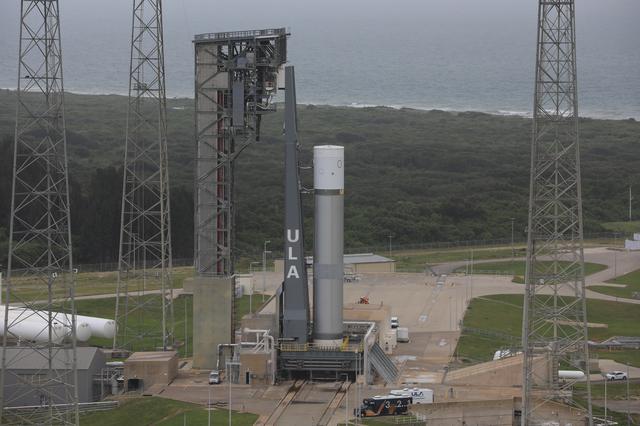
Vulcan Centaur
Vulcan Centaur is United Launch Alliance’s (ULA) next-generation rocket designed to replace both the Atlas V and Delta IV Heavy launch vehicles. The two-stage rocket uses two
| First stage engines | 2× Blue Origin BE-4 (LOX/LNG) |
| Upper stage | Centaur V, 2× RL-10 |
| Payload to LEO | up to 27,200 kg (VC6 config) |
| Payload to GTO | up to 13,080 kg (VC6 config) |
| Fairing diameter | 5.4 m |
UP Aerospace
United States · 1998 · 3 productsUS suborbital launch provider operating the SpaceLoft XL sounding rocket from Spaceport America in New Mexico for microgravity research and technology demonstration.
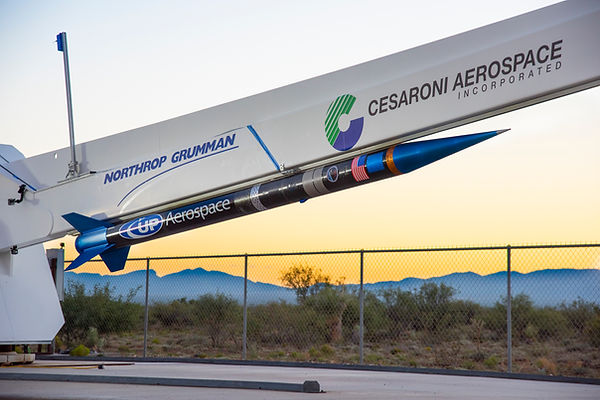
SpaceLoft
The SpaceLoft is an in-house developed and proven launch platform providing access to the space environment with demonstrated micro-gravity times in excess of 3 minutes.
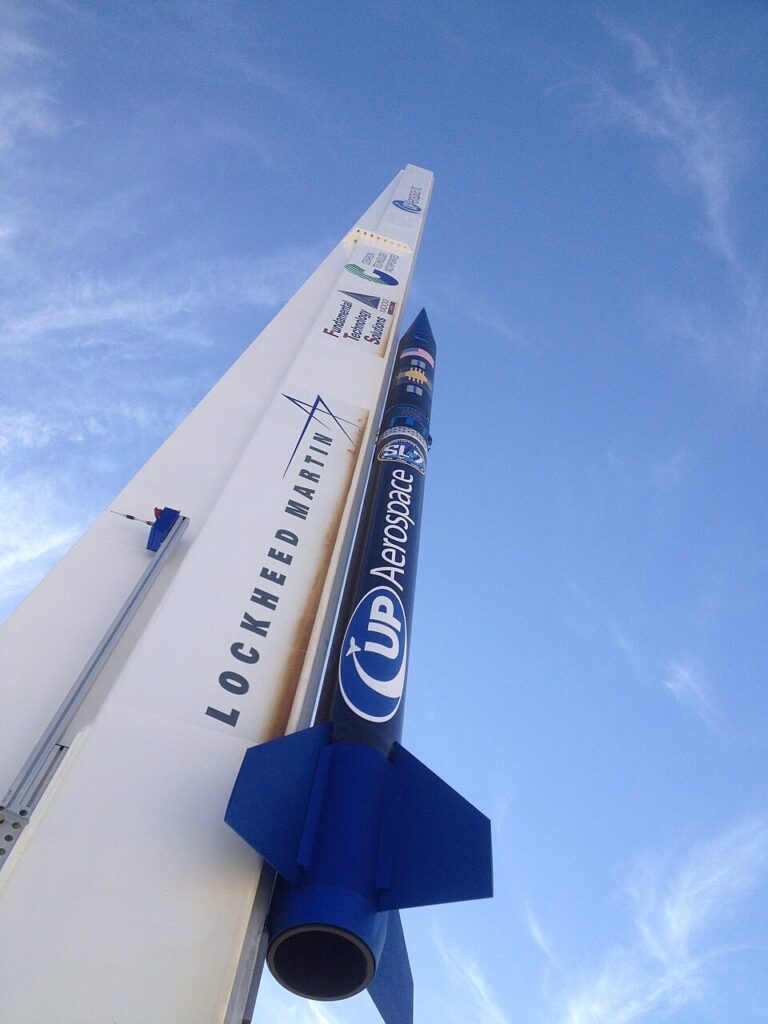
SpaceLoft XL
Flight-proven solid-fuel suborbital sounding rocket providing low-cost microgravity and hypersonic test flights from Spaceport America.
| Payload capacity | 36 kg (79 lb) |
| Altitude | 120–225 km |
| Stages | 1 (solid-fuel) |
| Microgravity duration | Up to 5 minutes |
| First flight | 25 September 2006 |
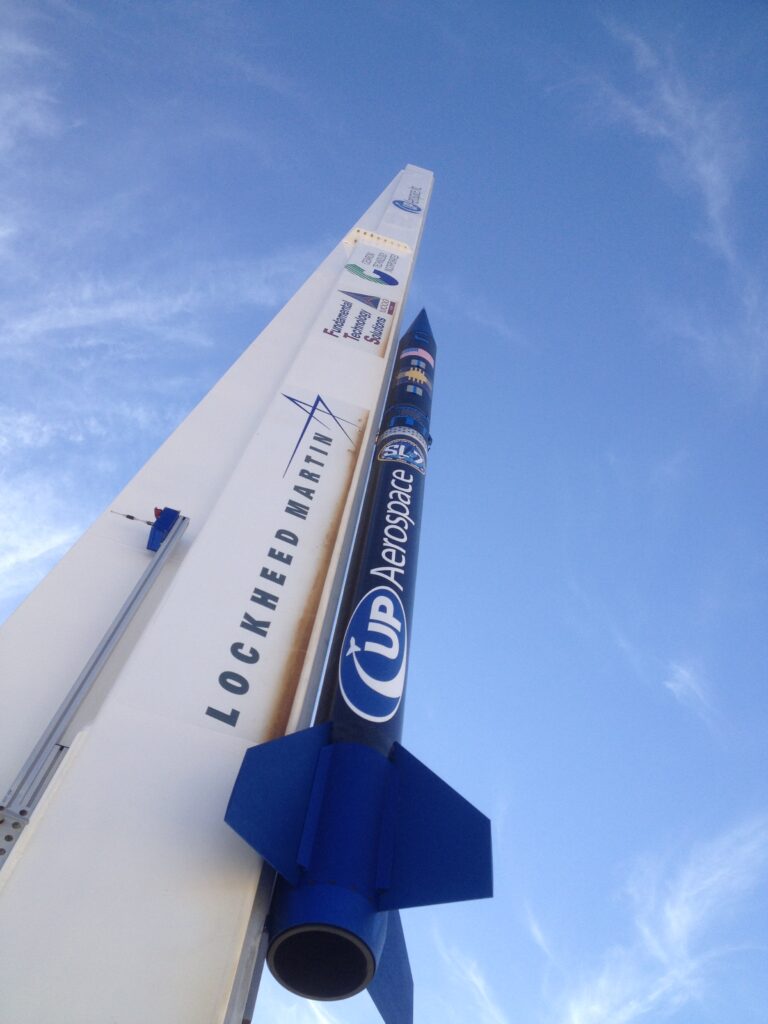
Spyder Sub-Orbital Vehicle
High-performance single-stage suborbital rocket capable of Mach 10+ speeds and 400 km altitude, developed with NASA support.
| Diameter | 17.25 in |
| Max speed | Mach 10+ |
| Max altitude | 400 km |
| Stages | 1 |
| First flight | June 2025 |
Vaya Space
United States · 2017 · 1 productVaya Space develops and manufactures advanced hybrid propulsion systems for defense and space applications, utilizing its patented Vortex-Hybrid engine.
Dauntless
Two-stage small-satellite launch vehicle powered by Vaya Space's vortex-hybrid STAR-3D engines.
| Height | 35 m (~115 ft) |
| Stage 1 diameter | 2.5 m (~8 ft) |
| Stage 2 diameter | 2.15 m (~7 ft) |
| Fairing diameter | 2.15 m (~7 ft) |
| Stages | 2 |
Yuzhnoye Design Bureau
Ukraine · 1954 · 10 productsYuzhnoye State Design Office (KB Pivdenne) is Ukraine's premier rocket and space engineering organization, providing full-cycle development of launch vehicles, spacecraft, and propulsion systems. Founded in 1954 and headquartered in Dnipro,
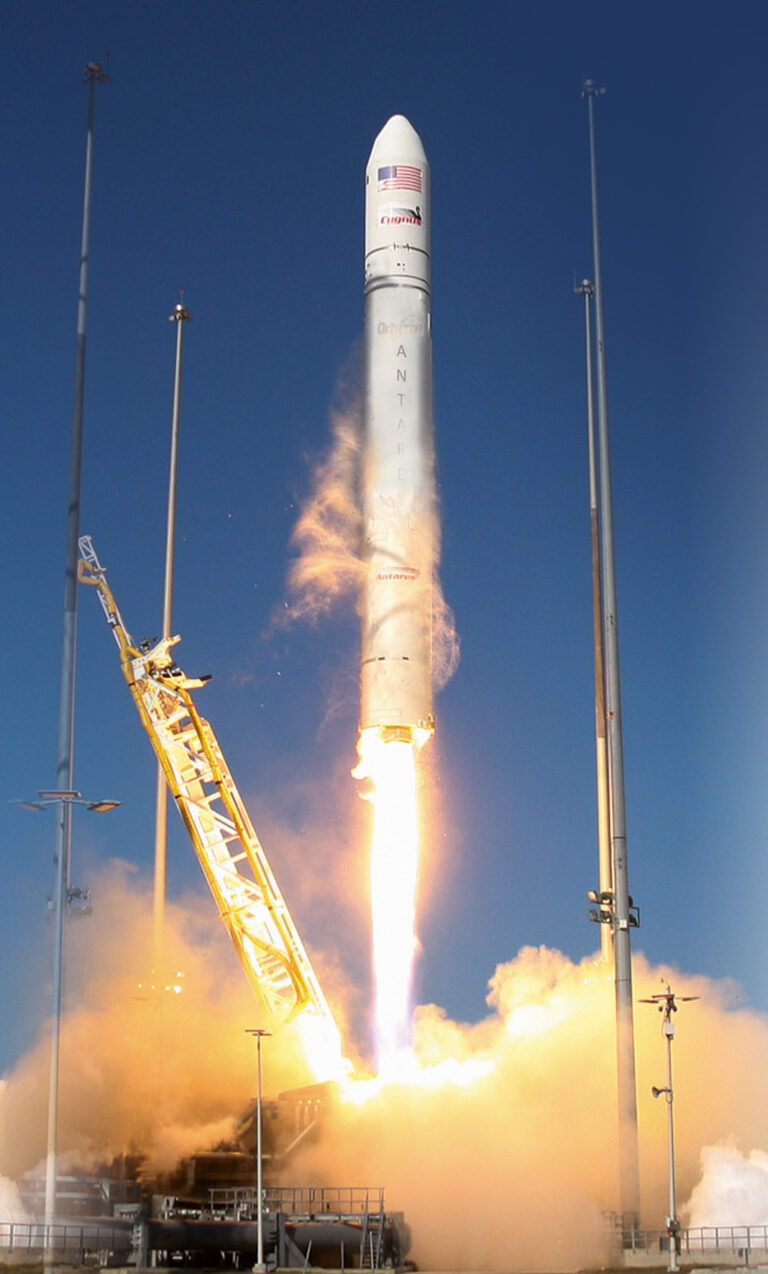
Antares
The Antares is a medium-lift class two-stage launch vehicle developed through collaboration between Orbital Sciences Corporation (now Northrop Grumman) and Ukraine’s Yuzhnoye
| Vehicle class | Medium-lift |
| Number of stages | 2 |
| Height | 42,500 mm |
| Body diameter | 3,900 mm |
| Gross mass (without payload) | 330 t |
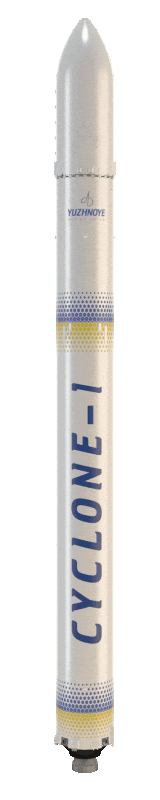
Cyclone-1
The Cyclone-1 is a lightweight three-stage liquid-propellant launch vehicle developed by Yuzhnoye SDO for deploying payloads into low Earth orbits, including sun-synchronous orbits
| Vehicle class | Lightweight |
| Number of stages | 3 |
| Height | 30,000 mm |
| Body diameter | 2,250 mm |
| Fairing diameter | 2,250 mm |
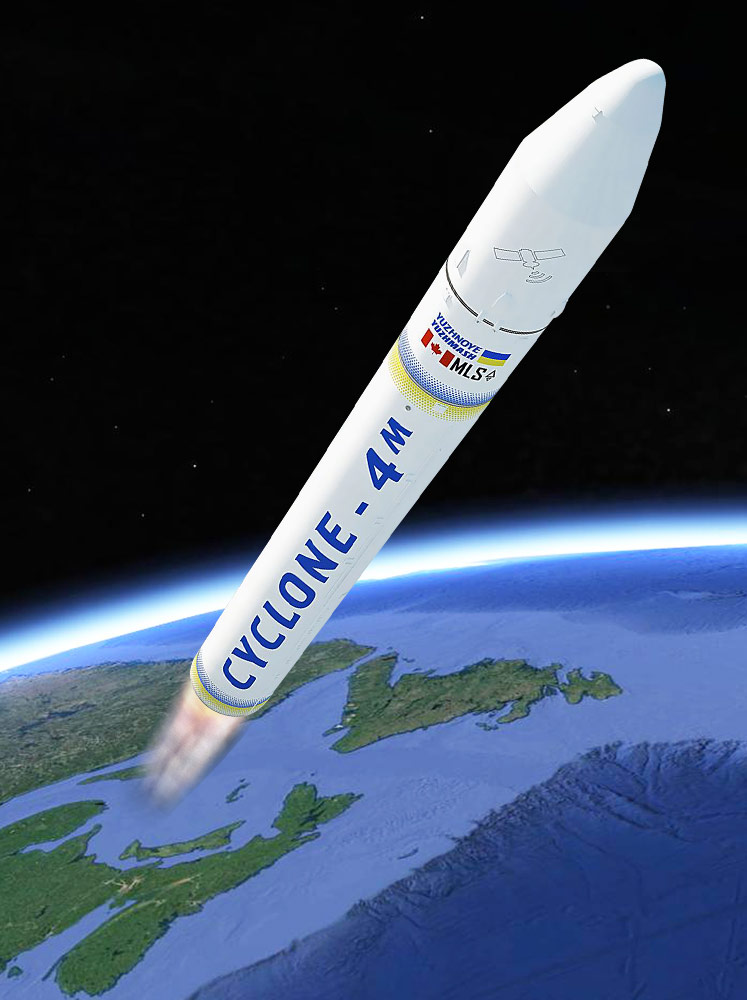
Cyclone-4M
The Cyclone-4M is a two-stage medium-lift class launch vehicle developed by Yuzhnoye SDO for deploying spacecraft into low, medium, and high near-Earth orbits, including sun-synchr
| Vehicle class | Medium-lift |
| Number of stages | 2 |
| Height | 39,000 mm |
| Body diameter | 3,900 mm |
| Fairing diameter | 4,000 mm |

Cyclone-5
The Cyclone-5 is a three-stage medium-lift class monoblock launch vehicle developed by Yuzhnoye SDO for placing spacecraft into low, medium, and high Earth orbits including geostat
| Vehicle class | Medium-lift |
| Number of stages | 3 |
| Height | 51,000 mm |
| Body diameter | 3,900 mm |
| Fairing diameter | 4,000 mm |
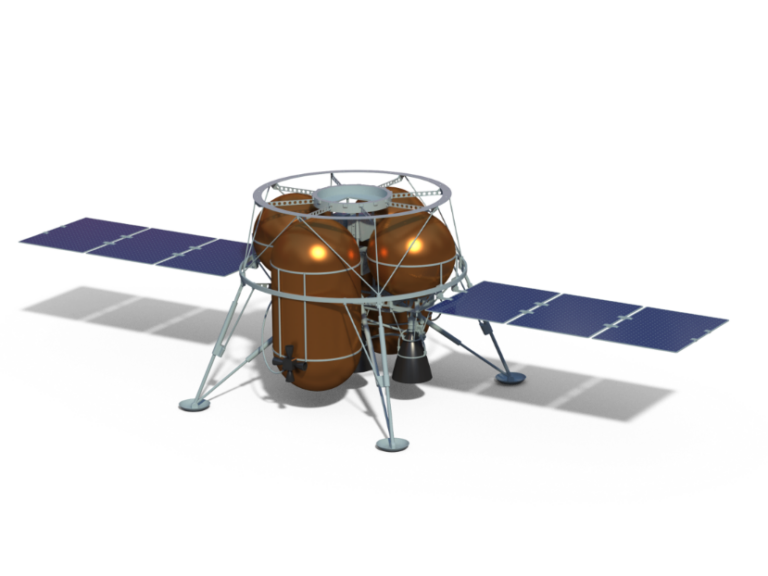
Heavy Lunar Lander
The Heavy Lunar Lander is a large-payload lunar surface delivery vehicle developed by Yuzhnoye SDO, designed to deliver up to 10 tonnes of useful payload to the lunar surface. This
| Payload capacity to lunar surface | Up to 10 tonnes |
| Primary applications | Lunar base modules, manned vehicles |
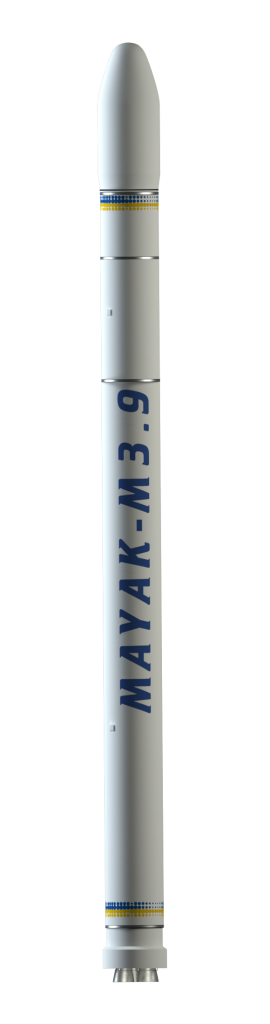
Mayak-M-3.9
The Mayak-M-3.9 is a two-stage heavy-lift class launch vehicle developed by Yuzhnoye SDO, utilizing RD815 engines on the first stage and technologies derived from the proven Zenit,
| Vehicle class | Heavy-lift |
| Number of stages | 2 |
| Height | 65,000 mm |
| Body diameter | 3,900 mm |
| Fairing diameter | 4,200 mm |
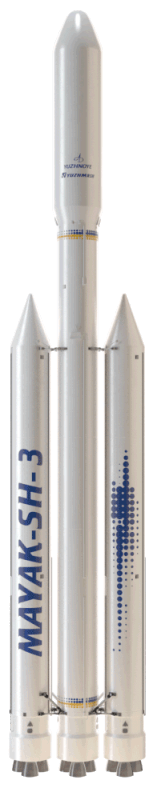
Mayak-SH-3
The Mayak-SH-3 is a super heavy-lift class two-stage launch vehicle developed by Yuzhnoye SDO, capable of placing 59.3 tonnes into low Earth orbit and 18.7 tonnes on a lunar trajec
| Vehicle class | Super heavy-lift |
| Number of stages | 2 |
| Height | 75,000 mm |
| Body diameter | 3,900 mm |
| Fairing diameter | 5,100 mm |
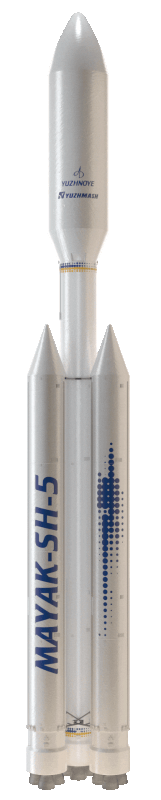
Mayak-SH-5
The Mayak-SH-5 is a super heavy-lift class two-stage launch vehicle developed by Yuzhnoye SDO, capable of placing 93.2 tonnes into low Earth orbit and 30.5 tonnes on a lunar trajec
| Vehicle class | Super heavy-lift |
| Number of stages | 2 |
| Height | 80,000 mm |
| Body diameter | 3,900 mm |
| Fairing diameter | 6,200 mm |
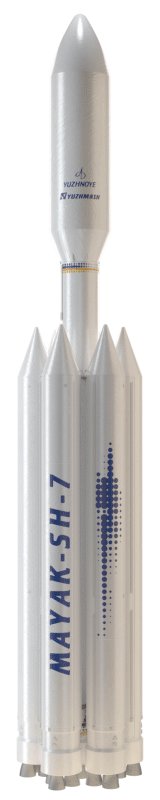
Mayak-SH-7
The Mayak-SH-7 is the largest variant in Yuzhnoye SDO’s Mayak super heavy-lift launch vehicle family, capable of delivering 133 tonnes to low Earth orbit and 40 tonnes on a l
| Vehicle class | Super heavy-lift |
| Number of stages | 2 |
| Height | 79,900 mm |
| Body diameter | 3,900 mm |
| Fairing diameter | 6,200 mm |
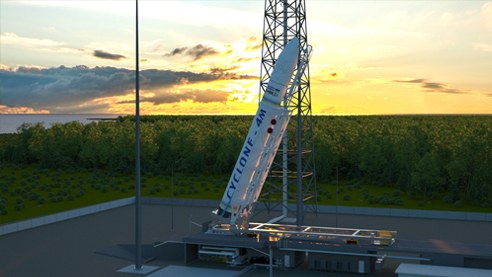
SLS Mobile Basing
The Space Launch System (SLS) Mobile Basing is a road-mobile launch solution developed by Yuzhnoye SDO for launching meteorological rockets to altitudes up to 100 km. The mobile la
| Application | Meteorological rockets to 100 km altitude |
| Vehicle configuration | 6x2 or 6x4 wheeled |
| Diesel engine power | 250 to 400 kW |
| Emission standard | Euro 5 |
| Cruising range | 900 km |
Directory
Manufacturers in this sector
Abyom Spacetech
Abyom-Spacetech enables frequent, low-cost deployment of satellites and orbital assets, supports defense and meteorological missions, facilitates microgravity experiments, and provides rocke
Aevum
US autonomous launch company developing Ravn X, an unmanned, runway-launched, reusable autonomous launch vehicle (AuLV) for rapid small-satellite deployment to low Earth orbit.
Agnikul Cosmos
Agnikul Cosmos designs, manufactures, and launches orbital-class vehicles using 3D-printed engines and a mobile launchpad, providing dedicated and flexible access to space.
Aphelion Orbitals
Aphelion Orbitals is a New Jersey-based launch vehicle company developing the Helios nanosatellite launch system for regular, scheduled orbital access at low cost.
arianegroup
ArianeGroup designs and manufactures space transport systems, including launchers and related technologies, for institutional, commercial, and industrial customers in civil and military sect
Astra Space
Astra Space designs and manufactures responsive mobile launch systems (Rocket 4.0) and flight-proven electric propulsion systems for satellites, headquartered in Alameda, California.
AVIC (Aviation Industry Corp of China) Space Division
Chinese state-owned aviation and defense conglomerate with an emerging, narrow space-systems foray via its Chengdu subsidiary's reusable cargo spaceplane program.
Avio S.p.A.
Avio S.p.A. designs, manufactures, and integrates space launchers and tactical missiles, providing space propulsion solutions and the Vega rocket family for institutional, governmental, and
b2space
B2Space develops high-altitude balloon launch systems for deploying small satellites to near-space and low Earth orbit. The Spanish company's Nearspace Launcher platform uses stratospheric b
Beyond Gravity (ex-RUAG Space)
Swiss-Swedish space components manufacturer providing satellite structures, thermal control products, payload electronics, and antennas for commercial and institutional programs.
Blue Origin
Heavy-lift reusable launch — New Glenn; suborbital tourism & research — New Shepard.
C6 Launch Systems Inc.
C6 Launch Systems provides launch services and manufactures a dedicated smallsat launch vehicle for payloads up to 100 kg, offering access to all orbits.
CALT (China Academy of Launch Vehicle Technology)
Chinese state launch vehicle design organisation in Beijing (CASC subsidiary); Long March 2F (crewed), LM-3B/C, LM-5/5B, LM-7, LM-8 rockets; 130+ launches from 1970; backbone of China's crew
CAS Space
Chinese commercial launch company backed by CAS, developing the Kinetica rocket family for rideshare and dedicated missions, headquartered in Guangzhou.
CASIC ExPace — Kuaizhou
CASIC commercial launch subsidiary; Kuaizhou-1A solid quick-reaction LV (400 kg SSO) and Kuaizhou-11 (1,500 kg SSO); rapid-response launches from Jiuquan and Taiyuan.
Celestia Aerospace
Celestia Aerospace offers turnkey solutions and an airborne launch platform for businesses seeking to access space, leveraging experience in nanosat projects.
China Rocket Co. (CALT)
CALT/CASC commercial arm — solid Smart Dragon (Jielong) rockets for smallsat rideshare, including sea launch.
Cosmoleap
Dahang Transition develops and operates medium and large reusable launch vehicles and their on-board computers, supporting satellite Internet engineering.
Creotech Instruments S.A.
Creotech Instruments is a Polish space technology company developing satellite platforms (HyperSat), spacecraft subsystems, and manufacturing services for the space industry, science, and ot
Dawn Aerospace
New Zealand and Netherlands aerospace company developing the Mk-II Aurora reusable spaceplane and refuellable in-space propulsion systems for satellite missions.
Deep Blue Aerospace
Private Chinese reusable launcher — Nebula-1 (~2 t to LEO) nearing first orbital flight; larger Nebula-2 in development.
DELTAV Space Technologies
Turkish aerospace company developing hybrid rocket propulsion, cryogenic systems, composite structures, and in-space propulsion — with a sounding rocket exceeding 200 km altitude and a hybri
Destinus
European defence manufacturer focused on scalable strike and air-defence systems for European and allied armed forces.
Ensign-Bickford Aerospace & Defense (EBAD)
US manufacturer of non-explosive actuators (TiNi FrangiBolt, pin pullers, ejectors) and energetic hold-down and release systems.
Equatorial Space Systems
Singapore-based developer of hybrid-propulsion, explosives-free small-satellite launch vehicles and sounding rockets.
Esrange Space Center (SSC)
SSC Space designs and launches sounding rockets and balloon systems, provides global ground station services, and offers engineering, operations, and consultancy for space missions.
EtherealX (Ethereal Exploration Guild)
Indian reusable launch vehicle startup — developing Razor Crest Mk 1 (RCM1), a fully reusable medium-lift rocket capable of 16 orbital insertions per flight, operating India's largest privat
Firefly Aerospace
Alpha small-lift rocket; lunar lander Blue Ghost; Medium Launch Vehicle in development with NG.
Galactic Energy
Chinese commercial launch company; Ceres-1 solid small LV (first flight Nov 2020) and Pallas-1 liquid medium LV in development; multiple successful commercial orbital launches.
Gilmour Space Technologies
Gilmour Space Technologies builds and operates an integrated launch vehicle, satellite platform, and spaceport for commercial, government, and defence customers.
HyImpulse Technologies
HyImpulse Technologies develops and manufactures hybrid rocket-powered launch vehicles and in-space mobility solutions, offering launch, satellite-as-a-service, and space-data-as-a-service.
HyPrSpace
French hybrid rocket propulsion company developing the OB1 microlauncher (235 kg to LEO) with patented annular combustion chamber technology.
Independence-X Aerospace
Malaysian NewSpace launch and re-entry services company developing the DNLV (Domino Next Launch Vehicle) — Malaysia's first commercially developed orbital small launch vehicle — and the MERC
INNOSPACE
South Korean developer of hybrid-propulsion small satellite launch vehicles, offering dedicated orbital launches from 90 kg to 1,300 kg to SSO.
Innovative Space Carrier (ISC)
Japanese aerospace startup developing ASCA, a reusable single-stage-to-orbit launch vehicle targeting daily space transportation with turnarounds of once per day and 1,000+ repeat flights.
Interorbital Systems
US private aerospace company developing the NEPTUNE and TRITON low-cost orbital launch vehicles, TubeSat and CubeSat personal satellite kits, a commercial LunarStation lander, and orbital to
Interstellar Technologies
Interstellar Technologies designs and manufactures orbital launch vehicles and satellite communication systems, aiming to provide space infrastructure.
iRocket
iRocket designs and manufactures next-generation reusable small launch vehicles and provides advanced propulsion technology for aerospace and defense applications.
Isar Aerospace
Isar Aerospace designs and manufactures the 'Spectrum' two-stage launch vehicle for small and medium satellites and constellations, providing launch services to global customers.
iSpace (Beijing Interstellar Glory)
Chinese commercial launch company; Hyperbola-1 first private orbital success July 2019; Hyperbola-2 reusable liquid LV in development; founded 2016, Beijing.
JAXA - Japan Aerospace Exploration Agency
Japan Aerospace Exploration Agency (JAXA) is Japan national aerospace and space agency, responsible for research, technology development, and launch of satellites and space missions.
LandSpace
LandSpace is a space transportation company founded in 2015, specializing in the development, manufacturing, testing, and launching of medium and large reusable liquid oxygen-methane launch
Latitude
Latitude designs and manufactures a multi-configurable launcher in France for dedicated SmallSat launch services, offering frequent and affordable access to orbit.
LinkSpace
LinkSpace (翎客航天) is China's first private reusable rocket company, developing VTVL launch vehicles and liquid rocket engines.
Long Wall Space (formerly ABL Space Systems)
Formerly ABL Space Systems; now Long Wall, developing containerized missile defense systems, hypersonic test vehicles, and the RSX liquid booster, building on its RS1 orbital launch vehicle
Magellan Aerospace
Canadian global aerospace manufacturer delivering complex aeroengine and aerostructure assemblies, Black Brant sounding rockets, and small satellite bus platforms for civil and defence marke
MaiaSpace
MaiaSpace designs, manufactures, operates, and commercializes reusable mini launchers and space mobility solutions for various orbits, serving customers like Eutelsat.
Miles Space / RocketStar
RocketStar is a U.S. aerospace technology company developing reusable aerospike rocket engines, water-fueled and fusion-enhanced electric propulsion for spacecraft, and a suite of digital si
Mitsubishi Heavy Industries Launch Services
H3 next-generation Japanese launch vehicle (heir to H-IIA); commercial GTO/SSO missions.
MT Aerospace
German aerospace components manufacturer producing satellite tanks, CFRP structures, and antenna dishes for European satellite programs.
Nammo
Nammo is an aerospace and defense company that designs and manufactures rocket motors for military and space applications, ammunition, and shoulder-launched munitions systems.
NewSpace India Limited (NSIL)
ISRO's primary commercial arm; manages PSLV/SSLV production, provides international launch services, and facilitates Indian private space industry growth.
Northrop Grumman Space Systems
Minotaur family, Pegasus XL, Antares (legacy); MLV co-development with Firefly.
Omspace Rocket and Exploration
Omspace Rocket and Exploration designs and manufactures reusable rockets for small and nano satellites, operating from Ahmedabad, Gujarat, India.
OneSpace Technologies
Chinese private launch-vehicle developer building the OS-X suborbital and OS-M orbital solid-fuel rocket families, and China's first privately funded company authorized to develop and manufa
Orienspace (Orient Space)
Chinese commercial launch company developing the Gravity Series medium and heavy-lift rockets, headquartered in Yantai, Shandong.
PacSci EMC
PacSci EMC designs and manufactures mission-critical pyrotechnic and energetic material devices and integrated systems for aerospace, defense, energy and space applications.
Perigee Aerospace
South Korean small launch vehicle company developing the liquid-methane Blue Whale rocket family and in-house propulsion systems.
Phantom Space
Phantom Space Corporation provides satellite manufacturing, launch services, and develops data constellations, with a focus on revolutionizing space commerce.
PION Labs
Brazilian NewSpace startup building PocketQube/CubeSat nanosatellites, sounding rockets, and STEM space-education programs to democratize access to space.
PLD Space
Miura 5 partially-reusable small-lift rocket; suborbital Miura 1 — first European commercial reusable launcher.
POLARIS Raumflugzeuge
German developer of reusable, horizontal-takeoff-and-landing spaceplanes for orbital launch and hypersonic transport.
Promin Aerospace
Ukrainian small-launch startup developing Promin 1 (Zaarbird), an ultra-light autophagic rocket that burns its own solid-fuel airframe to orbit pico- and nanosatellites.
Radian Aerospace
Radian Aerospace designs and manufactures fully-reusable orbital mission platforms and reentry vehicles for routine and affordable space access.
Reaction Dynamics
Reaction Dynamics designs and manufactures hybrid rockets, including the RDX Aurora, for small satellite launch services, aiming for cost-effective and reliable access to Low Earth Orbit.
Relativity Space
Relativity Space builds reusable medium-to-heavy-lift rockets, such as the Terran R, to provide access to space for a range of customers including companies and government entities.
Rocket Factory Augsburg
German launch company developing RFA ONE small satellite launch vehicle with staged-combustion Helix engines and Redshift OTV for last-mile delivery.
Rocket Lab
Dedicated small-satellite launches to LEO/SSO via Electron; Neutron medium-lift in development.
Rocket Propulsion Systems (RPS)
Designs, builds, and tests reusable LOX/methane rocket engines and orbital transfer vehicles
Roketsan
Turkish defense company developing missiles, rockets, and space launch systems including sounding rockets and orbital launch vehicle development programs.
SAST (Shanghai Academy of Spaceflight Technology)
The Shanghai Academy of Spaceflight Technology (SAST) is a major Chinese aerospace research and manufacturing organization founded in 1961, responsible for developing Long March launch vehic
Shaanxi Zhongtian Rocket Technology Co., Ltd.
Chinese developer and manufacturer of small solid rockets, weather-modification rocket systems, sounding rockets, guided rockets, and advanced aerospace materials.
Sirius Space Services
French startup developing a family of reusable small-satellite launch vehicles.
Skyroot Aerospace
India's first private launch company; developing Vikram family of rockets (350–900 kg to LEO); India's first space-tech unicorn (May 2026).
Skyrora
Skyrora designs, manufactures, and deploys rockets and provides space services for small satellite manufacturers and orbital spacecrafts.
Space One — KAIROS
Japanese commercial launch company; KAIROS four-stage solid-propellant small launch vehicle; Kii Spaceport in Wakayama; Canon Electronics, IHI, and Shimizu backed.
Space Pioneer (Tianbing Technology)
Chinese commercial launch company and developer of the Tianlong rocket family, the first Chinese private firm to reach orbit with a liquid-propellant rocket.
SpaceForest
SpaceForest designs and manufactures synthetic aperture radars, advanced electronics, microwave filters, and suborbital and supersonic rockets, offering flight services and technology testin
SpaceX
Fully-reusable launch services to LEO, GTO, GEO, TLI and beyond — Falcon 9, Falcon Heavy, Starship.
SpinLaunch
SpinLaunch develops a kinetic (non-combustion) launch system that uses a rotating vacuum-sealed accelerator to hurl launch vehicles toward space, and operates Meridian Space, a low-cost LEO
Stoke Space
Stoke Space designs and manufactures 100% reusable Nova rockets and their components for affordable access to and from orbit.
T-Minus Engineering
Dutch manufacturer of solid-propellant suborbital sounding rockets and hypersonic test vehicles
TiSPACE (Taiwan Innovative Space)
TiSPACE (Taiwan Innovative Space) is a private Taiwanese company specializing in hybrid-propulsion space launch vehicles and dedicated small-satellite launch services.
United Launch Alliance (ULA)
Heavy-lift national-security launch services — Vulcan Centaur, Atlas V.
UP Aerospace
US suborbital launch provider operating the SpaceLoft XL sounding rocket from Spaceport America in New Mexico for microgravity research and technology demonstration.
Vaya Space
Vaya Space develops and manufactures advanced hybrid propulsion systems for defense and space applications, utilizing its patented Vortex-Hybrid engine.
Yuzhnoye Design Bureau
Yuzhnoye State Design Office (KB Pivdenne) is Ukraine's premier rocket and space engineering organization, providing full-cycle development of launch vehicles, spacecraft, and propulsion sys
Need a quote?
Open any product on newspacemarket.com and send one request — it goes straight to the manufacturer. Comparing several? Add them to a list and send a single bulk request.
https://newspacemarket.com/catalogues/launch-vehicles/
© 2026 NewSpace Market. Product data belongs to the respective manufacturers. This catalogue may be shared freely.