
Claim ADA Space
Use your work email on the company domain (adaspacetech.com) — we will send you a confirmation link. Other emails are reviewed manually.
About ADA Space
ADA Space (时代星图, Shidai Xingtu) is a Chinese commercial space company headquartered in Chengdu, Sichuan, founded around 2017. The company focuses on remote-sensing satellite constellations and on-orbit AI computing infrastructure.
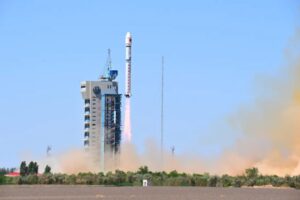
ADA Space gained international attention in May 2025 when it launched the first 12 satellites of the Three-Body Computing Constellation, developed jointly with Zhejiang Lab. Each satellite carries up to 744 TOPS of onboard AI compute, inter-satellite laser links at up to 100 Gbps, and remote-sensing payloads that process data directly in orbit.
The company previously developed the Xinghe (Tianfuguoxing-1 / Xingshidai) series of remote-sensing CubeSats, demonstrating Earth observation technology ahead of its larger constellation programs.
ADA Space targets an eventual constellation of approximately 2,800 satellites approved by the ITU, aiming to build the world's first dedicated orbital computing network.
Milestones
- 2018 ADA Space founded in Chengdu
- 2023 Tianxiang constellation exceeds 50 satellites
Reviews
No reviews yet — reviews come from buyer accounts that have worked with this company.
Write a review