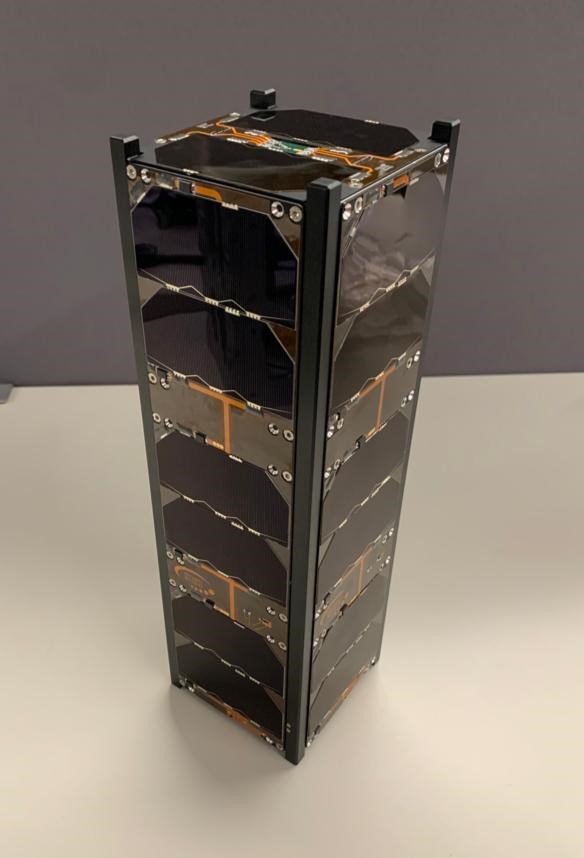

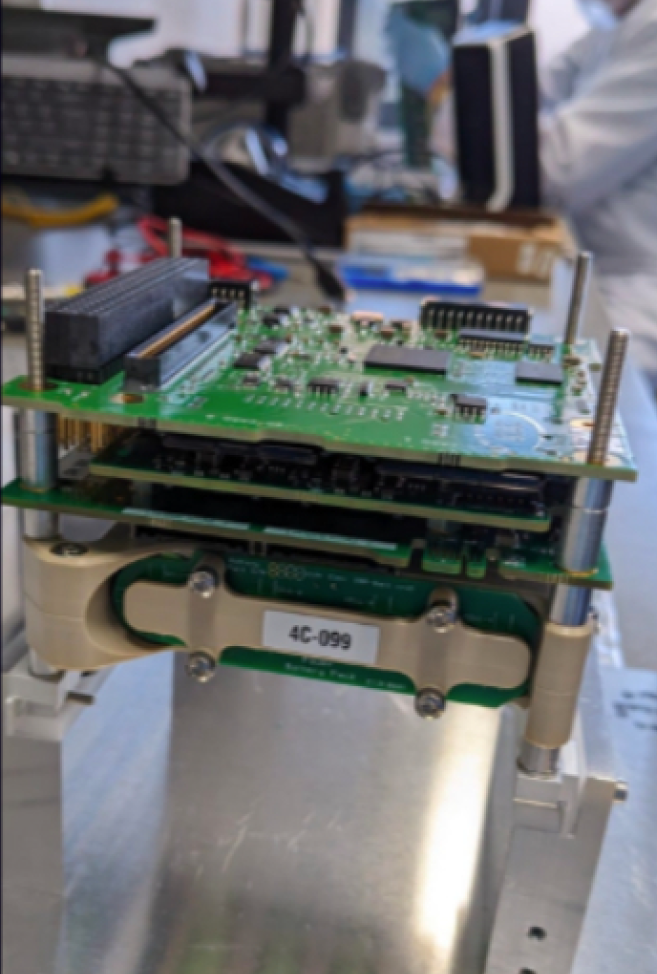

TRL-9 satellite edge-compute terminal combining 99.9% global connectivity, onboard AI, and secure cloud integration (AWS/Azure/NVIDIA), available in Mini and Max configurations.
cEDGE Terminal
TRL-9 satellite edge-compute terminal combining 99.9% global connectivity, onboard AI, and secure cloud integration (AWS/Azure/NVIDIA), available in Mini and Max configurations.
Description
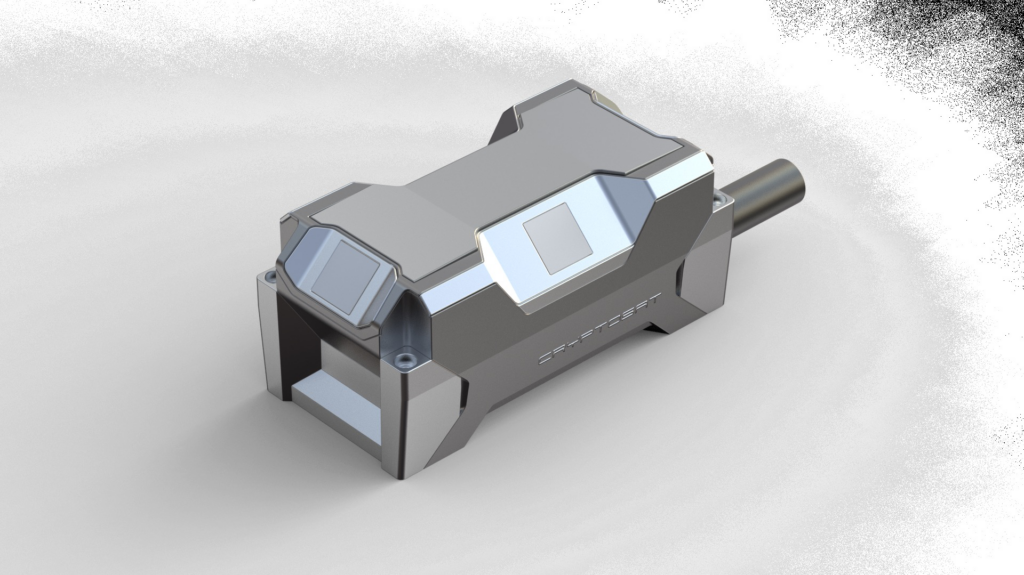
The cEDGE Terminal is Cryptosat's fully integrated satellite edge-compute and connectivity device, built on the flight heritage of the company's Crypto-series CubeSats. It combines constant, near-global connectivity (99.9% availability, including over the poles, without pointing or pass-planning) with onboard AI/ML compute and secure cloud integration, effectively extending modern cloud and CI/CD workflows to satellites and spacecraft. cEDGE uses Iridium 9603 satellite cross-links for global coverage and connects directly into cloud ecosystems including AWS (Greengrass and Lambda on the satellite; IoT Core, S3, DynamoDB, CloudWatch, SNS and SageMaker on the ground), as well as Azure, NVIDIA, IBM and GCP. Onboard compute runs an ARM v8 64-bit processor with an 8 TOPS GPU, 8 GB memory and 1 TB storage under Linux, supporting PyTorch, TensorFlow and Keras (modified to auto-correct radiation-induced bit-flip events). The terminal is offered in two configurations: Mini (10x9x5 cm, 500 g, 3.5 W, 10.5 V) and Max (10x24x7 cm, 1600 g, 10 W, 18 V), both rated TRL-9 with a 5-year LEO total-dose design life, SEU/SEL hardening, bit-flip protection and Doppler correction. Interfaces include Ethernet, LVDS, USB 2/3, CAN, UART, I2C, SPI, MIPI, CSI, Bluetooth and Wi-Fi. As of the brochure's publication, cEDGE units had flown 3 missions over 1.5 years with no SEU, SEL, or bit-flip related failures, both as a hosted payload and as a stand-alone platform, and are used for applications such as satellite retasking, robot control, orbital assembly, space-weather monitoring, cloud/disaster detection, vessel tracking, and grid surge protection.
Specifications
| Dimensions (Mini) | 10 x 9 x 5 cm |
|---|---|
| Dimensions (Max) | 10 x 24 x 7 cm |
| Mass (Mini) | 500 g |
| Mass (Max) | 1600 g |
| Power, oap (Mini) | 3.5 W |
| Power, oap (Max) | 10 W |
| Supply voltage (Mini) | 10.5 V regulated/unregulated |
| Supply voltage (Max) | 18 V regulated/unregulated |
| Readiness level | TRL-9 |
| Design total dose | 5 years LEO |
| Radiation features | SEU/SEL hardened, bit-flip protection, Doppler correction |
| Daily data rate (Mini/Max) | 4 MB / 600 MB |
| Latency | 2-20 sec |
| Availability | 99.9% |
| Interfaces | Ethernet, LVDS, USB2/3, CAN, UART, I2C, SPI, MIPI, CSI, Bluetooth, WiFi |
| Cpu architecture | ARM v8 64-bit |
| Gpu speed | 8 TOPS |
| Memory | 8 GB |
| Storage | 1 TB |
| Os | Linux |
| Ml frameworks | PyTorch, TensorFlow, Keras (radiation auto-correct) |
| Cloud integrations | AWS, Azure, NVIDIA, IBM, GCP, custom |
| Aws on satellite | Greengrass, Lambda |
| Aws on earth | IoT Core, S3, DynamoDB, CloudWatch, SNS, SageMaker |
| Alerts | Email, SMS, Slack, custom |
| Flight heritage | 3 missions, 1.5 years average, no SEU/SEL/bit-flip failures |