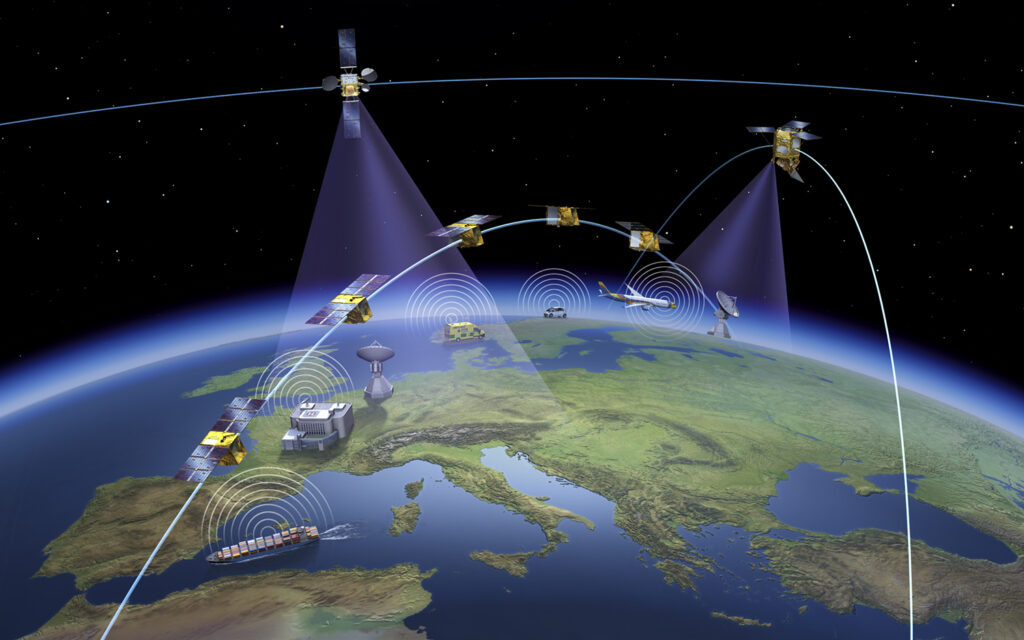

LuxSpace's Triton-X is a modular scalable smallsat bus in three variants (Light/Medium/Heavy, 40–250 kg) for LEO missions: EO, comms, SSA, IoT, and in-orbit demonstration. First flight (Triton-X Genesis) launched October 2023 on SpaceX Falcon 9, built in under 10 months.
Triton-X — Modular Smallsat Bus (40–250 kg)
LuxSpace's Triton-X is a modular scalable smallsat bus in three variants (Light/Medium/Heavy, 40–250 kg) for LEO missions: EO, comms, SSA, IoT, and in-orbit demonstration. First flight (Triton-X Genesis) launched October 2023 on SpaceX Falcon 9, built in under 10 months.
Description
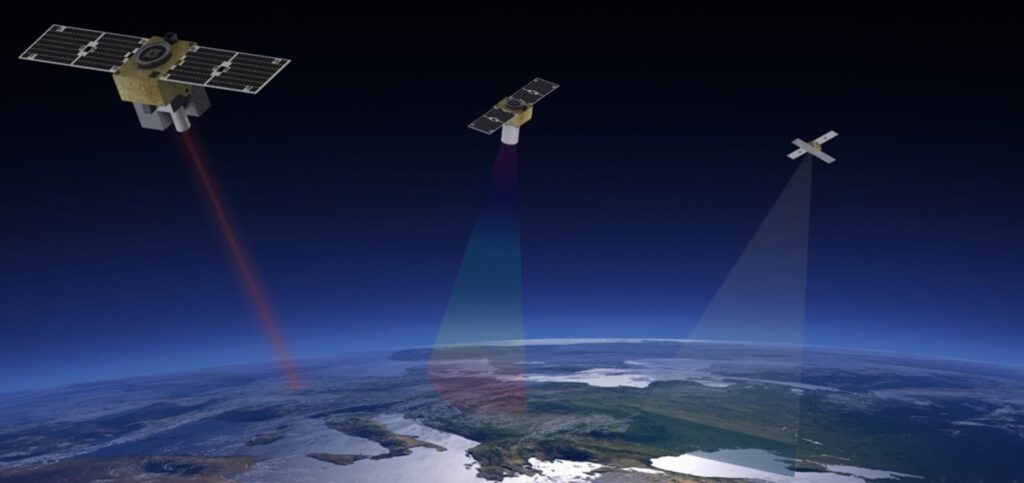
Triton-X is LuxSpace's flagship modular smallsat platform, offered in three scalable variants to serve a wide range of mission types in low Earth orbit: Earth observation, communications, space situational awareness, IoT/M2M, and in-orbit technology demonstration. The Light variant (TXL) supports spacecraft masses of 40–65 kg with up to 15 kg payload and 9–90 W payload power; the Medium variant (TXM) scales to 75–135 kg spacecraft with up to 45 kg payload and 45–180 W; the Heavy variant (TXH) reaches 130–250 kg spacecraft with up to 90 kg payload, 50–280 U volume, and 120–310 W power with full redundancy and very high downlink bandwidth. All variants use LuxSpace's Integrated Avionics Unit (IAU), a combined Power and Data Handling Unit/On-Board Computer designed specifically for the 40–250 kg mass class. The Triton-X Genesis, the first flight unit, launched in October 2023 on a SpaceX Falcon 9 after being built in under 10 months. LuxSpace has heritage in satellite manufacturing since Luxembourg's first domestically-built satellites — VesselSat-1 and VesselSat-2 (2011–2012) — and the ESAIL AIS satellite (110 kg, launched 2020 on Vega for exactEarth). LuxSpace is based in Luxembourg and is an OHB subsidiary.
Specifications
| Triton-x light (txl) — spacecraft mass | 40–65 kg |
|---|---|
| Triton-x light (txl) — payload mass | up to 15 kg |
| Triton-x light (txl) — payload volume | up to 12 U |
| Triton-x light (txl) — payload power | 9–90 W |
| Triton-x medium (txm) — spacecraft mass | 75–135 kg |
| Triton-x medium (txm) — payload mass | up to 45 kg |
| Triton-x medium (txm) — payload volume | 13–50 U |
| Triton-x medium (txm) — payload power | 45–180 W |
| Triton-x heavy (txh) — spacecraft mass | 130–250 kg |
| Triton-x heavy (txh) — payload mass | up to 90 kg |
| Triton-x heavy (txh) — payload volume | 50–280 U |
| Triton-x heavy (txh) — payload power | 120–310 W |
| Avionics | Integrated Avionics Unit (IAU) — combined PDHU + OBC |
| Applications | EO, communications, SSA, IoT/M2M, in-orbit demonstration |
| First flight | Triton-X Genesis — October 2023, SpaceX Falcon 9 (built in <10 months) |