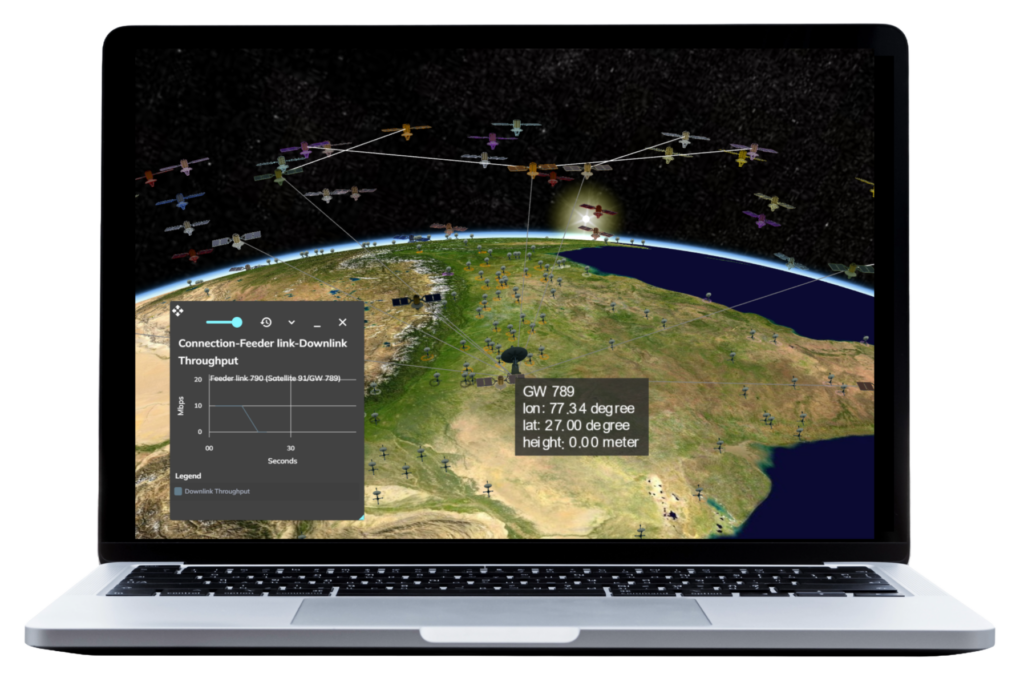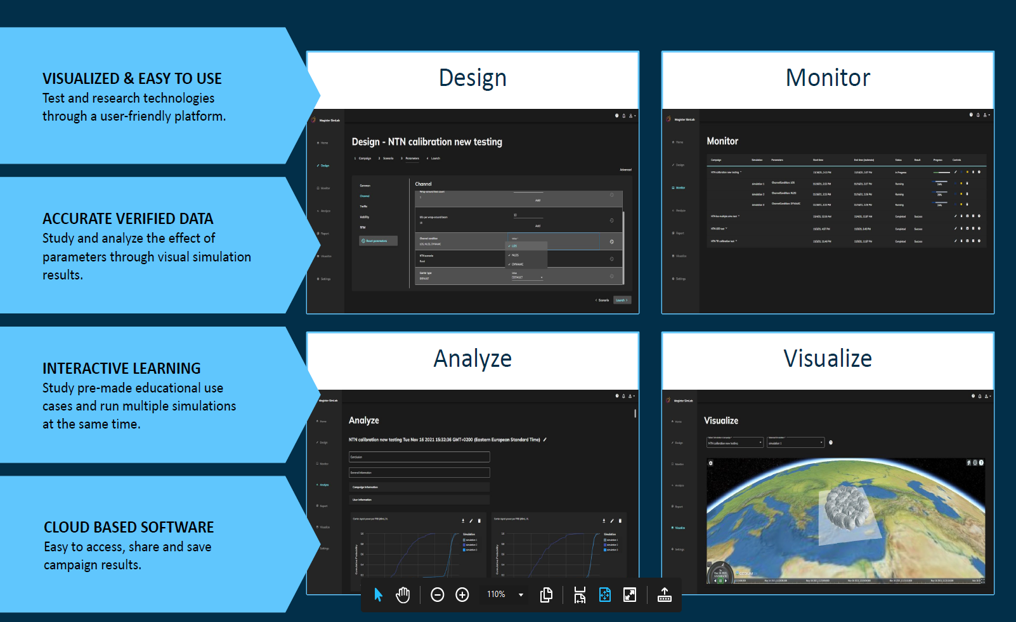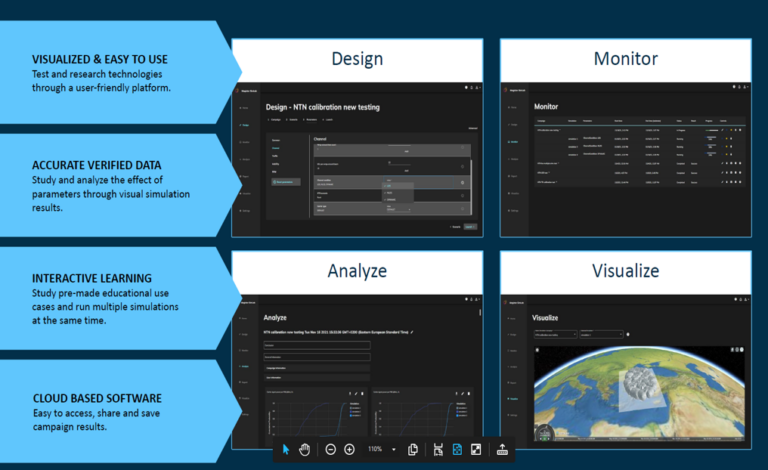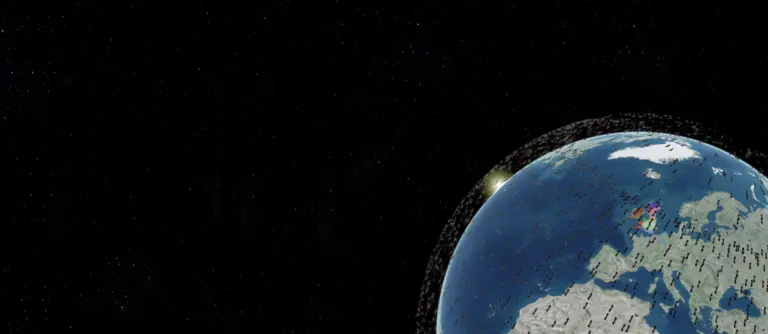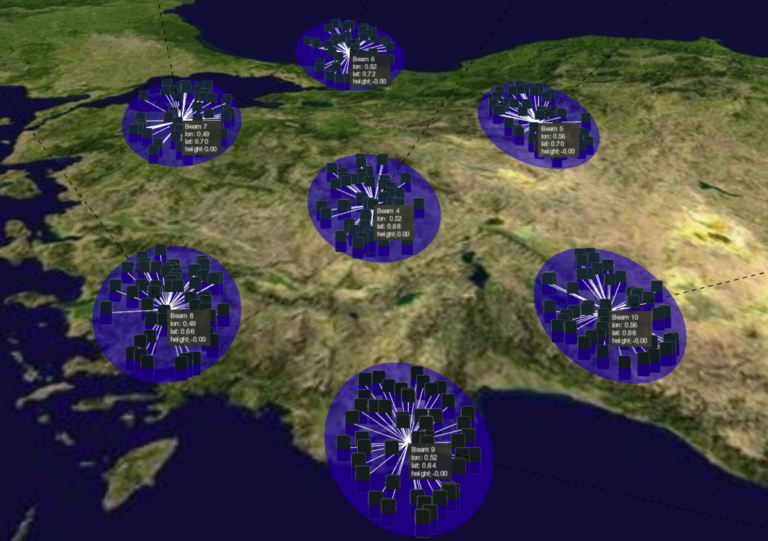

ALIX is a system-level 5G network simulator for detailed protocol-level evaluation of end-to-end network performance in terrestrial, non-terrestrial, and hybrid architectures.
ALIX
ALIX is a system-level 5G network simulator for detailed protocol-level evaluation of end-to-end network performance in terrestrial, non-terrestrial, and hybrid architectures.
Description
ALIX is a sophisticated system-level 5G network simulator engineered for comprehensive protocol-level evaluation of end-to-end network performance. It supports analysis across terrestrial, non-terrestrial (NTN), and hybrid network architectures. Operating with packet-level resolution, ALIX facilitates unbiased and reproducible comparisons between various communication technologies, such as 5G NR-NTN, DVB-S2X, and DVB-RCS2. This capability is crucial for standardization efforts, benchmarking, and the development of next-generation networks and technologies, including 6G. ALIX is aligned with 3GPP TR 38.811 & TR 38.821, enabling users to evaluate new features early and ensure compatibility with 3GPP specifications, including 5G NR-NTN, 6G TN/NTN, and emerging 6G standards. It allows for transparent, objective, and reproducible protocol-level evaluations, helping to test ideas, accelerate R&D, and identify bottlenecks before costly hardware or field trials. The simulator has been developed, validated, and continuously advanced through collaborations with the European Space Agency, the European Union, and various industry partners, demonstrating its technical credibility and relevance for system-level evaluation of 5G TN/NTN and future network architectures. ALIX has been instrumental in projects such as SAIRCC (integrating satellite communications into railway systems), HELENA (advancing NTN capabilities with a focus on 5G NTN mobility optimization), DYNASAT (dynamic spectrum sharing and NTN system optimization), MARINA (fair comparison of DVB-S2X and 5G NR technologies), and EAGER (exploration of 5G-Advanced and 6G NTN technologies).
Specifications
| Frequency bands | S-band and Ka-band |
|---|---|
| Frequency reuse factors | 1, 3, and 2+2 |