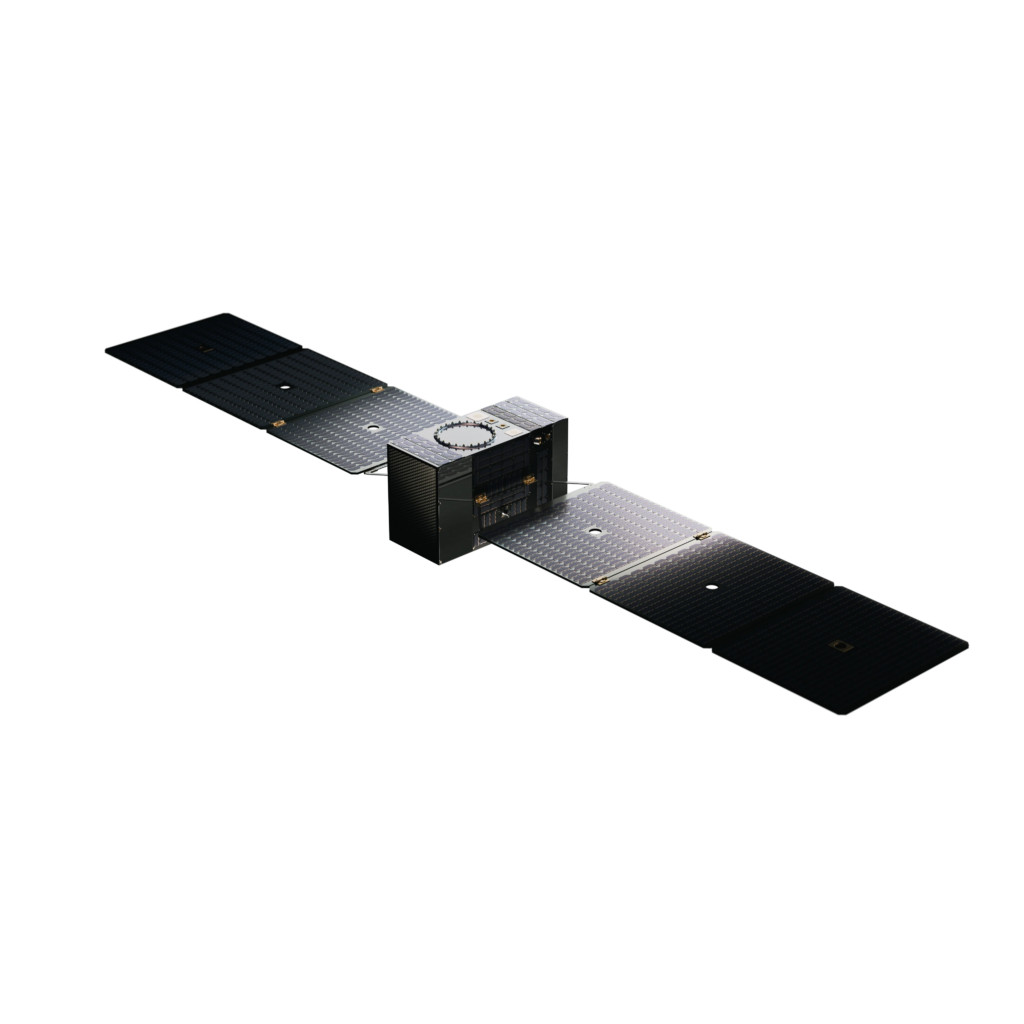

NEO-1 is a satellite platform engineered for sustained operations in very-low Earth orbit (200-300 km) for up to five years, enabling next-level imaging, global connectivity, and real-time data.
NEO-1
NEO-1 is a satellite platform engineered for sustained operations in very-low Earth orbit (200-300 km) for up to five years, enabling next-level imaging, global connectivity, and real-time data.
Description
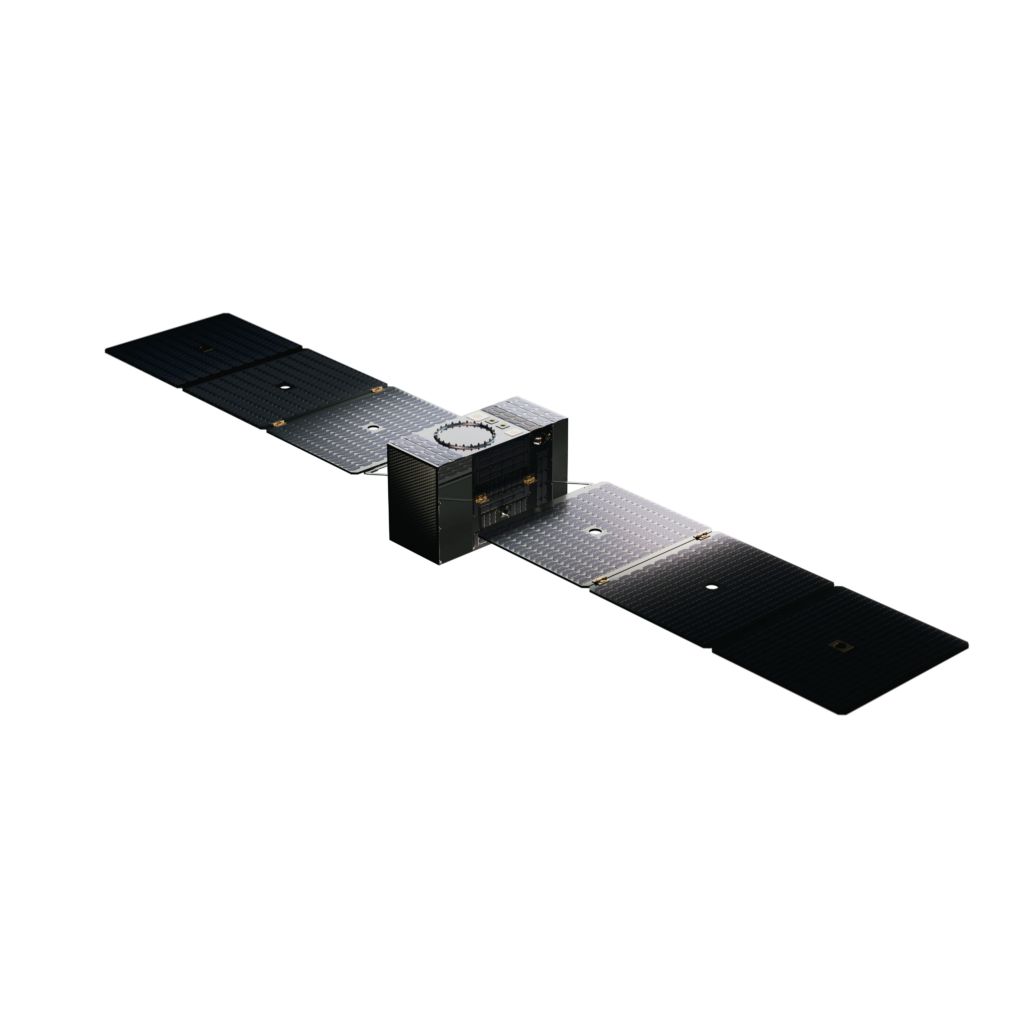
NEO-1 is a pioneering spacecraft platform specifically designed for very-low Earth orbit (VLEO) operations, capable of operating at altitudes between 200 and 300 km for five years. It is engineered to overcome the unique challenges of VLEO, such as atmospheric drag, atomic oxygen, and aerodynamic torques. The platform incorporates a sophisticated control design, advanced materials tolerant to atomic oxygen, and aerodynamic symmetry. A key feature is its in-house developed AURA electric propulsion system, which has been in development since 2021 and is now in its seventh generation. The AURA-X propulsion system utilizes a radio-frequency thruster and a proprietary cathode, delivering four times the specific impulse of conventional electric propulsion, which significantly reduces propellant requirements and enables the extended mission lifetime in VLEO. NEO-1 supports various payload types including Earth Observation (EO), Telecommunications (Telco), GNSS, and RF, with a payload mass capacity of 50 kg. It features S-band and X-band telecommunications, a slew rate of 1 deg/s, and provides 200 W of orbital average power (OAP), which is modifiable.
Specifications
| Target orbit | 200-300 km |
|---|---|
| Payload type | EO, Telco, GNSS, RF |
| Payload mass | 50 kg |
| Telecom | S-band & X-band |
| Slew rate | 1 deg/s |
| Power | 200 W OAP (modifiable) |
| Design life | 5 years |
| Propellant | Xenon |
| Total power | 100-750 W |
| Thrust level | 4-20 mN |
| Specific impulse | up to 4500s |