
Claim NileSat
Use your work email on the company domain (nilesat.org) — we will send you a confirmation link. Other emails are reviewed manually.
About NileSat
Nilesat (Nile Sat Company / Egyptian Satellite Company) is Egypt's national satellite operator, established in 1996 to build and operate the country's own geostationary broadcast fleet. Headquartered in Cairo and majority-owned by the Egyptian Radio and Television Union (ERTU) alongside other state and private shareholders, Nilesat has grown from a single-satellite domestic broadcaster into one of the largest direct-to-home (DTH) television platforms in the Middle East and North Africa, distributing hundreds of free-to-air and encrypted television and radio channels to tens of millions of households across the region.
The operator's fleet occupies the prime 7 degrees West orbital slot, a neighborhood shared with Eutelsat's satellites that together form one of the most-watched satellite TV hotspots in the world. Nilesat 101 and Nilesat 102 pioneered the position in the late 1990s and 2000s, followed by the larger Nilesat 201, launched in 2010 aboard an Ariane 5 rocket and built by Thales Alenia Space on the Spacebus-4000B2 platform. Nilesat 201 carries Ku-band and Ka-band payloads and has served as the backbone of Egyptian and pan-Arab broadcasting for over a decade.
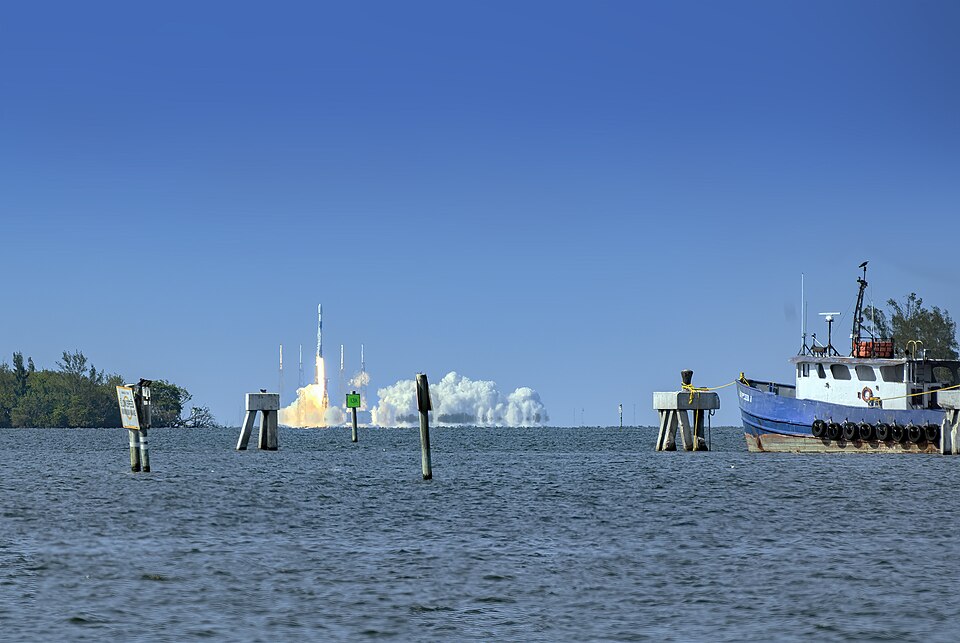
In 2022, Nilesat expanded and modernized its capacity with the launch of Nilesat 301, again built by Thales Alenia Space and launched by SpaceX from Cape Canaveral. Nilesat 301 was designed to progressively take over traffic from the aging Nilesat 201, offering higher-power Ku-band transponders and additional Ka-band capacity for broadband applications, while safeguarding the continuity of DTH services at the 7 degrees West slot that reaches an estimated audience of over 55 million households.
Beyond broadcasting, Nilesat provides satellite communications infrastructure for government, media, and enterprise customers, including channel uplinking, playout, digital terrestrial television support, and broadband connectivity services. As Egypt's flagship space asset in the commercial satellite domain, Nilesat plays a central role in the country's media landscape and is a key case study in MENA regional satellite cooperation and orbital slot coordination.
Reviews
No reviews yet — reviews come from buyer accounts that have worked with this company.
Write a review