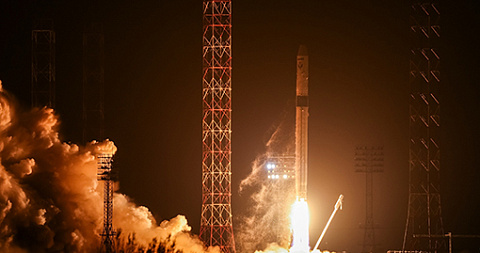
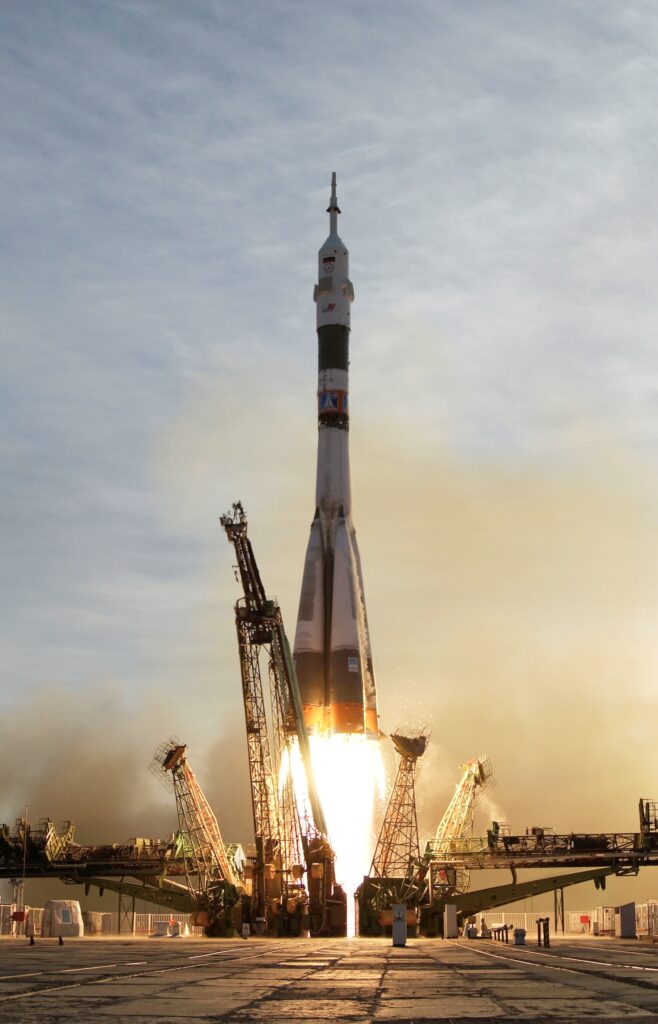
The world's most-launched rocket — Russia's Soyuz-2 family for crew, cargo, and commercial satellite missions.
Soyuz-2 Launch Vehicle
The world's most-launched rocket — Russia's Soyuz-2 family for crew, cargo, and commercial satellite missions.
Description
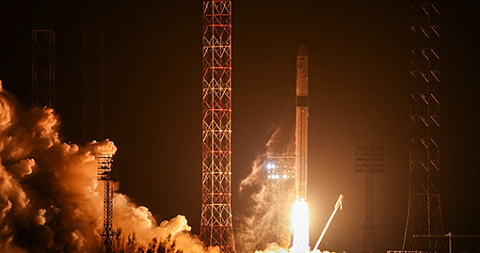
The Soyuz-2 is the modernized version of the legendary Soyuz rocket, manufactured by RKC Progress in Samara, Russia. It is the world's most frequently launched orbital rocket family with over 2,000 total Soyuz launches since 1966. The Soyuz-2 variants (2.1a, 2.1b, 2.1v) feature updated digital flight control systems, new NK-33 or RD-0110 upper stages, and improved payload fairings compared to the original Soyuz design.
Soyuz-2 serves as Russia's primary crew and cargo transportation system to the International Space Station (ISS), carrying Soyuz-MS crewed capsules and Progress-MS cargo spacecraft. The 2.1b variant with the Fregat upper stage is used for interplanetary missions and GTO satellites.
The rocket is launched from four operational sites: Baikonur Cosmodrome (Kazakhstan), Plesetsk (Russia), Vostochny (Russia), and the Guiana Space Centre (Kourou, French Guiana) for ESA commercial missions. Soyuz-2 offers payload capacity of approximately 8,200 kg to LEO.
Specifications
| Height | 46.3 m |
|---|---|
| Liftoff Mass | 311 tonnes |
| Payload to LEO | 8,200 kg (2.1a) / 8,700 kg (2.1b) |
| Payload to SSO | ~4,900 kg |
| Propellant | LOX / Kerosene (RD-107A/108A) |
| Launch Sites | Baikonur, Plesetsk, Vostochny, Kourou |