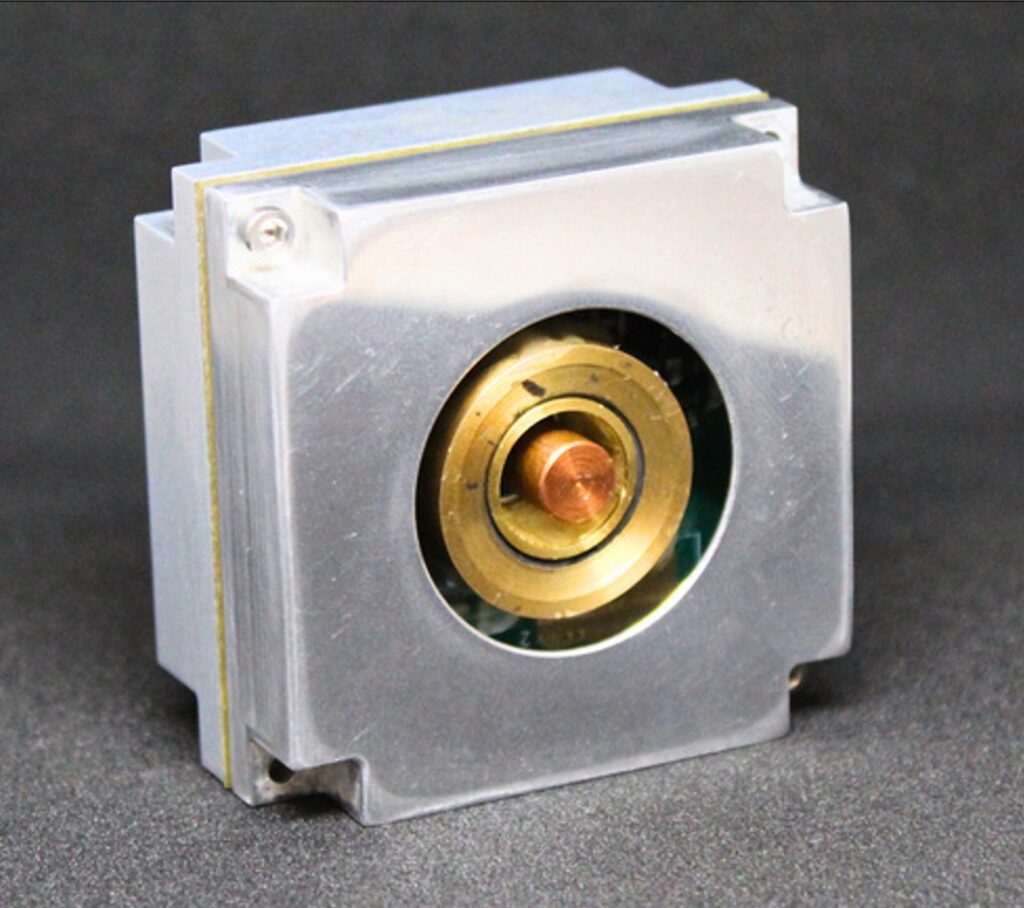

Fully solid-state, unpressurised vacuum arc thruster in a 45x45x25 mm package: 200 uN maximum thrust, 700 s Isp, 85 g wet mass, 8 Ns total impulse.
Pocket Rocket Vacuum Arc Thruster
Fully solid-state, unpressurised vacuum arc thruster in a 45x45x25 mm package: 200 uN maximum thrust, 700 s Isp, 85 g wet mass, 8 Ns total impulse.
Description
The Pocket Rocket is Solid State Propulsion's vacuum arc thruster. At 45 x 45 x 25 mm it is presented by the vendor as the most advanced propulsion system in its size class, intended for collision avoidance and minor orbital adjustments.
The fully solid state, unpressurised design offers a fail-safe and reliable propulsion system that is not even classified as a propulsion system by launch providers, making integration effortless. It is shipped with a development board for user testing.
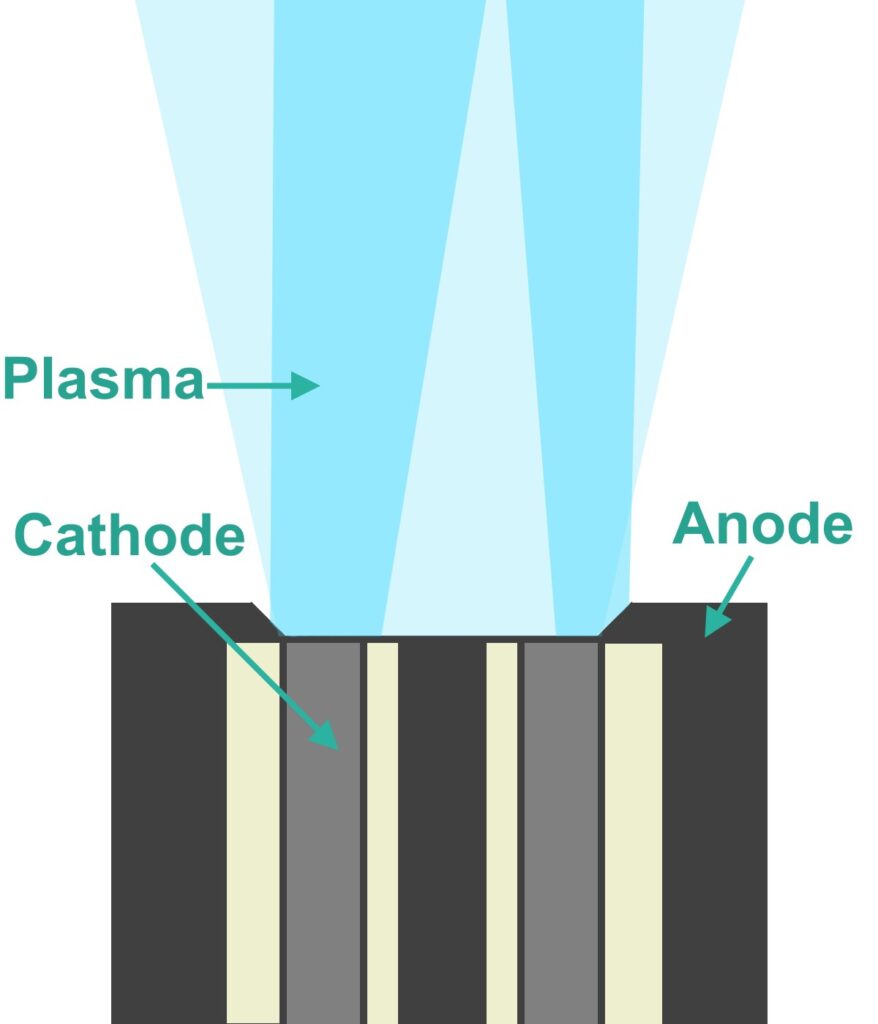
The thruster creates pulsed electric arcs between an anode and a cathode. These arcs concentrate in tiny regions known as cathode spots; each cathode spot acts like its own tiny rocket engine, turning the cathode metal into a high velocity plasma and generating thrust. Because the entire system is solid state there is no propellant line to jam, no valve to fail and no tank to leak, as there are no moving parts in the thruster.
By firing hundreds of thousands of short pulses over several days, the thruster builds up the same total impulse as a chemical engine firing for several minutes, without the mass and volume penalty. The pulsed operation allows micronewton-second accurate impulse bit control for precision applications such as formation flying. Applications include orbit raising, formation flying and orbit maintenance.
As of the May 2024 datasheet the first two units were sold and manifested on Transporter-12, with a quoted lead time of 10 weeks.
Specifications
| Maximum thrust | 200 uN |
|---|---|
| Specific impulse | 700 s |
| Input power | 0.5 - 20 W |
| Thrust to power ratio | 10 uN/W |
| Pulse repetition rate | 0.1 - 10 Hz |
| Total impulse | 8 Ns |
| Wet mass | 85 g |
| Dimensions | 45 x 45 x 25 mm |
| Voltage input | 5 V power, 5/3.3 V logic |
| Standard mounting | 4x M2 bolts |
| Connection | Samtec LSHM-110-02.5 |
| Propellant | Unpressurised solid metal cathode (vacuum arc, no moving parts) |
| Supplied with | Development board for user testing |
| Interface | PocketQube variant in development |
| Status | First two units sold, manifested on Transporter-12; lead time 10 weeks (datasheet v2.5, May 2024) |