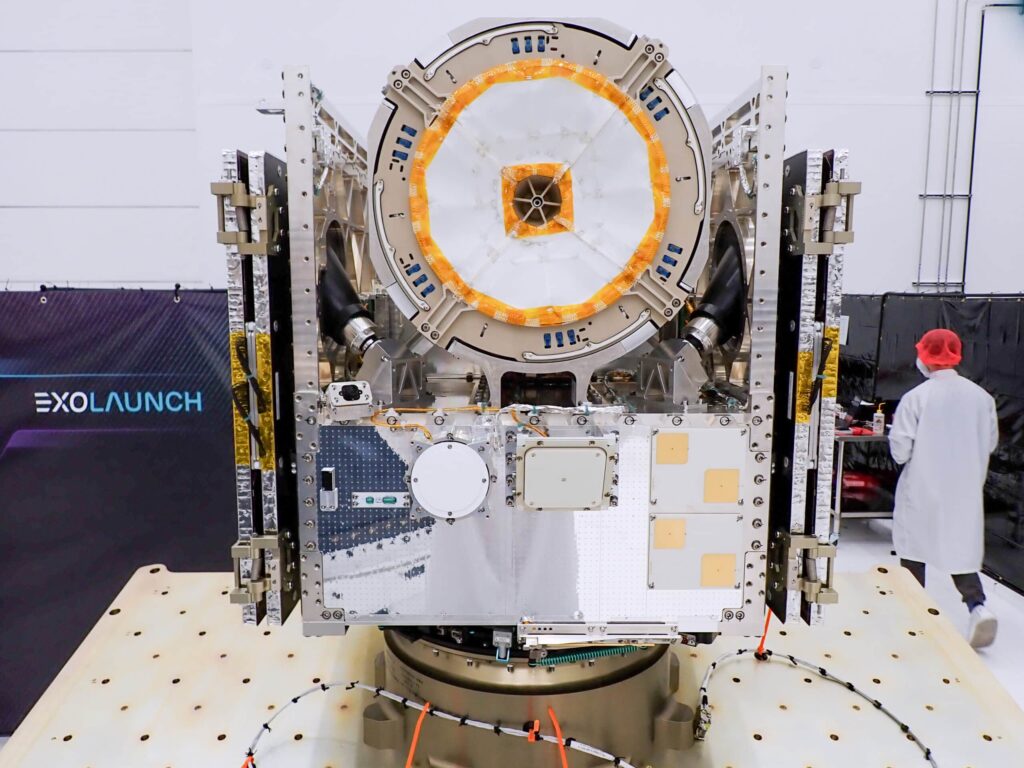

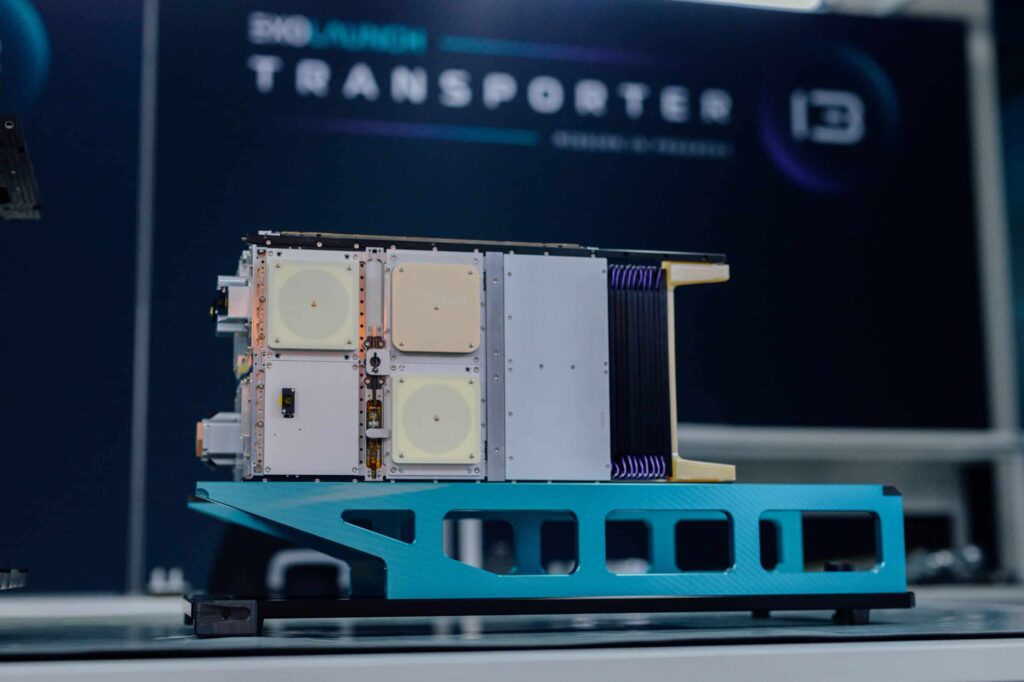




The Startical Constellation is a space-based communications and surveillance system designed to provide seamless, global coverage for aviation, connecting oceanic and continental airspaces.
Startical Constellation
The Startical Constellation is a space-based communications and surveillance system designed to provide seamless, global coverage for aviation, connecting oceanic and continental airspaces.
Description
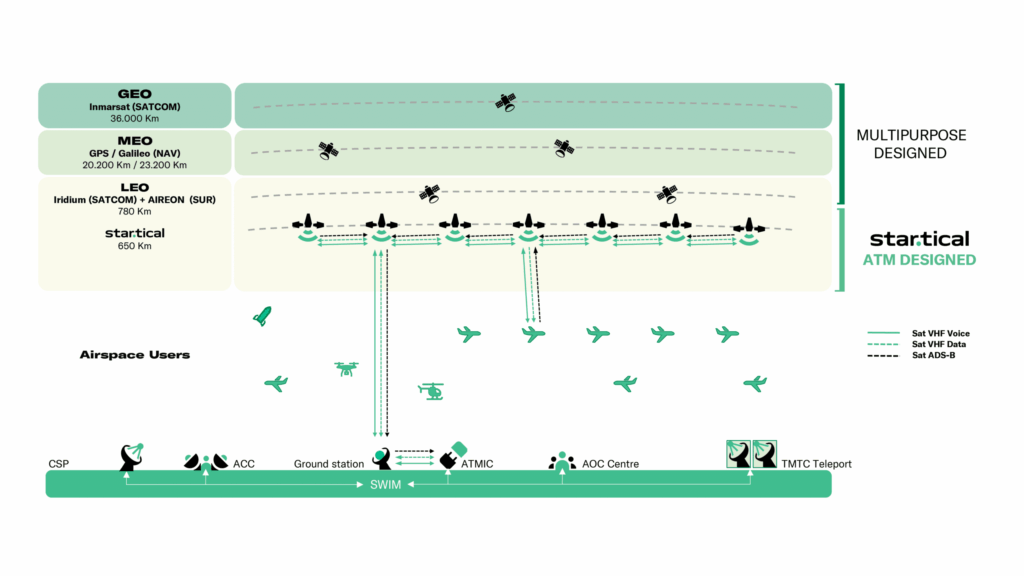
The Startical Constellation is a comprehensive space-based communications and surveillance system developed to offer seamless, global coverage for aviation. It aims to connect oceanic and continental airspaces, effectively closing gaps where terrestrial infrastructure is insufficient. The services provided include ADS-B surveillance and VHF Voice and Datalink communications, all fully compliant with Safety-of-Life requirements for Air Traffic Management (ATM). Beyond air traffic control, the system enables Airline Operations Centers to communicate easily via VHF with their fleets anywhere in the world, thereby enhancing safety, efficiency, and operational performance. The system comprises over 200 small satellites specifically designed for ATM in a low Earth orbit, ensuring global VHF and ADS-B coverage. It also includes a robust ground segment featuring a network of ground stations, a satellite control center, and dedicated service facilities to guarantee reliability and performance. Startical actively contributes to international efforts in shaping the regulation of satellite-based aeronautical communications, participating in ITU and ICAO forums to provide technical expertise and collaborate with national regulators for global standardization. The ITU World Radiocommunication Conference in December 2023 approved a new allocation for the Aeronautical Mobile-Satellite (Route) Service [AMS(R)S] within the VHF band (117.975–137 MHz), officially authorizing its use from space. Startical continues to work within the ICAO framework to achieve full standardization of these services by 2030. The company has conducted real-time trials and demonstration activities, including proof-of-concept tests across the South Atlantic corridor, covering airspaces over the Canary Islands, Azores-Santa Maria, Dakar Oceanic, Cape Verde, Ivory Coast, and the Atlantic region of Brazil, to validate the technology's ability to deliver seamless connectivity. The project has received support from European institutions through funding projects like ECHOES (2022–2025), co-funded by the European Union’s Connecting Europe Facility (CEF Transport) and supported by SESAR Joint Undertaking, and VOCALS (2025–2026), with support from the Spanish Space Agency and the European Space Agency as part of ESA’s programme of Advanced Research in Telecommunications Systems (ARTES).
Specifications
| Number of satellites | +200 small satellites |
|---|---|
| Services | ADS-B surveillance, VHF Voice and Datalink communications |
| Compliance | Safety-of-Life requirements for ATM |
| Orbital altitude | Low Earth Orbit |
| VHF band allocation | 117.975–137 MHz (AMS(R)S) |
| Regulatory framework | ITU, ICAO |
| In-orbit demonstrators | IOD-1, IOD-2 |
| Funding projects | ECHOES (2022–2025), VOCALS (2025–2026) |