
MinXSS (Miniature X-ray Solar Spectrometer)
Price on request
Description
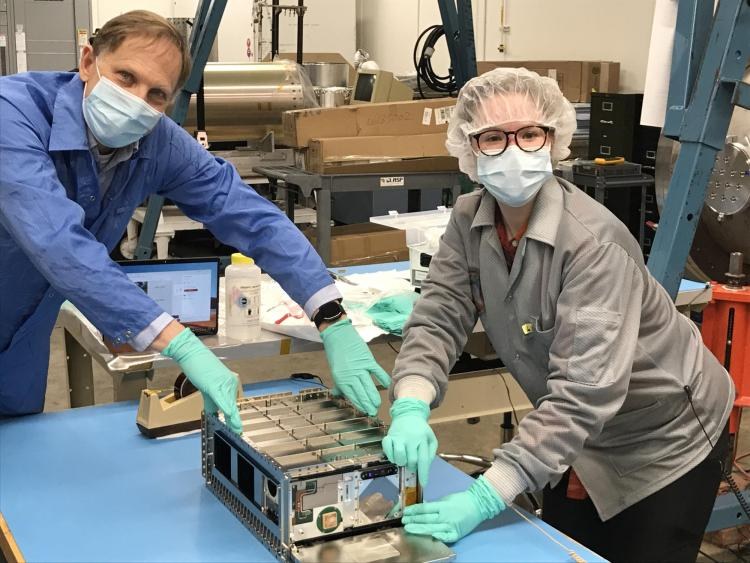
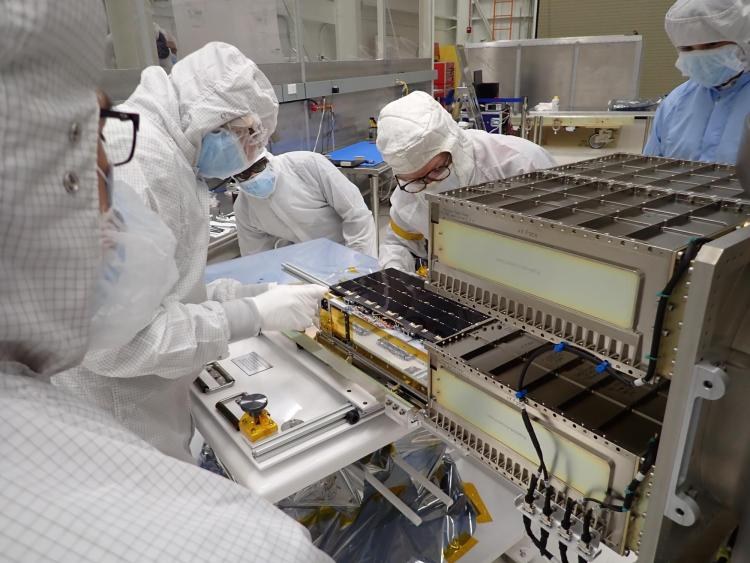
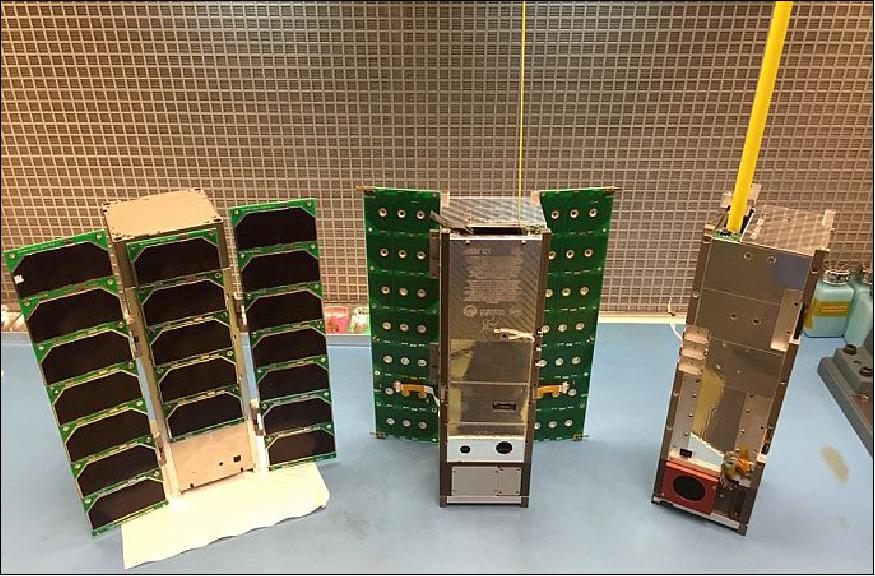
MinXSS is a 3U CubeSat built primarily by University of Colorado Boulder students at LASP to measure solar soft X-ray spectral irradiance. It was the first NASA Science Mission Directorate CubeSat to fly a dedicated science payload, studying how solar flares affect Earth's upper atmosphere and ionosphere.
Specifications
| Mission type | Non-EO |
|---|---|
| Launch date | 06 Dec 2015 |
| End of life date | 14 Feb 2019 |
| Power | 6 W |
| Power (2) | 20 W |
| Spacecraft pointing accuracy | ±0.003º (1σ) for 2 axes; ±0.007º (1σ) for 3 rd axis |
| Lifetime | ≥1 year |
| Orbital altitude range | 160-2000 km |
| Mass | ≤0.7 kg |
| Dimensions | ≤ 10 cm x 10 cm x 5 cm |
| Power consumption | ≤0.5 W |
| Power consumption (2) | ≤2.0 W |
| Operating voltage | 12 V±2 V |
| Data interface | RS-422 |
| Slew rate | ≥10º/s |