
Air-Scooping Electric Thruster (ASET) — Air-Breathing VLEO Propulsion
Description
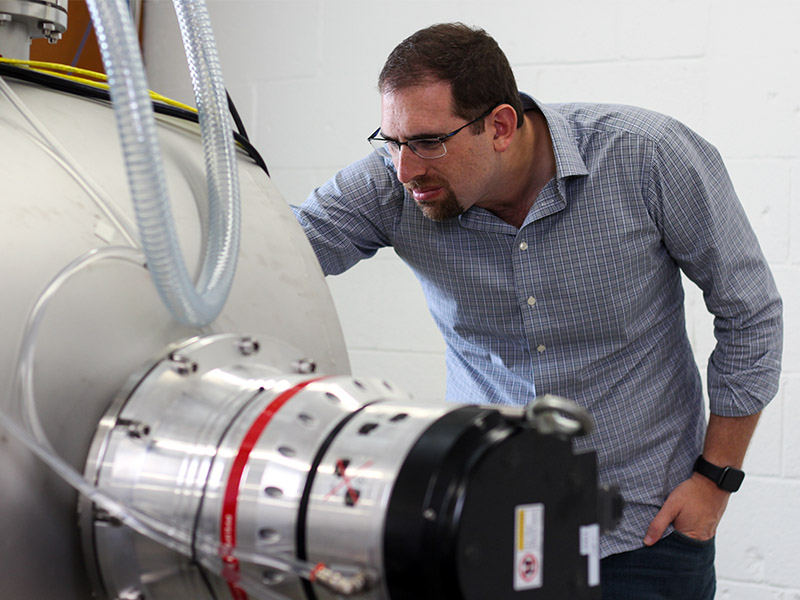
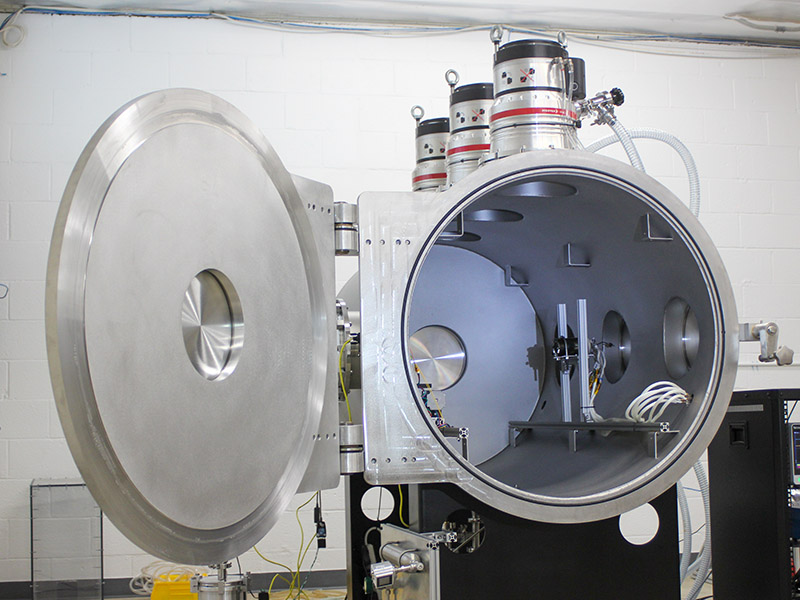
The Air-Scooping Electric Thruster (ASET) is Viridian Space Corporation's patent-pending flagship propulsion technology that enables satellites to operate indefinitely in Very Low Earth Orbit (VLEO, 150–300 km altitude) without carrying any onboard propellant. The system uses a Turbomolecular Active air-SCoop (TASC) to ingest rarefied atmospheric gases — primarily atomic oxygen above 180 km and molecular nitrogen at lower altitudes — and compress them by a factor of 3,000–40,000 before feeding them to a Hall Effect or gridded ion thruster as propellant. This eliminates the traditional mission-limiting constraint of finite onboard propellant mass, enabling satellites to remain in VLEO for a decade or more, compared to months for conventionally propelled VLEO missions. Viridian Space holds US Patent 12286943B2 for the TASC turbomolecular air-scoop (filed October 2022, granted April 2025). Operating altitude of 150–300 km provides major advantages over LEO: an order of magnitude better resolution for Earth observation sensors, stronger and more jam-resistant signals for communications, and direct-to-cellphone link margins. The ASET enables new mission classes including long-duration synthetic aperture radar (SAR) with centimetre-class ground resolution, persistent persistent surveillance, direct mobile broadband, and VLEO space tugs for debris removal and servicing. The system has been prototype-tested in vacuum chambers and achieved SBIR Phase II funding of over $3.5M from the U.S. Air Force and NSF. Co-founded by Dr. Rostislav Spektor (CEO, former Electric Propulsion Lab manager at The Aerospace Corporation) and Dr. Matthew Feldman (CTO), Viridian Space is headquartered in El Segundo, California.
Specifications
| Operating altitude (VLEO) | 150–300 km |
|---|---|
| Air-scoop type | Turbomolecular Active air-SCoop (TASC) |
| Atmospheric propellant | Atomic oxygen (>180 km), molecular nitrogen (lower altitudes) |
| Compression ratio | 3,000–40,000 (altitude-dependent) |
| Collection efficiency | ≥80% |
| Rotor speed | 30,000–100,000 rpm (nominal: 60,000 rpm) |
| Compressor stages | 1–8 stages (8-stage optimized) |
| Power consumption (orbit-averaged) | 50–550 W |
| Required ISP | >1,392–1,739 s (min); >1,800 s with oxygen at ~320 V |
| Compatible thrusters | Hall Effect Thruster (HET), Gridded Ion Thruster (GIT) |
| Patent | US12286943B2 (granted April 29, 2025; expires December 28, 2043) |
| TRL | Hardware prototype tested in vacuum chamber (pre-flight) |
| Orbital demo target | ~2027 |
| Sbir funding | >$3.5M (USAF Phase I + II, NSF) |