Hydrazine Monopropellant Rocket Engines
 Aerojet Rocketdyne (L3Harris)
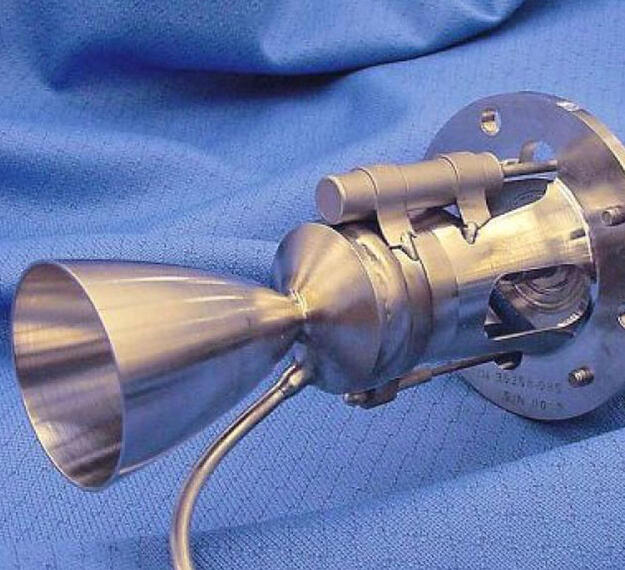
Hydrazine monopropellant engine family from 0.02 lbf to 700 lbf thrust, with more than 19,000 units delivered.
Typed specifications1 values
Discloses 1 of 10 fields engineers filter by in this category (category median 3).
- Propellant
- hydrazine product page
Each value is typed with its unit and measurement condition and cites the datasheet page it was taken from. Nothing is guessed: a field that is absent here has not been published by the manufacturer. machine-extracted ✓ checked by NewSpace Market ✓ manufacturer confirmed by the manufacturer.
As published by the supplier4 lines, in the manufacturer's own wording
- Thrust range
- 0.02 lbf to 700 lbf
- Propellant
- Hydrazine (catalytic decomposition)
- Units delivered
- More than 19,000
- Applications
- Planetary transit course corrections, orbital capture and insertion, landing, precision pointing, attitude and spin control, launch vehicle upper stage roll/pitch/yaw control and propellant settling
About
L3Harris has delivered more than 19,000 hydrazine-fueled monopropellant engines providing thrust levels ranging from 0.02 pounds to 700 pounds. Monopropellant engines generate thrust by flowing liquid hydrazine into a catalytic decomposition chamber where the propellant undergoes a highly energetic decomposition, producing gases that are then accelerated through a nozzle.
L3Harris monopropellant thrusters have been used on missions to explore every planet in the solar system, typically for planetary transit course corrections, orbital capture/insertion and landing. The Sky Crane that lowered NASA’s Curiosity and Perseverance Rovers to the Martian surface used L3Harris monopropellant thrusters to hover during the process and then to whisk the carrier spacecraft away from the landing site.
Monopropellant engines also are used for precision pointing, and attitude and spin control on various satellites and spacecraft, including ISS crew and servicing spacecraft. On launch vehicle upper stages, monopropellant thrusters are used for pitch, roll and yaw control, as well as for engine propellant settling burns.
Documentation
No public datasheet yet — request the datasheet / ICD from the supplier.