Electric Jet Engine Propulsion for Suborbital Flight
 Astro Mechanica
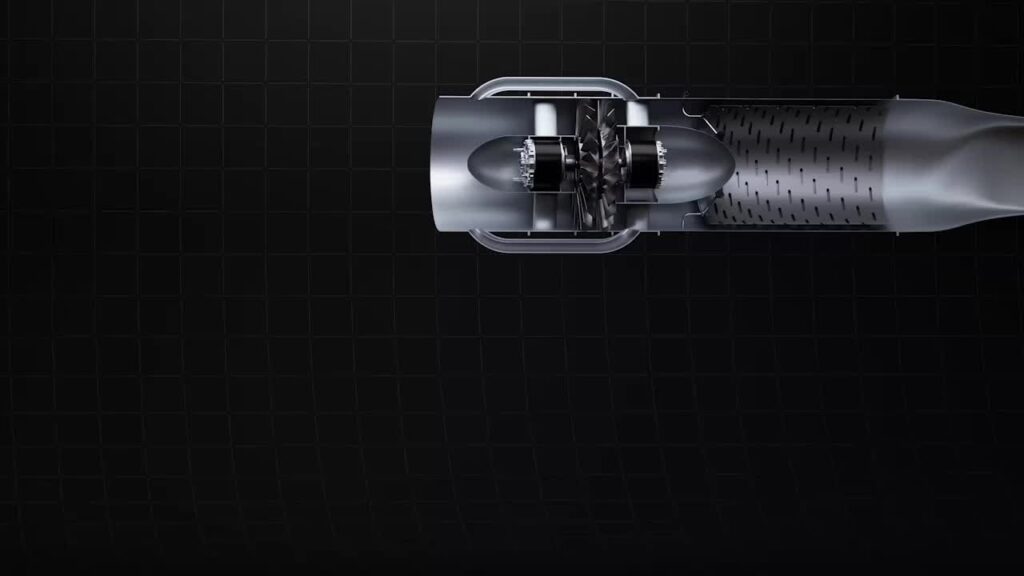
Astro Mechanica's electric jet engine augmented rocket first stage — using turbine-driven air-breathing propulsion at low altitude to reduce propellant mass and improve launch economics.
Technical specifications
- Concept
- Electric jet augmented rocket first stage (air-breathing + chemical propulsion)
- Advantage
- Reduces LOx mass required in dense lower atmosphere
- Operating range
- Ground level through transonic (Mach 0.8–1.2)
- Funding
- AFRL SBIR (US Air Force Research Laboratory)
- Stage
- Technology development / engine testing
- Country
- USA
About
Astro Mechanica is a US propulsion startup developing a novel electric jet engine concept that augments rocket first-stage propulsion with air-breathing turbojet thrust at low altitude, reducing the liquid oxygen (LOx) required in the dense lower atmosphere where rocket engines are least efficient. The approach uses an electric motor-driven turbine to generate additional thrust from atmospheric air, powered by the first stage’s fuel cells or battery system.
Conventional rocket first stages carry enormous quantities of LOx that is ‘wasted’ countering atmospheric pressure and drag in the first 30 km of ascent where air density is highest. An air-breathing augmentation system that generates thrust without onboard oxidizer during this phase can reduce total propellant mass significantly — potentially enabling a smaller, cheaper first stage with the same orbital delivery performance.
Astro Mechanica is developing electric motor and turbine technology capable of operating from ground level through the transonic regime (Mach 0.8–1.2), above which air-breathing approaches become less effective and the rocket transitions to pure rocket operation. The company has conducted static engine tests and received SBIR funding from AFRL (Air Force Research Laboratory). Its approach is complementary to concepts like Reaction Engines SABRE but focused on electric rather than precooling approaches.
Documentation
No public datasheet yet — request the datasheet / ICD from the supplier.