FPPT — Fiber-Fed Pulsed Plasma Thruster
 CU Aerospace
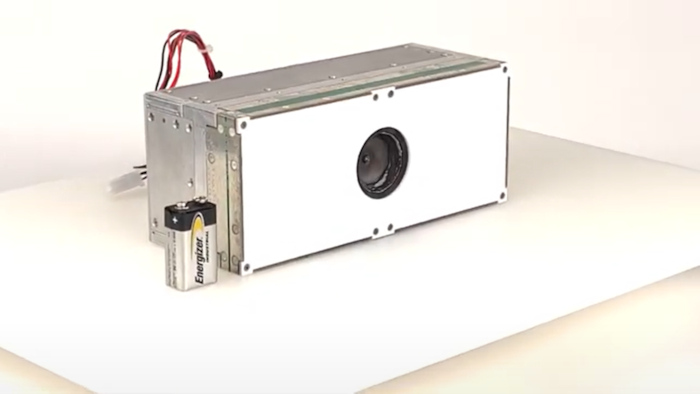
CU Aerospace’s Fiber-Fed Pulsed Plasma Thruster (FPPT) provides very high specific impulse greater than 3,500 seconds via a 10-microsecond electromagnetic pulse discharge using solid PTFE (Teflon®) fiber propellant spooled inside the package. No pressurized propellant tank or valving that can leak propellant is required, making FPPT inherently safe and compliant with range safety regulations. The […]
Typed specifications49 values
Discloses 9 of 10 fields engineers filter by in this category (category median 3).
- Propulsion family
- electric datasheet p.1
- Mass
- 780 g Propellant Mass · datasheet p.2 3.03 kg Total mass | 3.03 kg total propulsion wet mass
- Thrust
- 0.08 mN Nominal Pulse Energy 19J, Pulse Rate 0.64Hz · datasheet p.2 0.21 mN Nominal Pulse Energy 19J, Pulse Rate 1.6Hz | 0.275 mN peak continuous | 0.275 mN max · peak continuous thrust at 55 W input power | 0.08 mN nom. · 0.64 Hz +1
- Envelope (L×W×H)
- 21.7 x 9.0 x 8.65 cm3 envelope datasheet p.2
- Specific impulse
- 4 685 s datasheet p.2 3 500 s min | 4 685 s max
- Total impulse
- 29 000 N·s peak total impulse (text) · datasheet p.1 35 800 N·s system information table | 25 000 N·s min
- Propellant
- PTFE (Teflon) datasheet p.1
- Supply voltage
- 12 V nom. · 12V power interface · datasheet p.2 12 V
- Data interface
- RS-422 datasheet p.2 UART TTL-level UART | UART
- Operating temperature
- -40–75 °C system temperature range · datasheet p.1
- TRL
- 8 datasheet p.1
- Thruster technology
- pulsed plasma (PPT) datasheet p.1
- Volume
- 1.7 U datasheet p.1
- Propellant mass flow
- 0.002 mg/s 0.64 Hz · datasheet p.1 0.004 mg/s 1.6 Hz
- Number of starts or pulses
- 100 000 000 System Lifetime · datasheet p.2 100 000 000 min · system lifetime > 10^8 pulses
- Min impulse bit
- 130 mN·s datasheet p.1
- Propellant mass (full load)
- 780 g datasheet p.1
- Power at thrust
- 16.5 W nom. · power to PPU, 0.64 Hz · datasheet p.1 55 W input power at peak continuous thrust | 55 W input power at peak thrust | 41.3 W nom. · power to PPU, 1.6 Hz
- Flight heritage
- FPPT flight unit integrated into NASA-funded DUPLEX 6U CubeSat, launched and deployed in late 2025; operation and thrust vectoring validated on orbit datasheet p.1
- Satellite class
- CubeSat datasheet p.1
- Delta-v
- 3 700 m/s for 10 kg S/C wet mass · datasheet p.1
- Reference spacecraft mass for delta-v
- 10 kg S/C wet mass · datasheet p.1
- Power processing unit included
- yes datasheet p.1
- Thrust vector control
- other gimbal-less thrust vectoring · datasheet p.1
- PPU output power
- 16.5 W Nominal Power to PPU, at 0.64 Hz · datasheet p.2 41.3 W Nominal Power to PPU, at 1.6 Hz
- Pulse repetition rate
- 0.64 Hz nominal pulse rate · datasheet p.1 0.5 Hz steady operation demonstrated | 3 Hz max · shorter duration burns | 1.6 Hz nominal pulse rate
Each value is typed with its unit and measurement condition and cites the datasheet page it was taken from. Nothing is guessed: a field that is absent here has not been published by the manufacturer. machine-extracted ✓ checked by NewSpace Market ✓ manufacturer confirmed by the manufacturer.
As published by the supplier9 lines, in the manufacturer's own wording
- Thruster type
- Pulsed plasma thruster (PPT) with electromagnetic thrust vectoring
- Specific impulse (Isp)
- >3,500 s
- Total impulse (1.7L package)
- >25,000 N-s
- Total impulse range
- 1,000–600,000 N-s (0.7L–53L)
- Package size range
- 0.7 L to 53 L (1U to ESPA-class)
- Propellant
- PTFE (Teflon®) fiber; solid, inert, no pressure vessel required
- Thrust vectoring
- ±5° pitch and yaw electromagnetic steering
- Pulse duration
- 10 microseconds
- Lead time (standard 1.7U)
- <9 months dual fault tolerant unit
About
CU Aerospace’s Fiber-Fed Pulsed Plasma Thruster (FPPT) provides very high specific impulse greater than 3,500 seconds via a 10-microsecond electromagnetic pulse discharge using solid PTFE (Teflon®) fiber propellant spooled inside the package. No pressurized propellant tank or valving that can leak propellant is required, making FPPT inherently safe and compliant with range safety regulations. The system includes electromagnetic thrust vectoring of approximately ±5 degrees in pitch and yaw. FPPT delivers total impulse greater than 25,000 N-s in a 1.7-liter package and has evolved into form factors from 0.7 L to 53 L providing total impulses from 1,000 to 600,000 N-s. Applications include orbit raising and lowering, inclination change, collision avoidance, drag makeup, deorbiting, and deep space missions. The ESPA-class FPPT variant can serve as the propulsion system for active debris removal (ADR) satellites. Isp and total impulse are competitive with Hall and ion thrusters at significantly lower cost.
Documentation
Need the full ICD, test reports or a specific revision? Ask the supplier directly.