Deorbit Drag Device (D3)
 Orbotic Systems
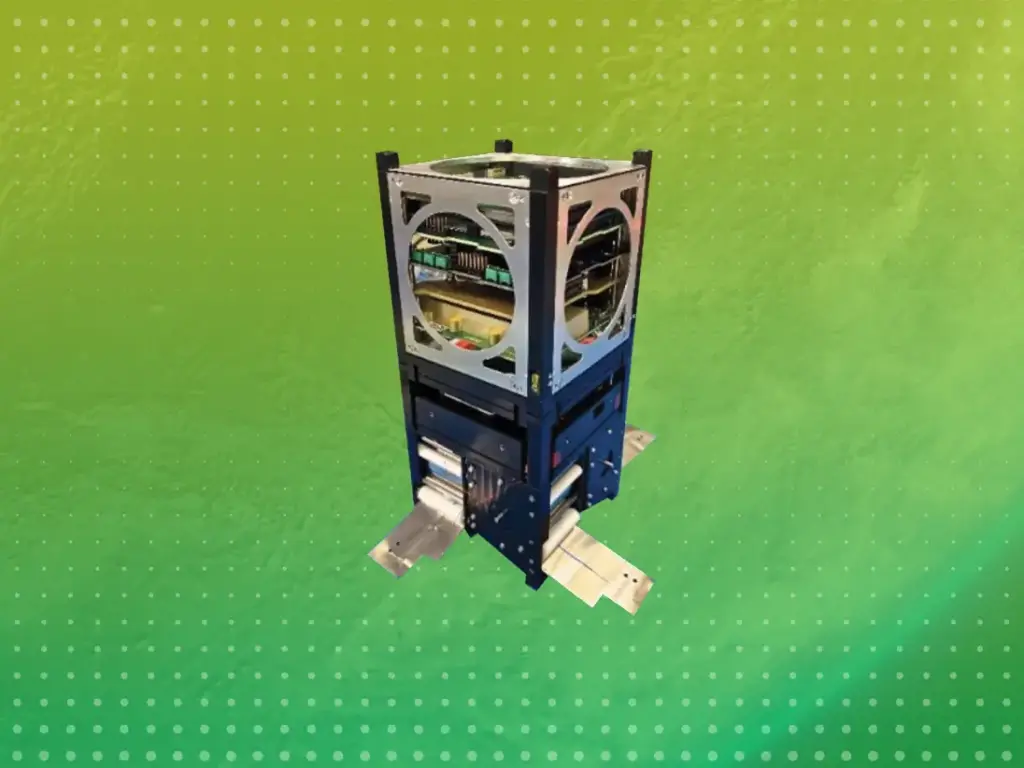
The Deorbit Drag Device (D3) is a propellant-free system for orbital control and end-of-life disposal of small spacecraft, modulating drag to enable maneuvering, controlled deorbit, and targeted re-entry.
Typed specifications2 values
Discloses 0 of 10 fields engineers filter by in this category (category median 3).
- Envelope (L×W×H)
- 10 cm x 10 cm x 5.9 cm (under 1U cubic form factor) product page
- Flight heritage
- Successfully deployed in September 2022 from the International Space Station product page
Each value is typed with its unit and measurement condition and cites the datasheet page it was taken from. Nothing is guessed: a field that is absent here has not been published by the manufacturer. machine-extracted ✓ checked by NewSpace Market ✓ manufacturer confirmed by the manufacturer.
As published by the supplier3 lines, in the manufacturer's own wording
- Increase in overall size
- 10 cm x 10 cm x 5.9 cm (under 1U cubic form factor)
- Deorbit altitude capability
- as high as 700 km
- Flight heritage
- Successfully deployed in September 2022 from the International Space Station
About
The Orbotic Systems Deorbit Drag Device (D3) is a propellant-free system engineered for orbital control and end-of-life disposal of spacecraft. It functions by modulating spacecraft drag to control orientation and orbital decay, facilitating maneuvering, controlled deorbit, and targeted re-entry. This system aims to reduce complexity compared to propulsive solutions while offering a reliable method for orbital lifecycle management. Key features include its simplicity, reliability, low cost, and non-propulsive nature. It addresses challenges faced by small spacecraft operators by enabling maneuvering and deorbit without expensive thrusters, assisting with compliance for regulations like the FCC’s ‘5-year orbital debris rule’, and helping to avoid collisions and the generation of new debris. D3 supports space traffic management and satellite control, improves ground radar visibility, and lowers mission costs due to its reduced complexity. As a passive system, it carries no explosive risk and is designed to fit a wide range of satellite form factors. It is capable of deorbiting satellites from altitudes as high as 700 km and can be used collectively for enhanced effect. The D3 is designed to be compliant with regulations requiring non-geostationary satellite operators to deorbit their satellites after the end of operations. It physically attaches to a host spacecraft prior to flight, allowing operators to comply with post-mission disposal rules in LEO regimes where they might otherwise not be compliant. This self-contained product interfaces directly with CubeSats or small spacecraft, adding a minimal increase in overall size (10cm x 10cm x 5.9cm, under 1U cubic form factor). Operation begins via an encrypted end-of-life command, at which point it utilizes the host spacecraft’s power system to deploy its drag surfaces. Orbotic Systems offers flexibility to upgrade D3 with atmospheric entry targeting, telemetry, and alternative power sources to provide mission flexibility and end-of-mission alternatives. The product has undergone functional testing in a ground environment and achieved successful deployment from the International Space Station in September 2022.
Documentation
No public datasheet yet — request the datasheet / ICD from the supplier.