Space Robotics and In-Space Assembly
 GITAI
GITAI
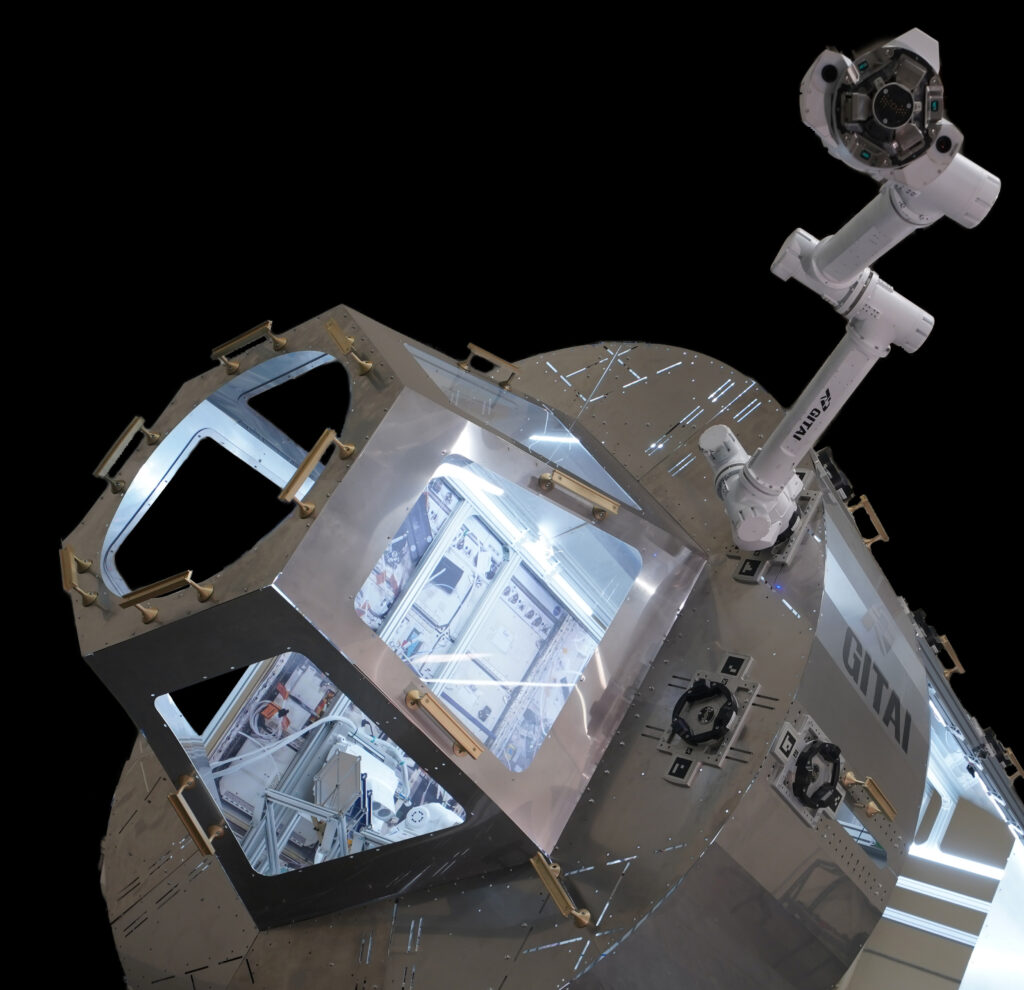
GITAI's general-purpose space robots for ISS external maintenance, lunar surface operations, and in-space manufacturing — reducing the need for costly and dangerous human spacewalks.
Technical specifications
- Robot
- S2 robotic arm — force-sensing, teleoperated, general-purpose
- Iss demo
- 2021 external ISS maintenance (Nanoracks Bishop Airlock) — first private company ISS robot op
- Target markets
- Space station maintenance, lunar surface construction, in-space assembly
- Key investor
- Yamaha Motor (robotics manufacturing expertise)
- HQ
- Tokyo, Japan (US subsidiary in Los Angeles)
About
GITAI is a Japanese space robotics company developing general-purpose teleoperated and autonomous robots that can perform manual tasks in space — replacing or augmenting human spacewalks (EVA) for maintenance, assembly, and manufacturing operations on space stations, satellites, and the lunar surface.
GITAI’s robotic arm (S2 model) was demonstrated on the ISS in 2021 as the first external robot operation on the ISS conducted by a private company, successfully performing maintenance tasks on the exterior of the Nanoracks Bishop Airlock. The demonstration validated GITAI’s force-sensing arm and teleoperation system under real space conditions.
GITAI is targeting the lunar surface operations market as NASA’s Artemis program and commercial lunar ventures require significant surface construction and maintenance work. A GITAI lunar robot could install solar panels, connect power cables, move equipment, and perform geological sampling tasks — work that is risky and time-limited for suited astronauts but can be done continuously by a robot over months. GITAI has received investment from Yamaha Motor (which brings robotics manufacturing expertise) and is headquartered in Tokyo, Japan, with a US subsidiary in Los Angeles for NASA contract work.
Documentation
No public datasheet yet — request the datasheet / ICD from the supplier.