Space Station Habitat Modules
 Gravitics
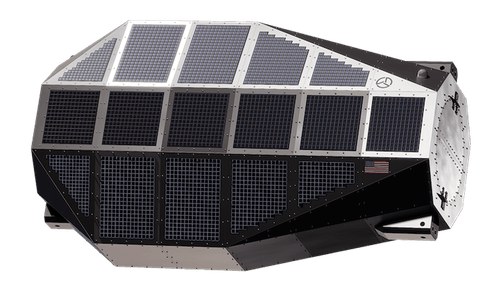
Gravitics' large commercial space station habitat modules — pressurized living and working volumes for LEO stations that offer far more internal space than current ISS modules.
Typed specifications1 values
Discloses 0 of 11 fields engineers filter by in this category (category median 1).
- Material (as printed)
- Composite primary structure for mass efficiency product page
Each value is typed with its unit and measurement condition and cites the datasheet page it was taken from. Nothing is guessed: a field that is absent here has not been published by the manufacturer. machine-extracted ✓ checked by NewSpace Market ✓ manufacturer confirmed by the manufacturer.
As published by the supplier6 lines, in the manufacturer's own wording
- Product
- StarMax large-diameter pressurized habitat modules for commercial space stations
- Advantage
- Larger internal volume than ISS modules (enabled by Falcon Heavy/New Glenn fairing)
- Market
- NASA Commercial LEO Destinations (CLD) program, Axiom, Orbital Reef, Starlab
- Materials
- Composite primary structure for mass efficiency
- Funding
- Venture investors + NASA contracts
- HQ
- Seattle, Washington, USA
About
Gravitics is a US commercial space habitat company developing large pressurized modules for commercial space stations. As NASA phases out the ISS (planned deorbit ~2030), it is funding commercial LEO destinations (CLD) through Axiom Space, Orbital Reef (Blue Origin), Starlab, and Nanoracks’ Starlab station — Gravitics is developing habitat modules that integrate with these platforms.
Gratiics’ StarMax habitat module design offers significantly larger internal volumes than ISS modules, enabled by manufacturing using composites and advanced manufacturing techniques on the ground and launching on large-diameter fairing vehicles (Falcon Heavy, New Glenn). Larger internal volumes support more crew, more science equipment, and higher-throughput commercial space operations — crucial for the station economics needed to be profitable without NASA government contracts.
Gratiics is backed by venture investors and has received NASA contracts to develop habitat module technology. The company’s approach emphasizes modular design that allows their habitats to connect to multiple space station architectures — making Gravitics a potential supplier to multiple CLD programs rather than a single-customer vendor. The company is headquartered in Seattle, Washington.
Documentation
No public datasheet yet — request the datasheet / ICD from the supplier.