Millennium Space Systems Small Satellite Systems
 Millennium Space Systems
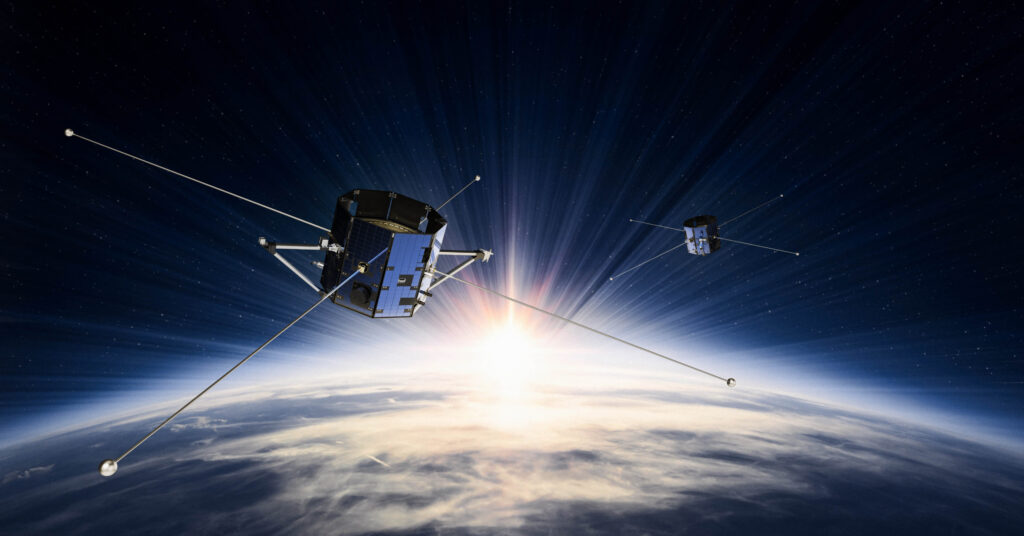
Millennium Space Systems provides highly capable and sophisticated small satellite systems and constellations for various missions including missile warning/defense, advanced space, ISR, and communications, designed for affordability, performance, and flexibility across multiple orbits.
Key figurescomparable across the catalogue
- Power
- 500 W
Normalised to common units so this product can be compared with others in its category. The supplier's own wording is below.
As published by the supplier
- LEO satellite class
- 10 kg - 1,000 kg Class
- LEO power
- Up to 500 w
- LEO size
- 12u to ESPA Grande typical
- LEO lifetimes
- One-to-three-year or three-to-seven-year
- LEO propulsion
- Green, monopropellant and bipropellant
- MEO satellite class
- 50 kg - 3,000 kg Class
- MEO power
- Up to 4,000 w
- MEO size
- 1/2 ESPA to launch-vehicle limited
- MEO lifetimes
- One-to-three-year or three-to-seven-year
- MEO radiation environment
- Rated to MEO radiation environments
- MEO propulsion
- Electric, monopropellant and bipropellant
- GEO satellite class
- 50 kg - 3,000 kg Class
- GEO power
- Up to 4,000 w
- GEO size
- 1/2 ESPA to launch-vehicle limited
- GEO lifetimes (single-string avionics)
- Three-to-five-year
- GEO lifetimes (selective-redundancy)
- Five-to-seven-year
- GEO radiation environment
- Rated to GEO radiation environments
- GEO propulsion
- Electric, monopropellant and bipropellant
- V-LEO altitude
- Approximately 150 km above Earth
- Wfov space program launch
- Set for 2022 Launch
About
Millennium Space Systems offers high-quality small satellite systems designed to benefit life on Earth through various mission opportunities. They disrupt traditional industries like missile warning and defense by rapidly designing and delivering high-performing, flexible systems across orbits at affordable prices. Their advanced space solutions provide highly capable and sophisticated small sat constellations with greater processing power, maneuverability, agility, and autonomy. For Intelligence, Surveillance, & Reconnaissance (ISR) and Tactical ISR, they develop constellation small satellite systems that provide decision-quality data for timely, informed decisions, with flexible designs operating across orbits. In communications, they combine agile, rapid development small satellite capabilities and platforms with deep space-based communications expertise to deliver next-generation proliferated communications constellations.
Their solutions are focused on affordability, performance, and flexibility, delivering autonomous, dynamic spacecraft. They offer highly agile and maneuverable small satellites capable of hosting different payloads across various orbits. The onboard processing developed by Millennium Space Systems has proven to be orders of magnitude better than heritage systems.
They offer scalable missions to meet diverse needs, including single satellites for development programs and prototyping, prototype constellations with a minimum of three small satellites, and large constellations based on their single satellite and small constellation designs.
Their capabilities extend to various orbital regimes:
– **Low Earth Orbit (LEO):** Systems can be designed to any requirements, offering one-to-three-year or three-to-seven-year lifetimes with selective-redundancy approaches. They support green, monopropellant, and bipropellant propulsion.
– **Medium Earth Orbit (MEO):** Systems can be designed to any requirements, offering one-to-three-year or three-to-seven-year lifetimes with selective-redundancy approaches. These systems are rated for MEO radiation environments and offer electric, monopropellant, and bipropellant propulsion.
– **Geosynchronous Orbit (GEO):** Small satellites can be designed to any requirements, offering three-to-five-year lifetimes with single-string avionics or five-to-seven-year lifetimes with selective-redundancy approaches. These systems are rated for GEO radiation environments and offer electric, monopropellant, and bipropellant propulsion.
– **Cis-Lunar Space:** Orbit-agnostic capabilities are easily transitioned to cis-lunar space to service and protect this growing domain.
– **Very-Low Earth Orbit (V-LEO):** Future opportunities include V-LEO (approximately 150 km above Earth) for quick missions and tactical support, offering lower all-around costs due to shorter mission lives.
Documentation
- 6a15e499f0cc92f9a98386c9_MSS08012-204-RQT Rev E Quality Clause Requirements.pdf PDF source: cdn.prod.website-files.com ↗
Need the full ICD, test reports or a specific revision? Ask the supplier directly.