Mission Space Radiation Monitoring Instruments (ZOHAR, SOLARIS, LEEMR)
 Mission Space
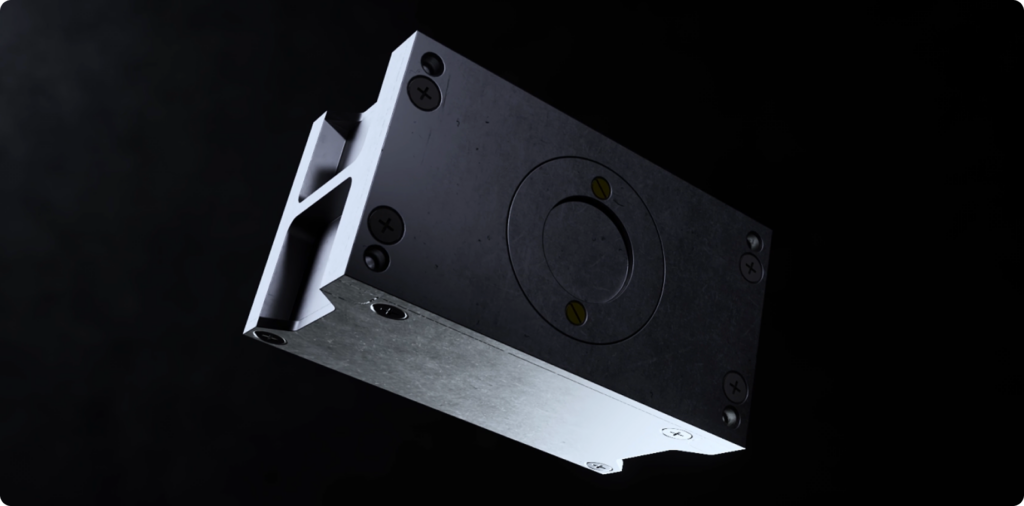
Ultra-compact radiation monitoring payloads under 1 W: ZOHAR-I silicon telescope and Cherenkov monitor (flight proven), SOLARIS deep-space suite, LEEMR lunar dust and surface-charging monitor.
Key figurescomparable across the catalogue
- Mass
- 50 kg
- Power
- 50 W
Normalised to common units so this product can be compared with others in its category. The supplier's own wording is below.
As published by the supplier
- Pl-1f dimensions / mass / power
- 85 x 50 x 70 mm / < 0.6 kg / < 1 W
- Pl-1m dimensions / mass / power
- 85 x 50 x 75 mm / < 0.6 kg / < 1 W
- Pl-2 dimensions / mass / power
- 147 x 95 x 30 mm / < 0.7 kg / < 1 W
- Pl-3m dimensions / mass / power
- 85 x 50 x 60 mm / < 1 kg / < 1.5 W (preliminary)
- Pl-1 charged particle ranges
- Electrons 0.1 to 10 MeV, protons 1 to 250 MeV
- Pl-2 charged particle ranges
- Electrons > 5 MeV, protons > 450 MeV
- Pl-3m measurands
- Collected excess charge, induced potential, dust density
- Data produced
- PL-1f 1-75, PL-1m 10-250, PL-2 1-70, PL-3m 1-50 MiB/day
- Field of view
- PL-1f 25-50 deg, PL-1m 90-110 deg, PL-2 omnidirectional, PL-3m hemisphere
- Lead time
- PL-1f 3 months, PL-1m 5 months (preliminary), PL-2 3 months
- Detector types
- PL-1 silicon telescope; PL-2 Cherenkov detector; PL-3m flat Langmuir probe + capacitance sensor
- Orbiter set
- 2x PL-1f (zenith and nadir oriented) + 2x PL-2 coaxial to PL-1, mass < 2 kg
- Lander set
- PL-1m (looking sideways) + PL-2, mass < 1 kg
- Auxiliary
- 9-axis sensor
- Zohar-i heritage
- Flight proven; pathfinder launched March 2025 on Transporter-13; Global Tech Award 2025
- Solaris availability
- Flight-ready configurations for integration starting 2028
- Leemr status
- Selected by NASA, with NASA Goddard Space Flight Center; TRL 7 in 2027
About
Mission Space develops ultra-compact instruments for radiation monitoring, including charged particle flux spectrometry, surface charge investigations and lunar environmental monitoring. Sensors are designed for space-origin missions: onboard satellites and spacecraft, from LEO to lunar orbiters and landers.
ZOHAR-I (flight proven) is focused on LEO missions, tracking corpuscular radiation environments within the Earth’s magnetosphere. It consists of two instrument types: the PL-1 silicon spectrometer and the PL-2 Cherenkov monitor. Capabilities include electron, proton and alpha-particle spectra via silicon telescopes, cosmic ray and SEP flux via Cherenkov detectors, sub-second measurement cadence and under 1 W power in a compact form factor. A pathfinder mission launched in March 2025 on Transporter-13, and the suite received a Global Tech Award in 2025.
SOLARIS is a ruggedized, ultra-compact radiation monitoring suite engineered for high-fidelity space weather investigations in the solar system’s harshest environments, offering an advanced multi-sensor payload, deep-space hardened design, high-cadence dynamics, ultra-low SWaP footprint and modular scalability. Flight-ready configurations are available for integration starting 2028.
LEEMR combines a surface charge sensor with a dust-sensitive module, measuring both ambient electrostatic conditions and the specific contribution of dust to local charging. It is intended for ground-based lunar weather monitoring stations, was selected by NASA and is developed in collaboration with NASA Goddard Space Flight Center, targeting TRL 7 in 2027 and building on ZOHAR electronics and autonomous measurement software heritage.
Instruments in the pipeline are PL-3 (surface charge monitor), PL-4 (solar UV / X-ray monitor) and a further PL-4 (X-ray / soft gamma-ray / electron spectrometer).
Documentation
No public datasheet yet — request the datasheet / ICD from the supplier.