GO-2 Electric Propulsion System
 Morpheus Space
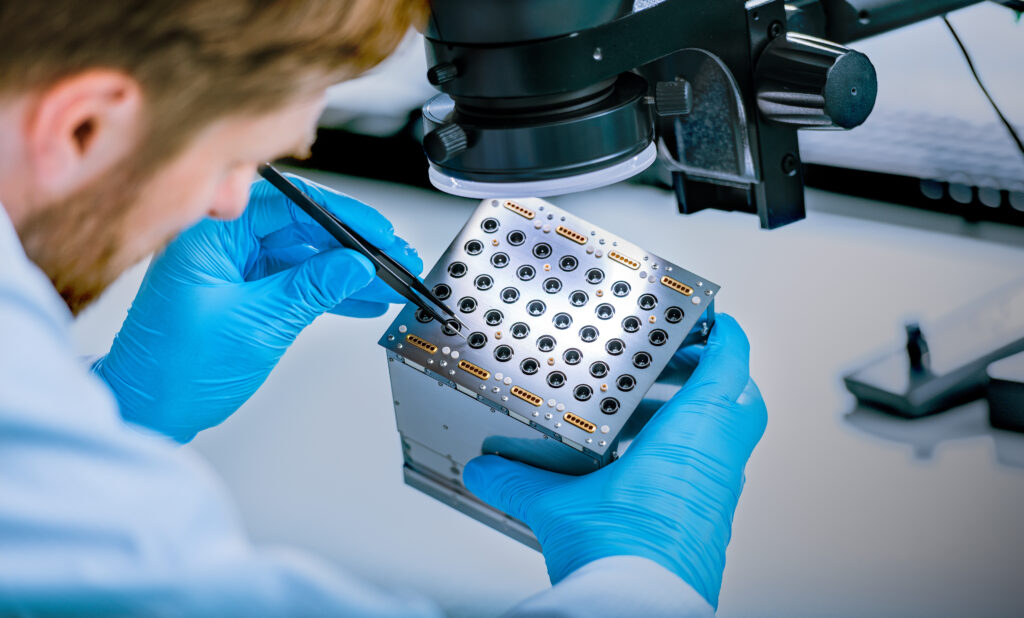
Modular ~1U FEEP electric propulsion unit with 40 individually controlled thrusters and solid metallic propellant, for spacecraft from 6U upwards.
Typed specifications5 values
Discloses 2 of 11 fields engineers filter by in this category (category median 3).
- Envelope (L×W×H)
- Approximately 1U modular unit product page
- Total impulse
- 12 400 N·s product page
- Propellant
- other solid metal propellant, metal not named · product page
- Power consumption
- 7 W product page
- Flight heritage
- Core technology in orbit since 2018; commercial customer missions since 2023 product page
Each value is typed with its unit and measurement condition and cites the datasheet page it was taken from. Nothing is guessed: a field that is absent here has not been published by the manufacturer. machine-extracted ✓ checked by NewSpace Market ✓ manufacturer confirmed by the manufacturer.
As published by the supplier10 lines, in the manufacturer's own wording
- Total thrust range
- 5 microN - 400 microN
- Optimal total impulse range
- 12.4 kNs - 6.2 kNs
- Power
- 7 W - 40 W
- Footprint
- 113 x 98 mm
- Dimensions
- Approximately 1U modular unit
- Thrusters per system
- 40 individual thrusters, each with its own propellant tank and independent thrust control
- Propellant
- Solid metallic propellant; zero leakage, no moving parts, chemicals or pressurization
- Supported spacecraft
- 6U and up
- Technology type
- FEEP (field-emission electric propulsion)
- Flight heritage
- Core technology in orbit since 2018; commercial customer missions since 2023
About
From constellation deployment and repositioning to deorbiting, collision avoidance, and station keeping, the GO-2 electric satellite propulsion system is equipped to handle every aspect of the mission. It is built to be the simplest, most efficient and cost-effective propulsion system, enabling mobility throughout the entire mission lifetime.
Efficient: the total impulse provided by the GO-2 system enables satellite mobility for long durations, ensuring satellite operators get full value out of their payload.
Reliable: each GO-2 system contains 40 individual thrusters, each with its own propellant tank and independent thrust control, offering an unprecedented level of redundancy and precision.
Modular: as a modular propulsion unit at approximately 1U in size, GO-2 can support a wide range of spacecraft from 6U and up.
Key features include a plug and play design that removes complexities of system integration; a solid metallic propellant that ensures zero leakage, with no moving parts, chemicals or pressurization; engineered high redundancy to maximize operational uptime and reliability; and 40 individually controlled thrusters enabling precise maneuvering for various mission requirements. GO-2 builds on three generations of space-proven technology, with core technology in orbit since 2018, support of commercial customer missions in space since 2023, the first-ever in-space test of a nanosatellite propulsion system and the world’s first nanosatellite collision avoidance maneuver.
Documentation
No public datasheet yet — request the datasheet / ICD from the supplier.