ND-50 Neumann Drive — Pulsed Cathodic Arc Thruster
 Neumann Space
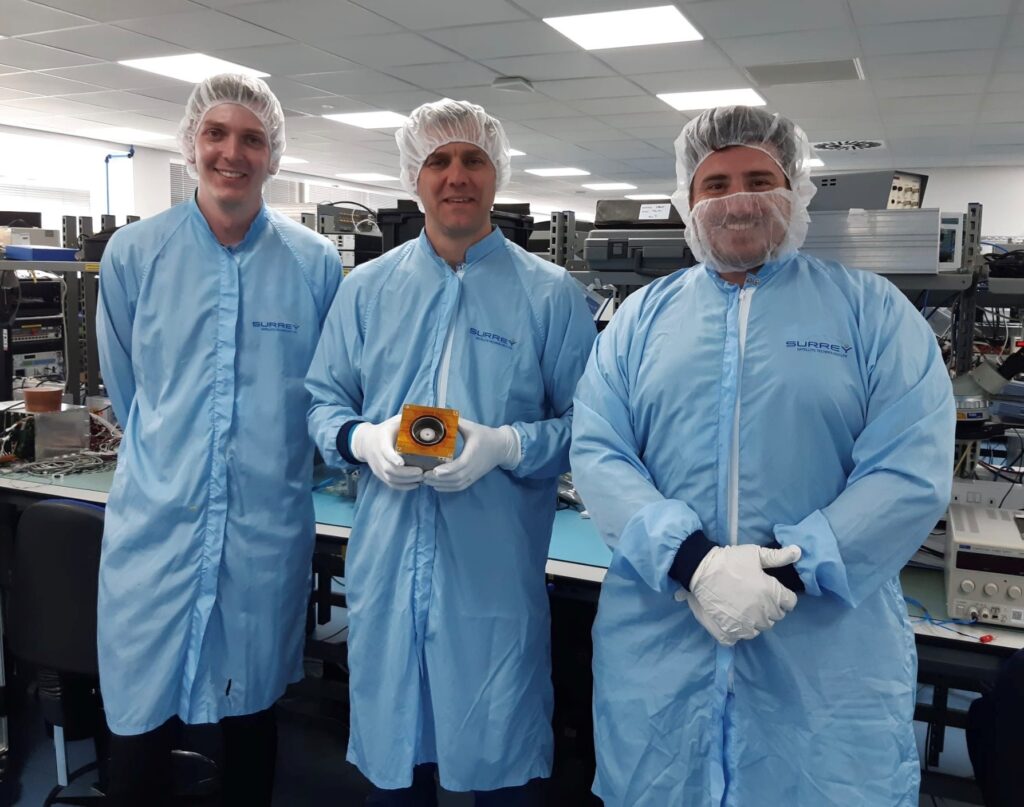
Neumann Space's ND-50 is a solid-metal-propellant pulsed cathodic arc thruster: 50 W max power, 1,400–2,000 s Isp, 1.4 kg total mass, 100 × 96 × 96 mm, TRL 8–9 with flight heritage on 3 missions including SSTL's CarbSAR and ESA's EDISON.
Typed specifications5 values
Discloses 2 of 10 fields engineers filter by in this category (category median 3).
- Mass
- 1.4 kg product page
- Envelope (L×W×H)
- 100 × 96 × 96 mm product page
- Propellant
- other solid metal rod, molybdenum (also Mg, Ti, V, Al, C), cathodic… · product page
- Power consumption
- 50 W product page
- Flight heritage
- SpIRIT (2023), EDISON/ESA Pioneer (2025), SSTL CarbSAR (2025) product page
Each value is typed with its unit and measurement condition and cites the datasheet page it was taken from. Nothing is guessed: a field that is absent here has not been published by the manufacturer. machine-extracted ✓ checked by NewSpace Market ✓ manufacturer confirmed by the manufacturer.
As published by the supplier13 lines, in the manufacturer's own wording
- Thruster type
- Centre-Triggered Pulsed Cathodic Arc Thruster (CT-PCAT)
- Max input power
- 50 W
- Specific impulse (Isp)
- 1,400–2,000 s (operational); up to ~14,690 s (laboratory, magnesium)
- Thrust efficiency
- ~20 µN/W
- Estimated peak thrust
- ~1 mN at 50 W
- Total wet mass
- 1.4 kg
- Dimensions
- 100 × 96 × 96 mm
- Total impulse
- ~1.5 kNs
- Propellant
- Solid metal rod — molybdenum (flight-standard); also Mg, Ti, V, Al, C
- Propellant advantage
- No gas tanks, no pressure vessels, long shelf life; can use orbital debris as propellant
- TRL
- 8–9 (3 flight missions: SpIRIT, EDISON, SSTL CarbSAR)
- Flight heritage
- SpIRIT (2023), EDISON/ESA Pioneer (2025), SSTL CarbSAR (2025)
- Product family
- ND-25TC (lower power), ND-50, ND-300, ND-Flatypus (larger spacecraft)
About
The ND-50 Neumann Drive is Neumann Space’s primary commercial electric propulsion system, based on the patented Centre-Triggered Pulsed Cathodic Arc Thruster (CT-PCAT) technology developed at the University of Sydney. Instead of xenon or krypton gas, the Neumann Drive uses a solid conductive metal rod as propellant — molybdenum in production missions, but the system is also compatible with magnesium, titanium, vanadium, aluminum, and carbon, including potential use of space debris material as propellant. Each firing creates a short-duration high-current arc discharge (~200 µs, ~3 kA) that erodes metal from the rod surface into a plasma stream that exhausts at tens of kilometres per second. At 50 W maximum input power, the ND-50 achieves 1,400–2,000 s specific impulse (Isp) in operational conditions and approximately 20 µN/W thrust efficiency — roughly 1 mN peak thrust at full power. The total wet mass is 1.4 kg in a compact 100 × 96 × 96 mm envelope. The ND-50 has accumulated flight heritage on three missions: SpIRIT nanosatellite (University of Melbourne, launched June 2023, in-orbit firing confirmed), EDISON satellite under the ESA Pioneer programme (launched January 2025, fired February 2025), and SSTL’s CarbSAR commercial SAR satellite (commissioned 2025 — the final validation flight before commercial production). Neumann Space is an Adelaide, Australia-based company and offers the ND-50 alongside the lower-power ND-25TC, the ND-300, and the ND-Flatypus variants for larger platforms.
Documentation
No public datasheet yet — request the datasheet / ICD from the supplier.