Supernova — Rapidly Maneuverable Multi-Orbit Spacecraft
 Portal Space Systems
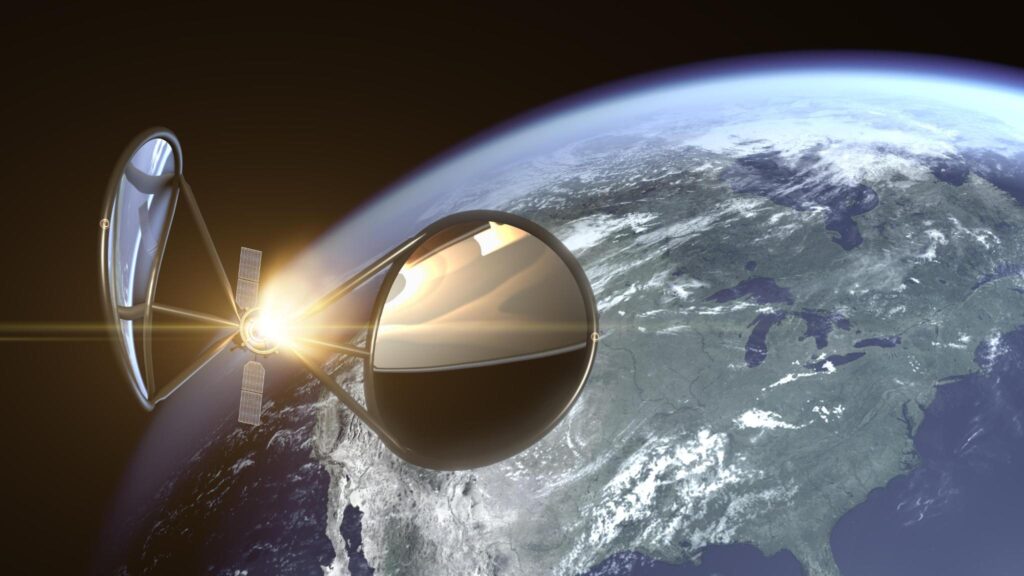
Portal Space Systems' Supernova is a ~500 kg solar thermal propulsion spacecraft delivering up to 6 km/s delta-V using ammonia propellant: LEO-to-GEO in hours, LEO-to-cislunar in days, 5+ year operational life, payload-agnostic up to 500 kg.
Typed specifications4 values
Discloses 1 of 7 fields engineers filter by in this category (category median 3).
- Max payload mass
- 500 kg max · product page
- Propulsion
- included ammonia propellant · product page
- Delta-v
- 6 000 m/s max · product page
- Max satellite wet mass
- 500 kg Spacecraft mass · product page
Each value is typed with its unit and measurement condition and cites the datasheet page it was taken from. Nothing is guessed: a field that is absent here has not been published by the manufacturer. machine-extracted ✓ checked by NewSpace Market ✓ manufacturer confirmed by the manufacturer.
As published by the supplier14 lines, in the manufacturer's own wording
- Spacecraft mass
- ~500 kg
- Total delta-v
- Up to 6 km/s
- Propulsion type
- Solar Thermal Propulsion (STP) — Flare HEX Thruster
- Propellant
- Ammonia (storable, non-cryogenic)
- LEO-to-GEO transfer time
- Hours
- LEO-to-cislunar transfer time
- Days
- Standby-to-ready time
- Minutes
- Payload swap time
- <24 hours
- Payload capacity
- Up to 500 kg (payload-agnostic)
- Operational lifespan
- 5+ years of continuous maneuvering
- Operational range
- LEO through cislunar space
- Propulsion TRL
- Vacuum-validated at full power (September 2025)
- Demo vehicle
- Starburst — 80% shared subsystems; SpaceX Transporter-18 manifest, Q4 2026
- Supernova launch target
- 2027
About
Supernova is Portal Space Systems’ flagship rapidly maneuverable spacecraft, built around the company’s patented Flare solar thermal propulsion (STP) system. Unlike chemical propulsion (high thrust, low Isp) or electric propulsion (high Isp, low thrust), solar thermal propulsion heats ammonia propellant using concentrated solar energy stored in a thermal battery, achieving specific impulse approaching nuclear thermal propulsion performance without a reactor — combining meaningful thrust with efficiency far beyond chemical systems. The result is a ~500 kg spacecraft capable of up to 6 km/s of total delta-V that can transfer from LEO to GEO in hours and reach cislunar space in days rather than the weeks or months required by competing systems. Supernova is payload-agnostic, hosting up to 500 kg of customer payload, and can be readied from standby to operational in minutes, with payload swap turnarounds under 24 hours. The Flare Heat Exchanger (HEX) thruster — a 3D-printed component that combines heat exchanger and nozzle into a single piece — was validated at full power in a thermal vacuum chamber in September 2025, making Portal the first commercial company to successfully test solar thermal propulsion at operational temperatures in a vacuum environment. The Supernova shares 80% of its subsystems with the smaller Starburst demonstration vehicle, which is manifested on SpaceX Transporter-18 in Q4 2026. Portal Space Systems, based in Bothell, WA, raised a $50 million Series A in April 2026. Target applications include national security space, cislunar logistics, rapid ISR retasking, space domain awareness, on-orbit servicing, and debris removal (in partnership with Paladin Space for DRaaS missions).
Documentation
No public datasheet yet — request the datasheet / ICD from the supplier.