Q-PACE (CubeSat Particle Aggregation and Collision Experiment)
 University of Central Florida
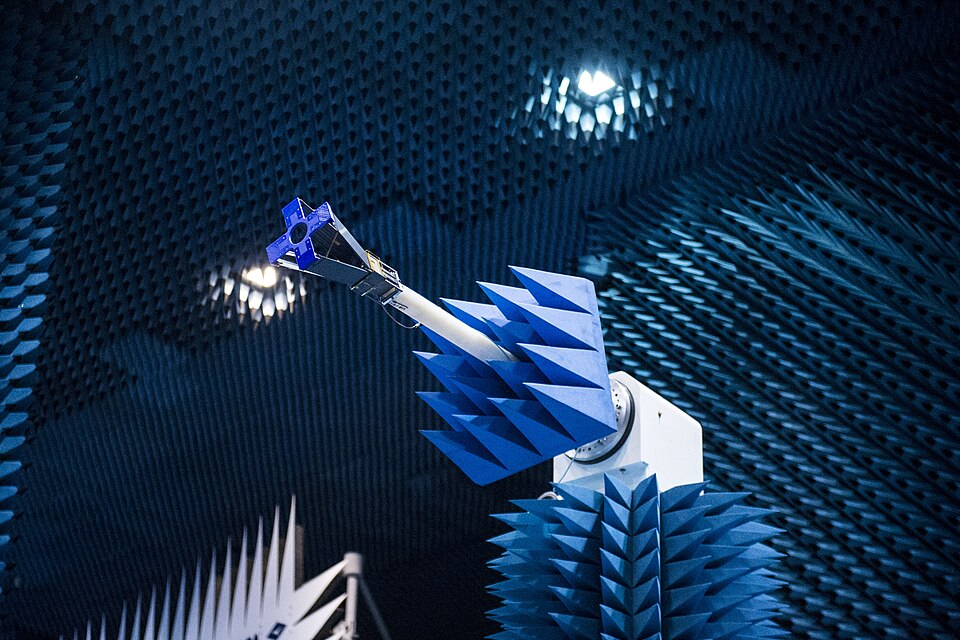
3U CubeSat built by UCF's Center for Microgravity Research to study low-velocity particle collisions relevant to planetesimal formation.
Technical specifications
- Form factor
- 3U CubeSat
- Dimensions
- 10 cm x 10 cm x 37.6 cm
- Mass
- 3 kg
- Orbit
- Low Earth orbit, ~500 km altitude, ~100 minute period
- Launch date
- 17 January 2021 (Virgin Orbit LauncherOne)
- Mission selection
- NASA ELaNa CubeSat Launch Initiative, 2015
About
Q-PACE is a 3U CubeSat developed at the University of Central Florida’s Stephen W. Hawking Center for Microgravity Research and Education. The mission was designed to observe low-velocity collisions (roughly 1 mm/s to 30 cm/s) between millimeter- to centimeter-scale particles in a long-duration microgravity environment, addressing the ‘meter-size barrier’ problem in planetesimal formation theory. Selected in 2015 under NASA’s ELaNa CubeSat launch initiative, Q-PACE launched on 17 January 2021 aboard Virgin Orbit’s LauncherOne from the Mojave Air and Space Port into a roughly 500 km low Earth orbit. Contact with the spacecraft was not established after deployment, and the mission was declared lost in March 2021.
Documentation
No public datasheet yet — request the datasheet / ICD from the supplier.