NEO — Near Earth Orbiter VLEO Earth Observation Constellation
 Skeyeon
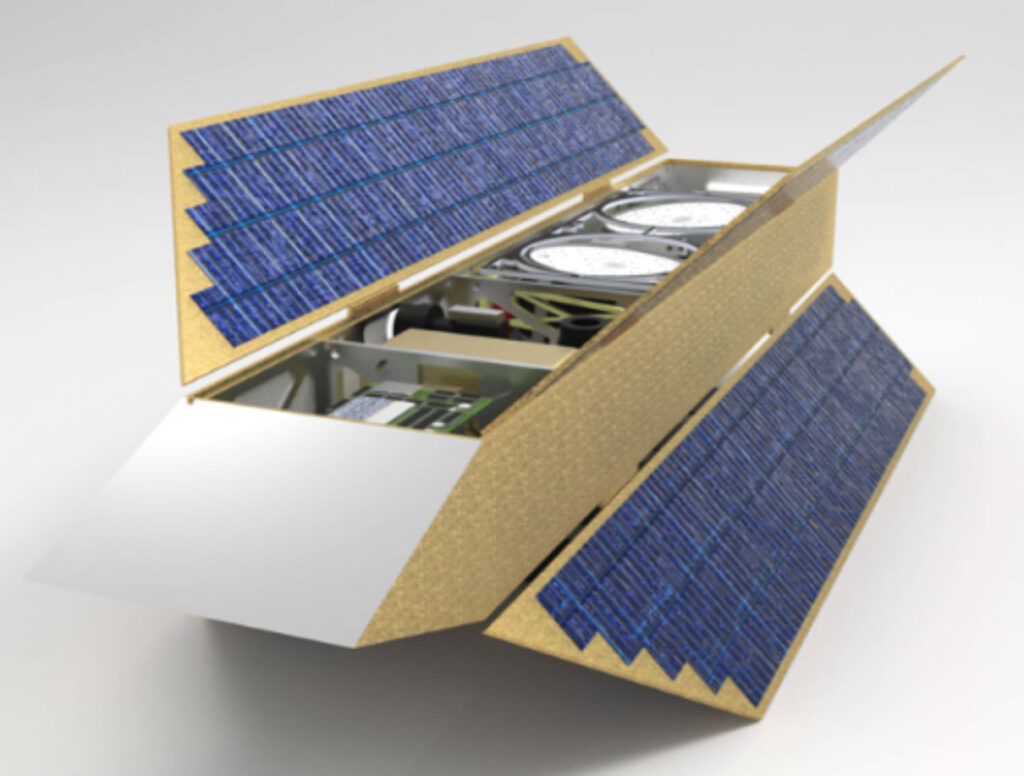
Skeyeon's NEO (Near Earth Orbiter) is a 100-satellite VLEO constellation at ~250 km altitude: 1 m resolution, daily revisit, self-healing atomic-resistant coatings for drag survivability, novel compact imager (10× reduced Z-height), and phased-array antenna for real-time cellular downlink.
Technical specifications
- Orbit
- VLEO (Very Low Earth Orbit), ~250 km altitude
- Resolution
- 1 metre
- Constellation size
- 100 satellites (target)
- Revisit time
- Daily or better
- Satellite lifetime
- ~3 years per satellite
- Key technology 1
- Atomic-resistant, self-healing coatings — enables VLEO drag survivability
- Key technology 2
- Novel compact imager — 10× reduced Z-height vs traditional designs at same resolution
- Key technology 3
- Phased array antenna — real-time high-bandwidth download via cellular infrastructure
- Status
- Pre-launch; SBA grant received 2020
About
The Near Earth Orbiter (NEO) is Skeyeon’s planned very-low Earth orbit (VLEO) small satellite constellation, designed to deliver 1-metre resolution Earth observation imagery with daily or better revisit from 100 satellites flying at approximately 250 km altitude — far lower than conventional EO constellations. At 250 km, atmospheric drag is significant, so Skeyeon has developed atomic-resistant, self-healing surface coatings that protect spacecraft surfaces from atomic oxygen erosion while reducing drag-induced decay. The constellation uses a novel compact high-resolution imager that achieves a 10× reduction in optical assembly Z-height compared to traditional designs at the same resolution, enabling the sensor to fit on a small satellite bus. A phased array antenna provides high-bandwidth data downlink directly through the existing cellular infrastructure, reducing dependence on dedicated ground station networks and enabling lower-latency image delivery to end users. The combination of VLEO altitude and a 100-satellite constellation is designed to provide scalable daily-or-better coverage with each satellite delivering a 3-year mission life. Target applications include daily change-detection imagery, tactical intelligence, surveillance and reconnaissance (ISR), disaster response, and agricultural monitoring. Skeyeon is a US-based startup (founded 2016) and received a $150,000 SBA grant in 2020 for nanosatellite payload development. No satellites have launched to date.
Documentation
- Lower-Altitude-saves-money-USC.pdf PDF source: www.skeyeon.com ↗
- Patent11671169.pdf PDF source: skeyeon.com ↗
Need the full ICD, test reports or a specific revision? Ask the supplier directly.