Spacebus NEO
 Thales Alenia Space
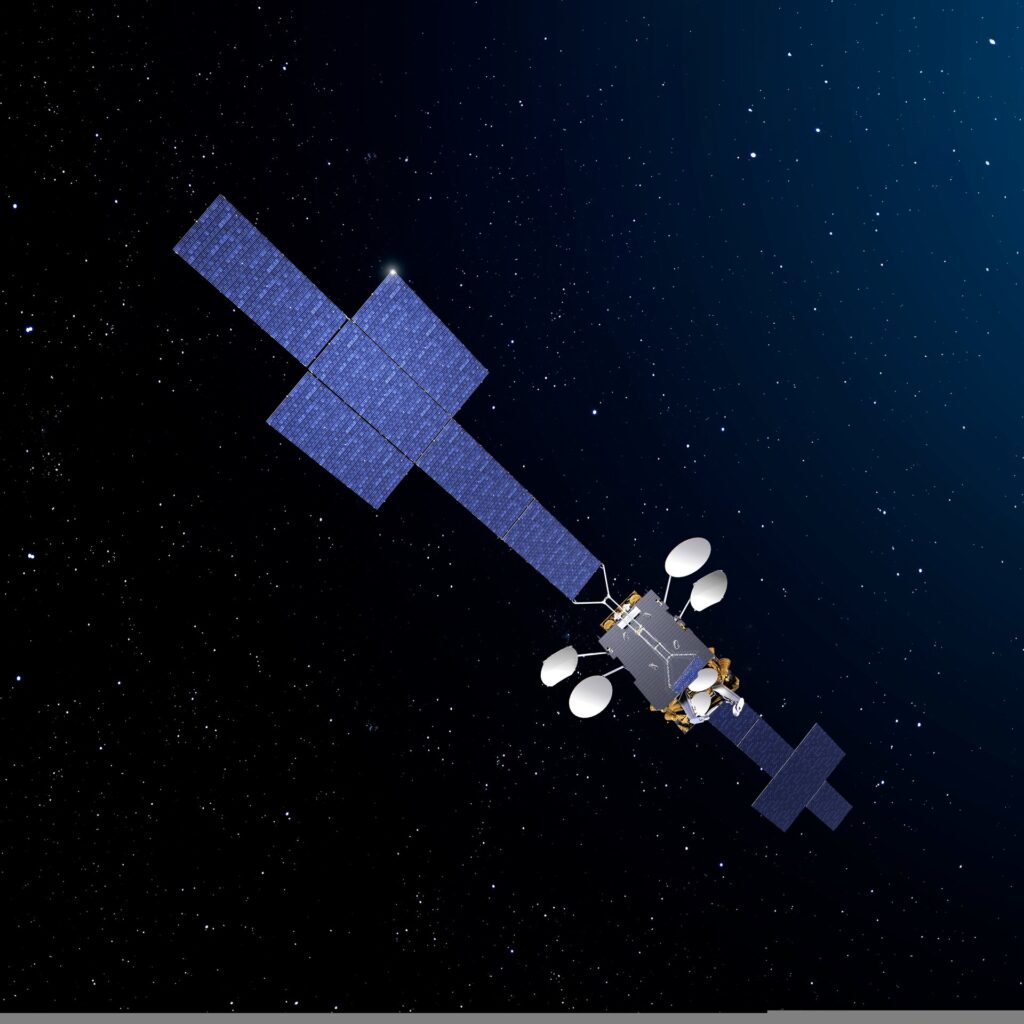
All-electric geostationary telecommunications satellite platform with modular design and high payload power.
Typed specifications6 values
Discloses 3 of 7 fields engineers filter by in this category (category median 3).
- Design lifetime
- 15 years product page
- Orbit
- GEO product page
- Max payload mass
- 2 000 kg max · product page
- Power available to payload
- 20 000 W max · product page
- Propulsion
- included product page
- Max satellite wet mass
- 7 600 kg max · Launch mass · product page
Each value is typed with its unit and measurement condition and cites the datasheet page it was taken from. Nothing is guessed: a field that is absent here has not been published by the manufacturer. machine-extracted ✓ checked by NewSpace Market ✓ manufacturer confirmed by the manufacturer.
As published by the supplier8 lines, in the manufacturer's own wording
- Orbit
- Geostationary orbit
- Mission life
- 15 years
- Payload power
- up to 20 kW
- Launch mass
- up to 7.6 tonnes
- Payload mass
- up to 2 tonnes
- Propulsion
- All-electric
- Launch vehicle compatibility
- Compatible with all major launch vehicles
- Satellites sold (as of announcement)
- 8 (KONNECT, KONNECT VHTS, SATRIA, Amazonas Nexus, Astra 1P, THOR 8, others)
About
Spacebus NEO is Thales Alenia Space’s line of platforms for geostationary telecommunications satellites, developed jointly with ESA (ARTES) and CNES. All Spacebus NEO platforms use all-electric propulsion and a modular architecture split into an avionics module (Cannes, France), a propulsion module (Belfast, UK), and a mission-specific payload module (Toulouse, France), enabling faster, more cost-effective production while remaining customizable to each operator’s mission. As of the mid-2020s, eight Spacebus NEO satellites had been sold, including Eutelsat KONNECT, Eutelsat KONNECT VHTS, SATRIA (Indonesia), Amazonas Nexus (Hispasat), Astra 1P (SES) and THOR 8 (Space Norway).
Documentation
No public datasheet yet — request the datasheet / ICD from the supplier.