420N HTP Bipropellant Kick-Stage Engine
 Thaliana Space
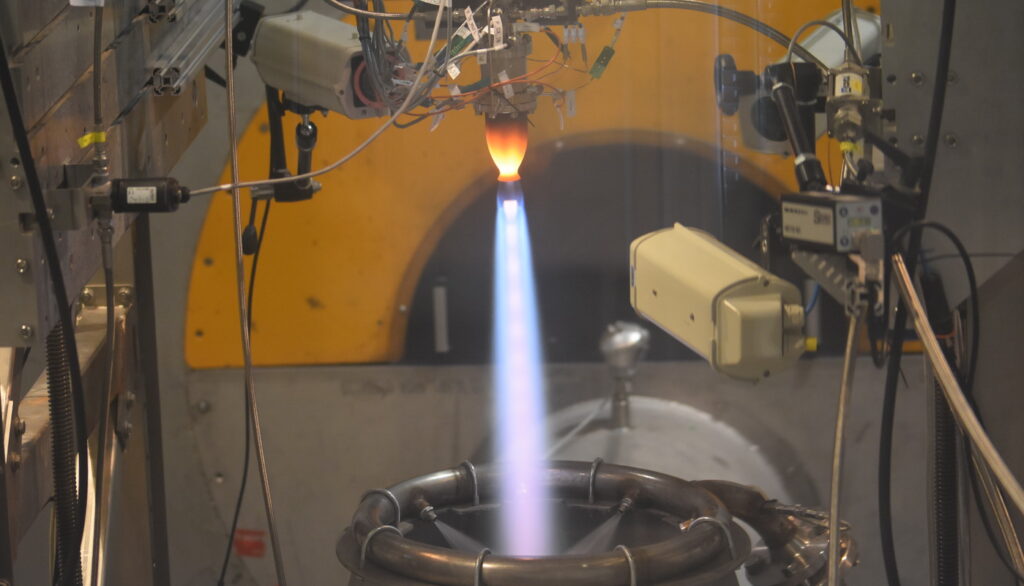
420 N-class bipropellant rocket engine using 98% hydrogen peroxide as oxidizer, developed under ESA's GRACE 1/2 programs and manufactured by Thaliana Space for MaiaSpace's Colibri kick-stage.
Typed specifications1 values
Discloses 0 of 10 fields engineers filter by in this category (category median 3).
- Flight heritage
- ESA GRACE 1 & GRACE 2 programs, Łukasiewicz - ILOT product page
Each value is typed with its unit and measurement condition and cites the datasheet page it was taken from. Nothing is guessed: a field that is absent here has not been published by the manufacturer. machine-extracted ✓ checked by NewSpace Market ✓ manufacturer confirmed by the manufacturer.
As published by the supplier7 lines, in the manufacturer's own wording
- Nominal thrust
- 420 N (per engine)
- Oxidizer
- 98% hydrogen peroxide (HTP)
- Type
- Bipropellant liquid rocket engine
- Application
- Kick-stage / orbital transfer vehicle (OTV) / launcher upper stage
- Flight heritage
- ESA GRACE 1 & GRACE 2 programs, Łukasiewicz - ILOT
- Customer program
- MaiaSpace Colibri kick-stage
- Qualification status
- Atmospheric hot-fire test campaign completed April 2026; vacuum test stand qualification planned
About
The 420 N engine is a bipropellant rocket engine using 98% hydrogen peroxide as oxidizer, built on the results of the ESA-funded GRACE 1 and GRACE 2 projects managed by the Łukasiewicz Research Network – Institute of Aviation (Łukasiewicz – ILOT), together with Thaliana Space’s own investment. It is intended for launcher upper stages, orbital transfer vehicles (OTV) and satellite propulsion applications requiring higher thrust than monopropellant units.
In April 2025, MaiaSpace signed a multi-party agreement with Łukasiewicz – ILOT and Thaliana Space to develop and deliver these engines, used in clusters, for the Colibri maneuvering (kick) stage of MaiaSpace’s orbital rocket – the first European launcher whose first stage will be recovered via vertical landing on a sea barge. Under the agreement, Łukasiewicz – ILOT is responsible for flight-version development and hot-fire qualification testing (including a new vacuum propulsion test facility), while Thaliana Space plays the strategic role of production and delivery of the engines. An atmospheric hot-fire test campaign – including assessment of combustion stability and measurement of thrust, temperatures and pressures at critical points – was successfully completed at the Łukasiewicz – ILOT rocket engine test stand in April 2026, ahead of vacuum test stand qualification.
Documentation
No public datasheet yet — request the datasheet / ICD from the supplier.