Vulcan Centaur
 United Launch Alliance (ULA)
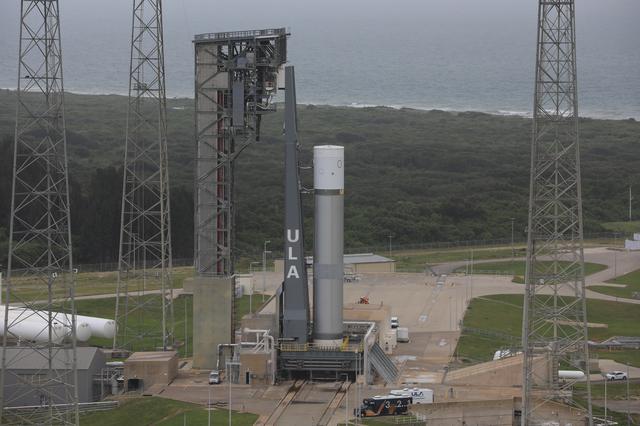
Vulcan Centaur is United Launch Alliance’s (ULA) next-generation rocket designed to replace both the Atlas V and Delta IV Heavy launch vehicles. The two-stage rocket uses two Blue Origin BE-4 LOX/LNG engines on its first stage, with a Centaur V upper stage powered by two RL-10 engines. Vulcan made its inaugural flight on January 8, […]
Key figurescomparable across the catalogue
- Payload capacity
- 27,200 kg
Normalised to common units so this product can be compared with others in its category. The supplier's own wording is below.
As published by the supplier
- First stage engines
- 2× Blue Origin BE-4 (LOX/LNG)
- Upper stage
- Centaur V, 2× RL-10
- Payload to LEO
- up to 27,200 kg (VC6 config)
- Payload to GTO
- up to 13,080 kg (VC6 config)
- Fairing diameter
- 5.4 m
- First flight
- January 8, 2024
- Payload mechanical interface diameter
- 2624 mm
About
Vulcan Centaur is United Launch Alliance’s (ULA) next-generation rocket designed to replace both the Atlas V and Delta IV Heavy launch vehicles. The two-stage rocket uses two Blue Origin BE-4 LOX/LNG engines on its first stage, with a Centaur V upper stage powered by two RL-10 engines. Vulcan made its inaugural flight on January 8, 2024, successfully delivering Astrobotic’s Peregrine lunar lander to a translunar trajectory.
The rocket features a 5.4-meter-diameter payload fairing and is optimized for both GTO, GEO-direct, and deep space missions. Vulcan’s first stage uses a composite core design with six solid rocket booster attach points for enhanced performance on heavy payload missions. The vehicle is the cornerstone of ULA’s strategy to maintain its position as the primary launch provider for United States Department of Defense (DoD) national security space missions under the NSSL Phase 3 Lane 1 contract.
Vulcan is designed to fly in configurations from VC0 (no solid boosters) through VC6 (six solid boosters), providing a wide range of performance capability from approximately 9,000 kg to over 27,200 kg to LEO. The reusable BE-4 engines are retained for recovery following stage separation via ULA’s SMART Reuse propulsion module concept, planned for future operational flights.
Documentation
Need the full ICD, test reports or a specific revision? Ask the supplier directly.