MINIATURE SATELLITES (PocketQubes)
 Xavier Space Solutions (XavSat)
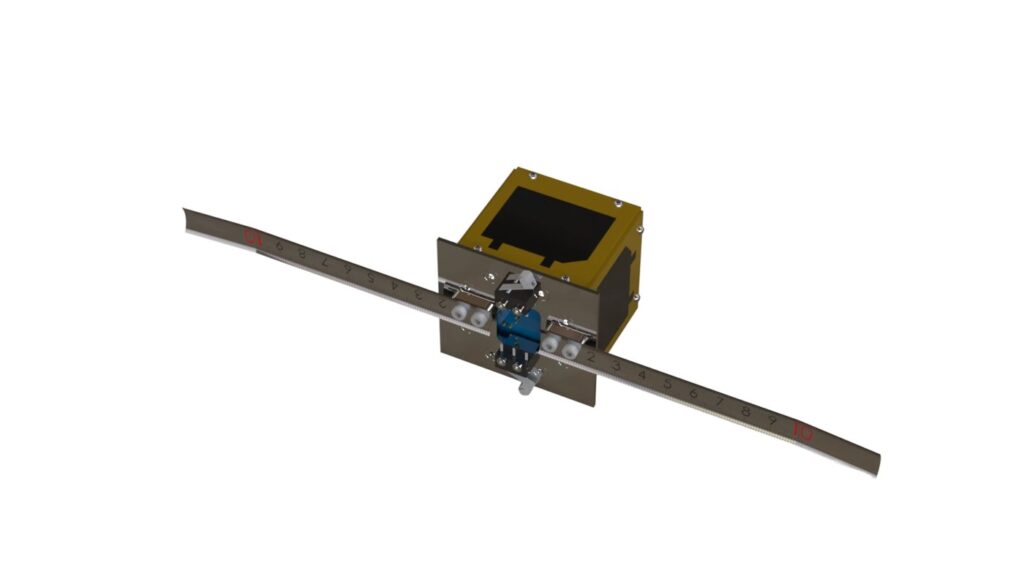
XavSat offers PocketQube satellites (1P to 3P) as low-cost, high-reliability platforms for rapid orbital deployment, available as educational kits or ready-to-fly professional-grade spacecraft.
Typed specifications3 values
Discloses 1 of 7 fields engineers filter by in this category (category median 3).
- Mass
- 250 g product page 250 g max
- Power available to payload
- 1 W product page
Each value is typed with its unit and measurement condition and cites the datasheet page it was taken from. Nothing is guessed: a field that is absent here has not been published by the manufacturer. machine-extracted ✓ checked by NewSpace Market ✓ manufacturer confirmed by the manufacturer.
As published by the supplier11 lines, in the manufacturer's own wording
- Pocketqube
- 1P Chassis (for XavSat-1)
- Payload (XavSat-1)
- (Quantum temperature & pressure payload)
- Average payload power (XavSat-1)
- ~ 1 W
- Altitude control (XavSat-1)
- Passive Bar Magnet
- Mass (XavSat-1)
- <250 g
- Antenna (XavSat-1)
- Deployable 437 MHz UHF dipole antenna
- Payload data downlink (XavSat-1)
- 1.2kb/s (UHF)
- OBC microcontroller
- Atmega328P
- Payload communication protocols
- I²C, SPI & UART etc.
- Power system features
- Solar energy collection, battery charging & power distribution & payload subsystems. Integrates maximum power point tracking (MPPT) circuitry.
- 1p pocketqube kits mass limit
- 250 g
About
XavSat’s Miniature Satellites are PocketQubes, ranging from 1P to 3P form factors, designed to provide a low-cost, high-reliability platform for rapid orbital deployment. These satellites feature a modular architecture with standardized PCB stacks for power, processing, and communications, enabling rapid prototyping from design to flight-ready hardware. They are compatible with standard MR-FOD or AlbaPod deployers. The On-Board Computer (OBC) utilizes an Atmega328P microcontroller. The Payload supports various communication protocols such as I²C, SPI, and UART. The Power system manages solar energy collection, battery charging, power distribution, and payload subsystems, integrating maximum power point tracking (MPPT) circuitry. The Altitude Determination and Control System (ADCS) for the XavSat-1 mission uses the Earth’s magnetic field and a passive bar magnet for stabilization, maintaining orientation without draining onboard power, which is ideal for high-stakes scientific and defense payloads requiring accurate and aligned data. XavSat offers two main configurations: 1p PocketQube Kits (XavSat-P-Kits) for educational or initial space projects, which are entry-level, modular satellite systems (5cm³) providing hands-on experience with core satellite subsystems (OBC, EPS, Radio) and allowing for quick testing in sub-orbital or simulated environments. These kits use standardized, stackable PCB “sandwiches” that meet strict 250g mass limits and are compatible with standard AlbaPod deployers. The second configuration is the Ready-to-Fly (RTF) PocketQube (XavSat-series), a professional-grade, fully functional satellite bus designed for immediate orbital missions. These RTF PocketQubes are complete, integrated spacecraft featuring solar panels for power generation, a high-reliability communication module, and a dedicated module tailored for specific sensors, cameras, or research experiments. They are fully assembled with a flight-proven architecture to ensure reliability from launch to de-orbit. The XavSat-1 mission, Ghana’s first private PocketQube, is set to launch for Earth Temperature and Pressure Profiling, aiming to measure and send back data daily for the mission’s duration.
Documentation
No public datasheet yet — request the datasheet / ICD from the supplier.