


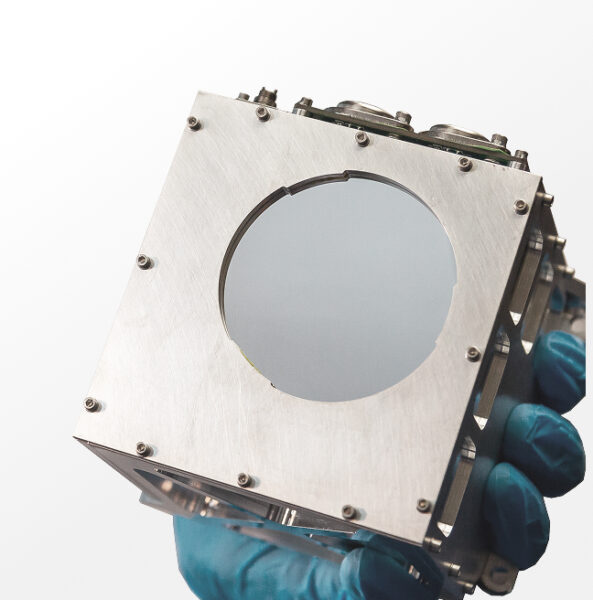
Fibertek offers mission-differentiating laser systems for space, air, and ground domains, specializing in remote sensing (lidar) and optical communications technologies.
Laser Technologies
Fibertek offers mission-differentiating laser systems for space, air, and ground domains, specializing in remote sensing (lidar) and optical communications technologies.
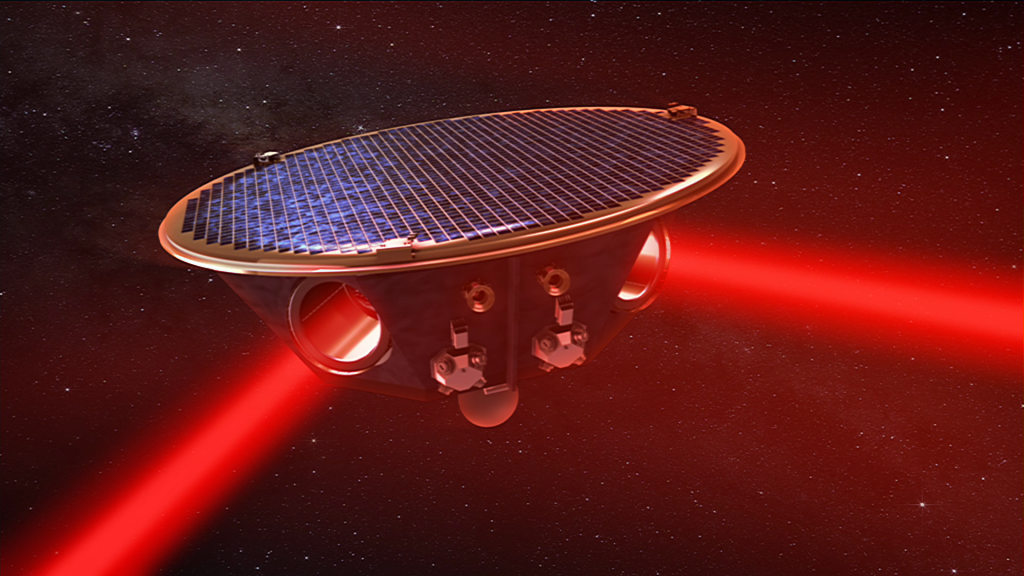
Description
Fibertek's Laser Technologies encompass a range of mission-differentiating laser systems designed for space, air, and ground applications. With over four decades of expertise, they develop first-of-kind capabilities, ensuring precision and reliability for aerospace and defense missions. Their offerings include custom lidar systems for precision mapping, navigation, ranging, tracking, and planetary science, featuring advanced laser transmitters, receiver subsystems, high-reliability and radiation-hardened electronics, novel algorithms, and mission planning. For optical communications, Fibertek engineers high-reliability technologies for long-range, high-bandwidth communications in demanding environments, from ground stations to beyond low Earth orbit. These capabilities include modems, amplifiers, optical transceivers, and complete laser communications terminal systems. Fibertek also provides end-to-end R&D, from concept development through manufacturing readiness, with integrated opto-mechanical design and packaging for harsh environments, and custom radiation-hardened digital and RF electronics for long-duration mission deployment. A notable flight heritage example is their contribution to NASA’s ICESat-2 mission, where they developed and delivered space-qualified laser transmitters and photon-counting detector electronics for the Advanced Topographic Laser Altimeter System (ATLAS). This enabled ultra-precise, long-term measurements of Earth’s ice, vegetation, and surface elevation, providing sub-decimeter elevation measurements from a 500 km altitude with precision 532 nm laser transmitters operating at 10 kHz and receive electronics for high-resolution global mapping. The system demonstrated extreme reliability with consistent performance after 2 trillion shots and a projected life exceeding 17 years on orbit.
Specifications
| Flight heritage | NASA’s ICESat-2 mission (space-qualified laser transmitters and photon-counting detector electronics for ATLAS) |
|---|---|
| Laser wavelength (ICESat-2) | 532 nm |
| Laser repetition rate (ICESat-2) | 10 kHz |
| Operational altitude (ICESat-2) | 500 km |
| Elevation measurement accuracy (ICESat-2) | Sub-decimeter |
| Shot count (ICESat-2) | 2 trillion shots and counting |
| Projected on-orbit life (ICESat-2) | Exceeds 17 years |