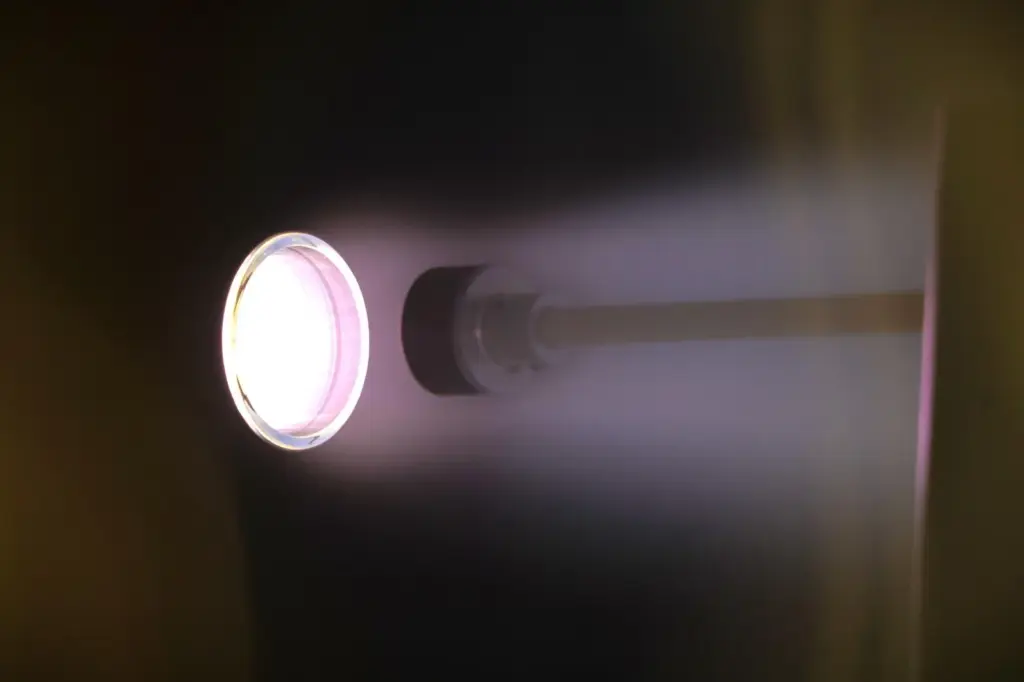
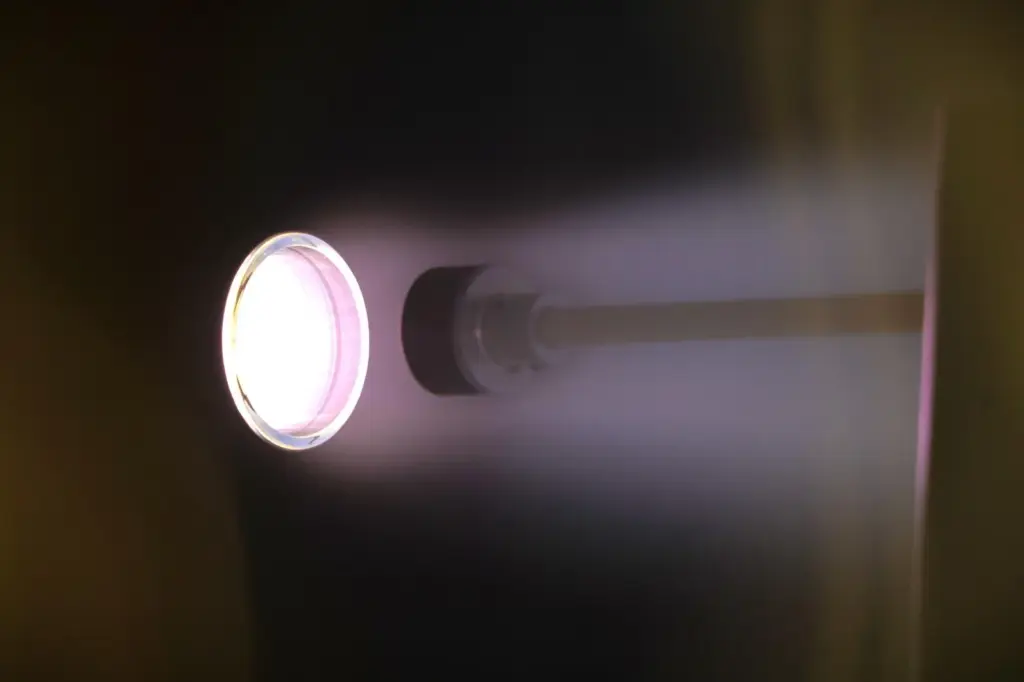
Electric thruster ingesting residual atmospheric particles at Very Low Earth Orbit and converting them to plasma for continuous thrust — no onboard propellant tank required.
Air-Breathing Electric Propulsion (ABEP) Thruster
Electric thruster ingesting residual atmospheric particles at Very Low Earth Orbit and converting them to plasma for continuous thrust — no onboard propellant tank required.
Description
Kreios Space's air-breathing electric propulsion (ABEP) system enables sustained satellite operation in Very Low Earth Orbit (VLEO), an orbit traditionally unworkable due to atmospheric drag. It runs only on collected atmospheric gas and solar power, requiring no onboard propellant tank. Development has progressed through prototype generations: K-1 (2021, first helicon plasma thruster prototype, lab-tested ignition and plasma generation), K-2 (2023, integrated with intake system, vacuum-tested, stable operation), and K-3 (2024, tested with multiple gases, power levels, and mass flow rates, achieving the highest specific impulse, efficiency, and thrust to date).
Specifications
| Satellite platform lifetime | >7 years |
|---|---|
| Operating altitude | Can extend below 200 km |
| Propellant | None required — ingests atmospheric gas |
| Development generations | K-1 (2021), K-2 (2023), K-3 (2024) |