
A comprehensive list and description of the Optus satellite series, including A, B, C, D, and 10/11 classes, detailing their design, equipment, launch history, and operational locations for telecommunications services in Australia and New Zealand.
Optus (satellite) series
A comprehensive list and description of the Optus satellite series, including A, B, C, D, and 10/11 classes, detailing their design, equipment, launch history, and operational locations for telecommunications services in Australia and New Zealand.
Description
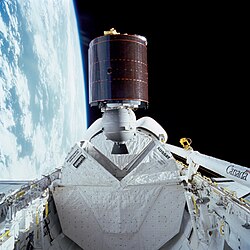
This page provides a detailed overview of the Optus satellite fleet, operated by the Australian telecommunications company Optus. The satellites are categorized into A, B, C, D, and 10/11 classes, each with distinct specifications and operational histories. The A-Class satellites (A1, A2, A3) were Hughes HS-376 models with a design life of 7-10 years, equipped with 15 Ku-band transponders. They had a diameter of 2.2m and a height of 2.9m (stowed) to 6.3m (deployed). The B-Class satellites (B1, B2, B3) were Hughes HS-601 models with a 10-year design life, featuring 15 Ku-band transponders, 1 L-band transponder, a Ka-band beacon, and a laser retroreflector. Optus C1, manufactured by Space Systems/Loral (SS/L) using the LS-1300 platform, had a 15-year design life and was equipped with 24 Ku-band, 4 (+1) Ka-band, 4 X-band, and 6 UHF transponders, partially funded by the Australian Government for defence and telecommunications. The D-Class satellites (D1, D2, D3) were built by Orbital Sciences Corporation on the Orbital STAR 2 platform, designed for 15+ years of service. D1 had 24 Ku-band transponders and a launch mass of 2350 kg. D2 featured 24 active Ku-band transponders (sixteen 150W, eight 44W) and a launch mass of 2375 kg. D3 included 32 Ku-band transponders (twenty-four 125W primary, eight 44W backup) and a launch mass of 2500 kg. Optus 10, also an SS/L LS-1300 bus, had a launch mass of 3200 kg and was expected to have similar transponder configurations to the D-series. Optus 11 is planned for launch in Q4 2025. These satellites provide broadcast services, two-way voice and data communication, and government services across Australia and New Zealand. The page also details launch dates, operational locations, and notable incidents or failures for individual satellites.
Specifications
| A-class satellite type | Hughes HS-376 |
|---|---|
| A-class design life (A1 & A2) | 7 Years |
| A-class design life (A3) | 10 Years |
| A-class equipment | 15 Ku band transponders (including four 30 W transponders and eleven 12 W transponders) |
| A-class diameter | 2.2m |
| A-class height (stowed) | 2.9m |
| A-class height (deployed) | 6.3m |
| Aussat (optus) a1 operational location | 160° east (1985–1993) |
| Aussat (optus) a1 launch date | 27 August 1985 |
| Aussat (optus) a2 operational locations | 156° east (1985–1993), 164° east (1993–1999) |
| Aussat (optus) a2 launch date | 27 November 1985 |
| Aussat (optus) a3 operational locations | 164° east (1987–1993), 156° east (1993–1995), 152° east (1995–1999) |
| Aussat (optus) a3 launch date | 16 September 1987 |
| Aussat (optus) a3 moved to graveyard orbit and shutdown | April 2008 |
| B-class satellite type | Hughes HS-601 |
| B-class design life | 10 Years |
| B-class equipment | 15 Ku band transponders, 1 L band transponder, Ka band beacon, laser retroreflector |
| Optus b1 primary mission location | 160° east |
| Optus b1 current location | Sent to Junk orbit |
| Optus b1 launch date | 14 August 1992 |
| Optus b1 beacon frequencies | 12.748.000 H / 12.749.000 H |
| Optus b2 launch date | 21 December 1992 |
| Optus b3 primary mission locations | 156° east (from initial launch until establishment of Optus C1), 152° east (until establishment of Optus D2) |
| Optus b3 current location | 164° east inclined (as at 2008-02-17) |
| Optus b3 launch date | 27 August 1994 |
| Optus (and defence) c1 satellite type | Space Systems/Loral (SS/L): LS-1300 |
| Optus (and defence) c1 launch date | 11 June 2003 |
| Optus (and defence) c1 location | 156° east |
| Optus (and defence) c1 design life | 15 Years |
| Optus (and defence) c1 equipment | 24 Ku band transponders, 4 (+1) Ka band transponders, 4 X band transponders, 6 UHF transponders |
| D-class manufacturer | Orbital Sciences Corporation |
| D-class satellite type | Orbital STAR 2 platform |
| D-class design life | 15+ years |
| Optus d1 location | 160° east |
| Optus d1 launch date | 13 October 2006 |
| Optus d1 equipment | 24 Ku band transponders |
| Optus d1 launch mass | 2350 kg |
| Optus d2 location | 152° east |
| Optus d2 launch date | 5 October 2007 |
| Optus d2 equipment | 24 active Ku band transponders (including sixteen 150 W transponders and eight 44 W transponders) |
| Optus d2 launch mass | 2375 kg |
| Optus d3 location | 156° east |
| Optus d3 launch date | 21 August 2009 |
| Optus d3 equipment | 32 Ku band transponders (consisting of twenty four 125 watt primary and eight 44 watt backup transponders) |
| Optus d3 launch mass | 2500 kg |
| Optus 10 location | 156° east |
| Optus 10 launch date | 11 September 2014 |
| Optus 10 launch site | Guiana Space Center |
| Optus 10 rocket | Ariane 5 ECA |
| Optus 10 manufacturer | Space Systems Loral (SSL) |
| Optus 10 bus | LS-1300 |
| Optus 10 possible equipment (based on previous D-series) | 32 Ku band transponders (consisting of twenty four 125 watt primary and eight 44 watt backup transponders) |
| Optus 10 launch mass | 3200 kg |
| Optus 10 regime | Geostationary |
| Optus 11 expected launch | Q4 2025 |
| Optus 11 rocket | Ariane 6 |