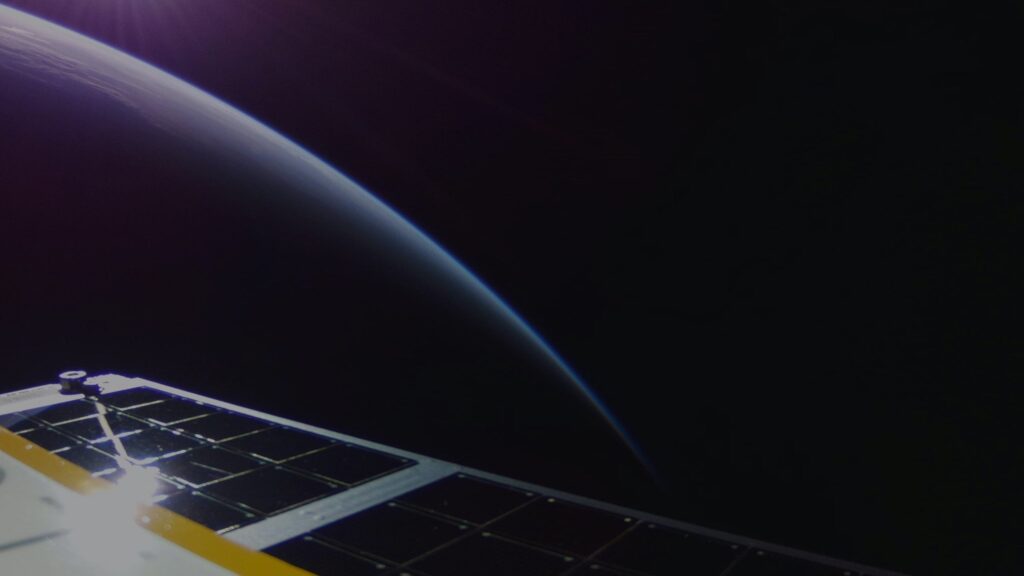
Rocket Lab's versatile small spacecraft bus family covering LEO, re-entry, and deep-space missions in four variants (Standard, Lightning, Pioneer, Explorer) with integrated Electron launch.
Photon Spacecraft Bus Platform
Rocket Lab's versatile small spacecraft bus family covering LEO, re-entry, and deep-space missions in four variants (Standard, Lightning, Pioneer, Explorer) with integrated Electron launch.
Description
Photon is Rocket Lab's family of small spacecraft buses that evolved from the Electron Kick Stage into a full satellite platform offering integrated propulsion, power, communications, and attitude control for customer payloads. The platform is offered in four mission-tailored variants. Standard Photon is the baseline LEO bus carrying up to 170 kg to a 37-degree inclination orbit or 130 kg to sun-synchronous orbit, powered by the Curie engine. Explorer is the high-energy deep-space variant driven by the HyperCurie engine; it successfully delivered NASA's CAPSTONE CubeSat to a Near-Rectilinear Halo Orbit around the Moon in 2022 and is manifested for a Venus flyby mission. Pioneer is Rocket Lab's re-entry and dynamic-operations bus, first flown in 2023 on Varda Space Industries' in-space pharmaceutical manufacturing mission with successful capsule recovery; it carries up to 120 kg payload. Lightning is a high-power LEO constellation bus delivering 3 kW to payload, designed for 12-plus years operational life in high-duty-cycle telecom and remote sensing constellations; it is contracted for Globalstar (17 spacecraft) and Space Development Agency missions. All variants benefit from Rocket Lab's integrated launch-plus-spacecraft offering on Electron from launch sites in New Zealand and Virginia.
Specifications
| Variants | Standard (LEO), Lightning (constellation), Pioneer (re-entry), Explorer (deep space) |
|---|---|
| Launch mass (Standard) | 50 kg |
| Payload capacity (Standard) | 170 kg to 37-deg LEO; 130 kg to SSO |
| Payload capacity (Pioneer) | up to 120 kg |
| Power (Lightning) | 3 kW to payload |
| Propulsion (Standard/Pioneer) | Curie engine (monopropellant or bipropellant) |
| Propulsion (Explorer) | HyperCurie engine (high delta-V, interplanetary capable) |
| Design life (Lightning) | 12+ years LEO |
| Communications | S-band |
| Flight heritage | CAPSTONE lunar (2022), Varda Pioneer re-entry (2023), multiple LEO missions |
| TRL | 9 (Standard, Explorer, Pioneer flight-proven) |