Photon Spacecraft Bus Platform
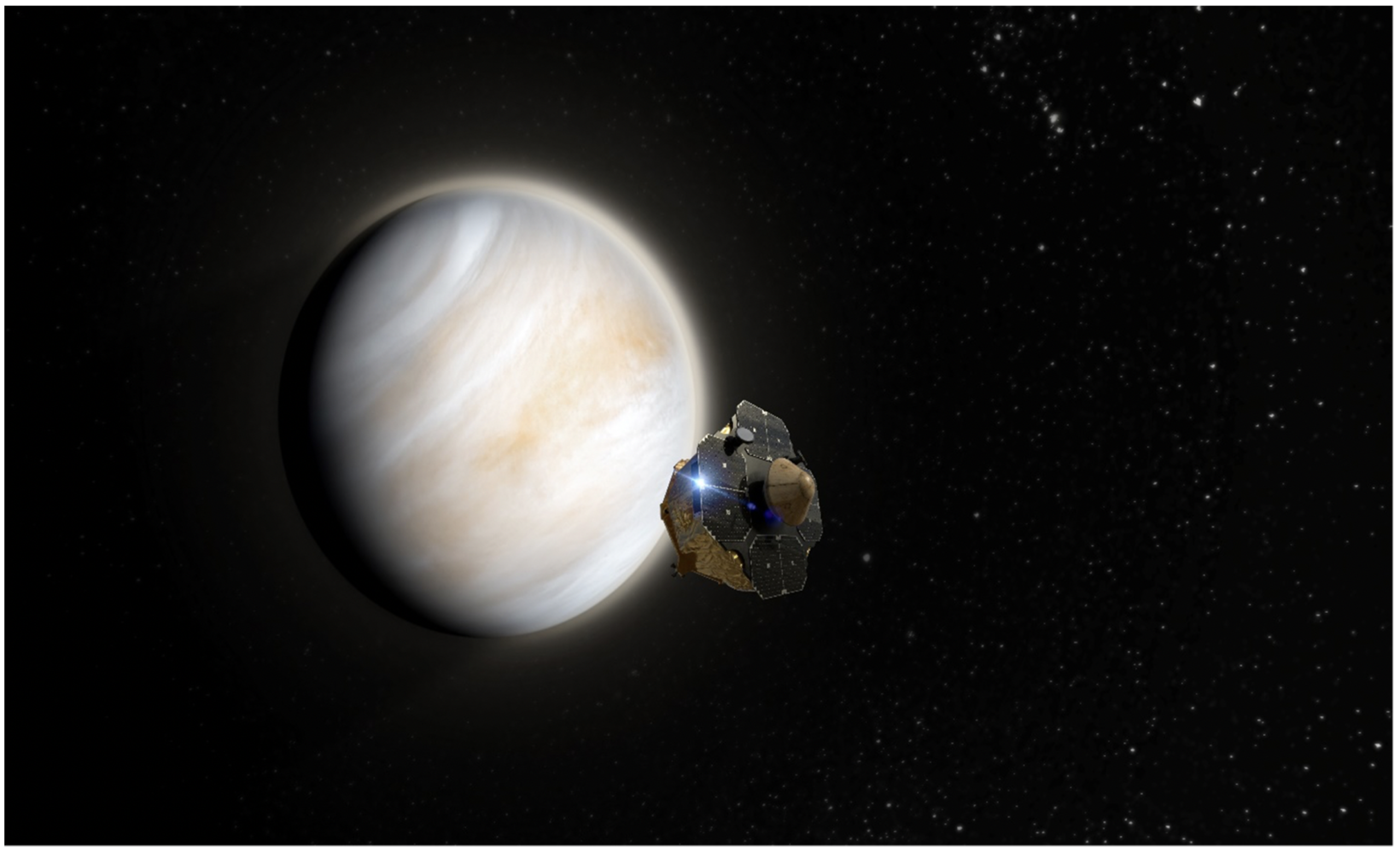 Rocket Lab - Photon
Rocket Lab's versatile small spacecraft bus family covering LEO, re-entry, and deep-space missions in four variants (Standard, Lightning, Pioneer, Explorer) with integrated Electron launch.
Typed specifications5 values
Discloses 1 of 7 fields engineers filter by in this category (category median 3).
- Mass
- 50 kg product page
- Power consumption
- 3 W product page
- Max payload mass
- 170 kg product page
- Radio band
- S product page
- Flight heritage
- CAPSTONE lunar (2022), Varda Pioneer re-entry (2023), multiple LEO missions product page
Each value is typed with its unit and measurement condition and cites the datasheet page it was taken from. Nothing is guessed: a field that is absent here has not been published by the manufacturer. machine-extracted ✓ checked by NewSpace Market ✓ manufacturer confirmed by the manufacturer.
As published by the supplier11 lines, in the manufacturer's own wording
- Variants
- Standard (LEO), Lightning (constellation), Pioneer (re-entry), Explorer (deep space)
- Launch mass (Standard)
- 50 kg
- Payload capacity (Standard)
- 170 kg to 37-deg LEO; 130 kg to SSO
- Payload capacity (Pioneer)
- up to 120 kg
- Power (Lightning)
- 3 kW to payload
- Propulsion (Standard/Pioneer)
- Curie engine (monopropellant or bipropellant)
- Propulsion (Explorer)
- HyperCurie engine (high delta-V, interplanetary capable)
- Design life (Lightning)
- 12+ years LEO
- Communications
- S-band
- Flight heritage
- CAPSTONE lunar (2022), Varda Pioneer re-entry (2023), multiple LEO missions
- TRL
- 9 (Standard, Explorer, Pioneer flight-proven)
About
Photon is Rocket Lab’s family of small spacecraft buses that evolved from the Electron Kick Stage into a full satellite platform offering integrated propulsion, power, communications, and attitude control for customer payloads. The platform is offered in four mission-tailored variants. Standard Photon is the baseline LEO bus carrying up to 170 kg to a 37-degree inclination orbit or 130 kg to sun-synchronous orbit, powered by the Curie engine. Explorer is the high-energy deep-space variant driven by the HyperCurie engine; it successfully delivered NASA’s CAPSTONE CubeSat to a Near-Rectilinear Halo Orbit around the Moon in 2022 and is manifested for a Venus flyby mission. Pioneer is Rocket Lab’s re-entry and dynamic-operations bus, first flown in 2023 on Varda Space Industries’ in-space pharmaceutical manufacturing mission with successful capsule recovery; it carries up to 120 kg payload. Lightning is a high-power LEO constellation bus delivering 3 kW to payload, designed for 12-plus years operational life in high-duty-cycle telecom and remote sensing constellations; it is contracted for Globalstar (17 spacecraft) and Space Development Agency missions. All variants benefit from Rocket Lab’s integrated launch-plus-spacecraft offering on Electron from launch sites in New Zealand and Virginia.
Documentation
No public datasheet yet — request the datasheet / ICD from the supplier.