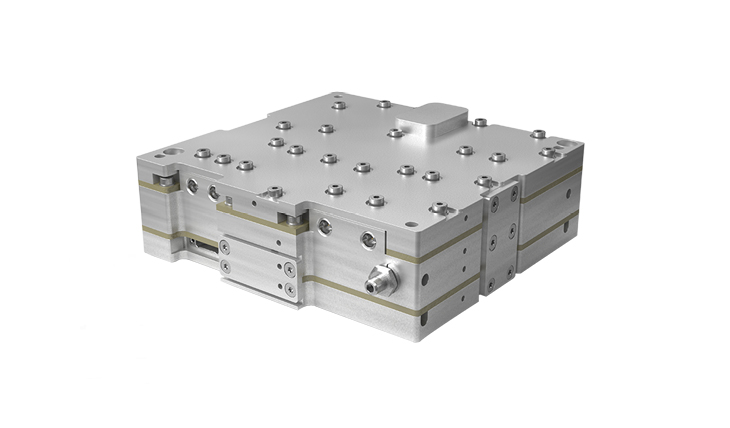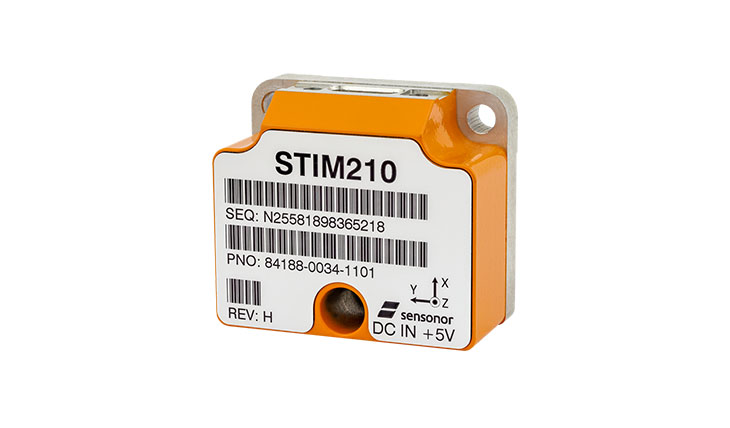

The Hydra is a high-performance, modular star tracker system designed for autonomous operation, offering enhanced robustness, precision, and ease of use. It is available with several fields of view to match diverse mission profiles and architectures. The system has been flight-proven since 2012, with over 245 units launched and more than ten million hours in operation. The software can be implemented either in the Hydra electronic unit (EU) or on the satellite’s onboard computer (OBC), with a software library available for various OBCs. The electronic unit comes in two versions: Hydra Baseline and Hydra TC ('Two Channels'), featuring a fully redundant electronic unit, with a centralized processing version also available. The optical head and baffle utilize a CMOS detector for fast acquisition and tracking precision of a few arcseconds, featuring a 26° sun exclusion angle and available with or without a thermoelectric cooler.
Configurations include:
- **Hydra - Access**: The most affordable version, featuring batch manufacturing, off-the-shelf availability with 8-week delivery, and a standard test plan including vibration, thermal vacuum testing, and calibration. It operates without an electronic unit, relying on centralized processing by software embedded in the OBC, and supports up to 3 Hydra optical heads.
- **Hydra - Baseline**: A best-in-class, highly modular star tracker available in centralized or stand-alone versions. It offers three electronic unit versions: LEO, GEO (with enhanced radiation shielding), and TC "Two Channels" (with hot or cold electronic redundancy in a single unit). It can be configured with one or two electronic units for redundancy and from 1 to 4 optical heads.
- **Hydra - Custom**: Tailored solutions developed for specific missions like JUICE & EUROPA CLIPPER. This version allows for improved robustness with additional shielding and hardware or software adaptations. A low-power version, Hydra-M (Minimum Power), is also available, along with possibilities for additional studies and specific support throughout the mission's lifespan.
Options include EEE parts level 1 or level 2, with or without a Thermo-Electric Cooler, alignment cube orientations, and software options to enhance performance. Sodern also offers testing facilities and support, including training, mission-specific radiation and performance assessments, technical support for software integration, engineering models, star tracker numerical performance models, and static or dynamic optical ground support equipment, as well as electrical ground support equipment for H/W in the loop testing. Dedicated project management and manufacturing teams are available, with standard or customized management and review levels.