
An operator-neutral coordination platform and control plane that connects satellite tasking, on-orbit compute and data processing across constellations so fleets and ground systems can operate as a single network.
Satlyt Network
An operator-neutral coordination platform and control plane that connects satellite tasking, on-orbit compute and data processing across constellations so fleets and ground systems can operate as a single network.
Description
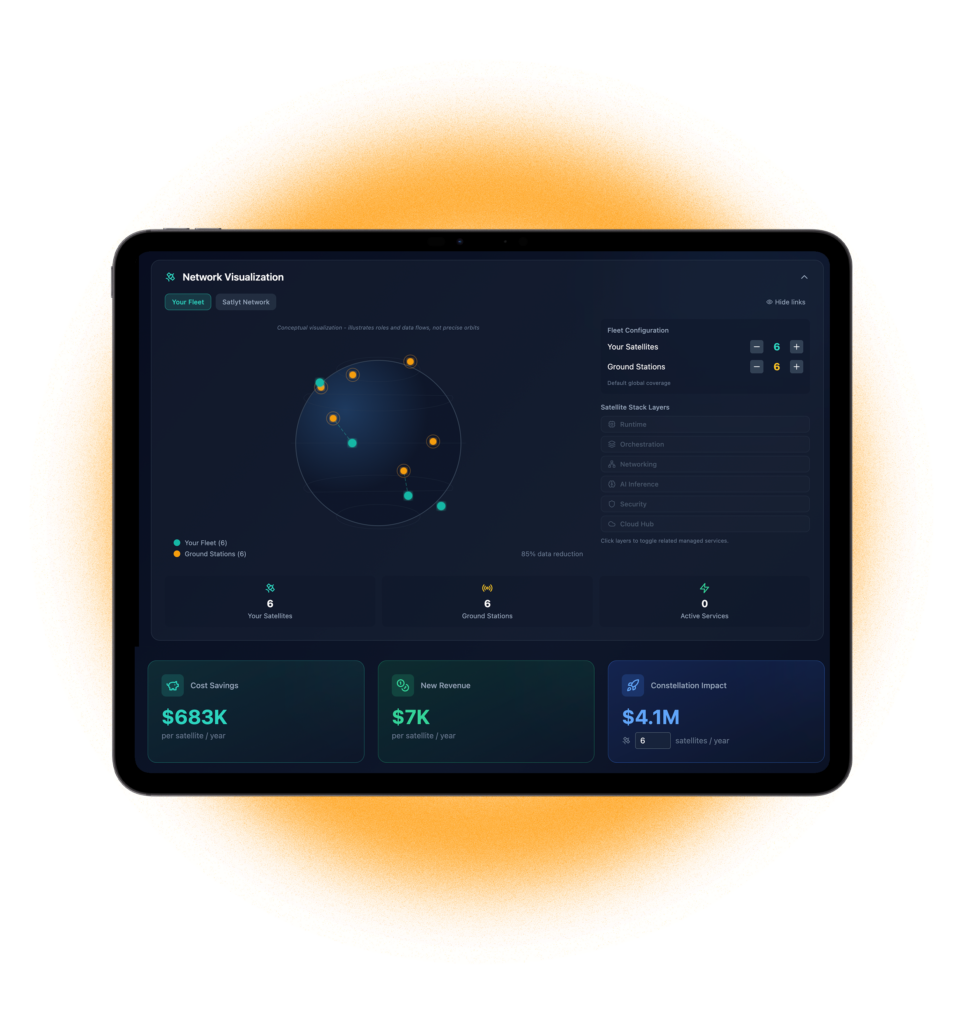
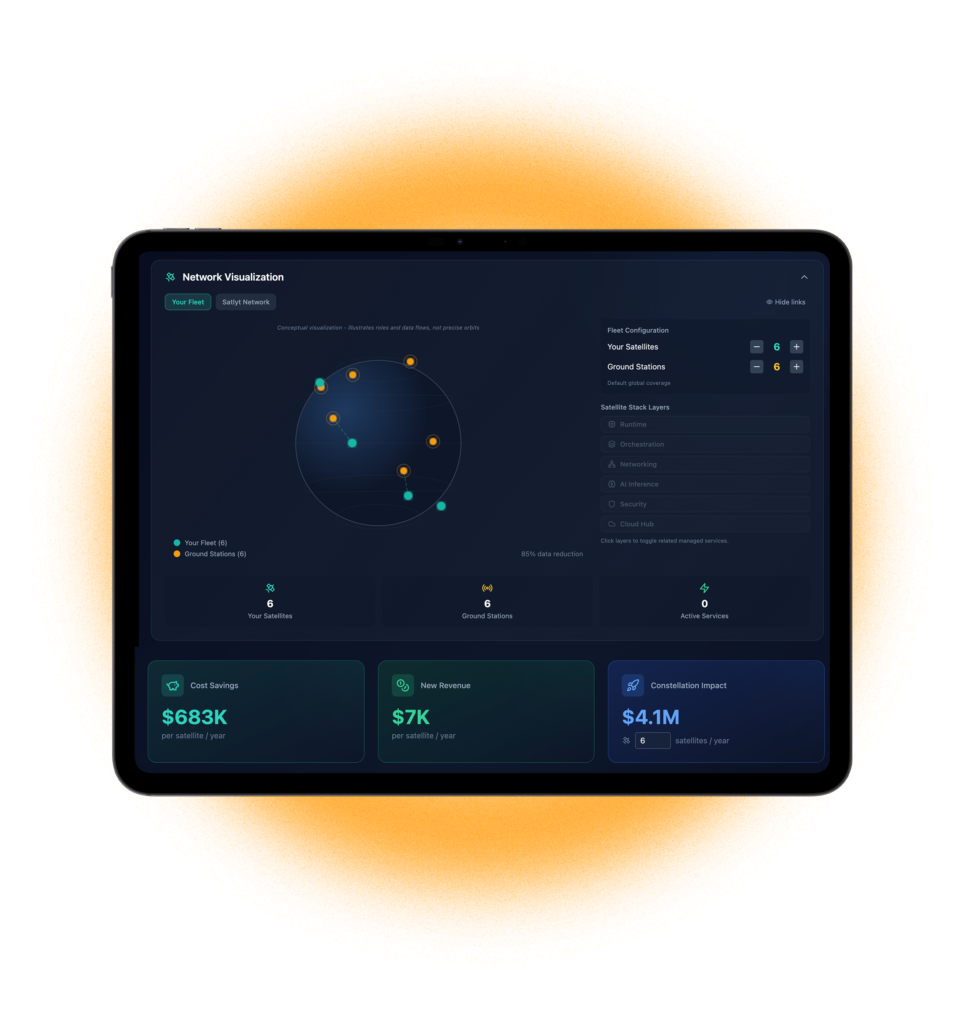
The Satlyt Network is a shared control plane for orbit that connects satellite tasking, on-orbit compute and data processing across constellations, letting satellites and ground infrastructure operate as a single coordinated network instead of isolated assets. As launch costs have fallen and constellation sizes have grown, satellites have become numerous but remain largely disconnected from one another operationally: workflows are fixed per mission, processing is delayed until data reaches the ground, and coordination between operators and platforms is minimal. Satlyt's thesis is that the next constraint on the space economy is coordination, not access to orbit.
The platform is built around distributed data processing, spreading analysis of large datasets across multiple satellites in a fleet rather than centralizing it on the ground; edge computing, moving processing to the spacecraft itself to reduce latency and enable real-time insight generation; and direct inter-satellite communications that reduce dependence on ground-station passes and shorten response times for time-critical taskings. Together these capabilities let operators task, process and coordinate across a federation of interconnected satellites as though they were a single system.
Satlyt Network is designed to be operator-neutral, exposing open APIs and SDKs so third parties can build and run applications on shared inter-satellite infrastructure without having to build, launch or operate their own satellites or compute. This lets operators monetize idle onboard compute, distribute software across partner fleets, and reach new customers through a shared marketplace model, while application developers gain access to constellation-scale compute and connectivity without owning hardware.
Target use cases span Earth observation tasking and downlink optimization, defense and national security coordination across distributed assets, and commercial constellation operators looking to reduce downlink costs and latency while unlocking new revenue from underused onboard resources.
Specifications
| Architecture | Operator-neutral control plane connecting tasking, on-orbit compute and data processing |
|---|---|
| Processing model | Distributed data processing across satellites plus edge computing onboard |
| Connectivity | Direct inter-satellite communication links to reduce ground-station dependency |
| Integration | Open APIs and SDKs for cross-platform, cross-operator interoperability |
| Target sectors | Earth observation, defense and national security, commercial constellations |