Shuri Lab AI-Native Spaceborne Instrumentation
 Satlyt
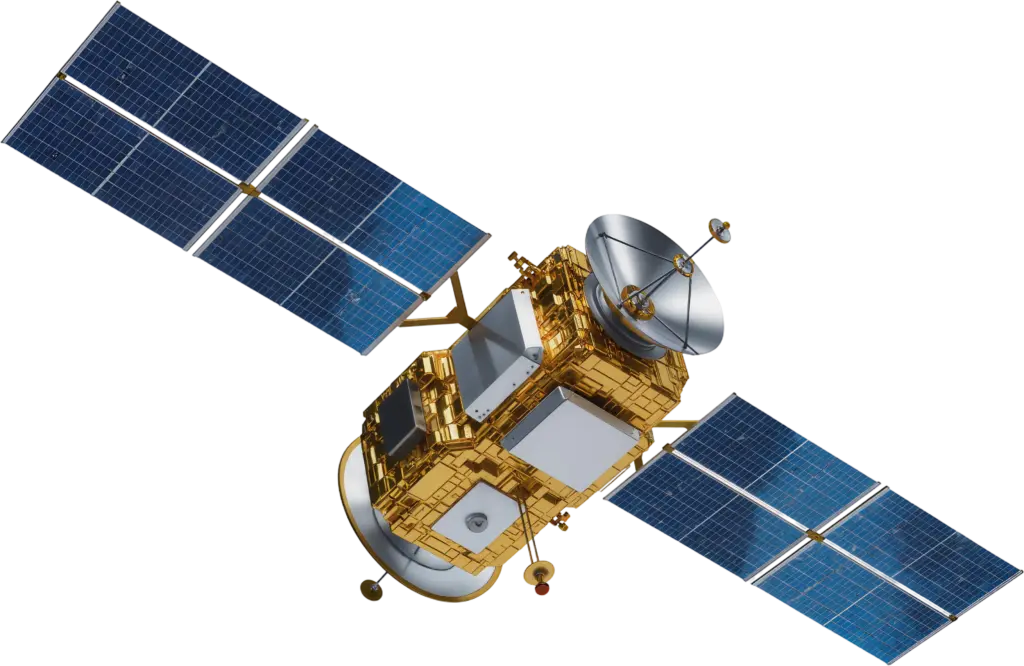
AI-native onboard instrumentation stack for spaceborne science, providing real-time telemetry summarization, autonomous task management and inter-satellite communications parsing, demonstrated in orbit running Google's Gemma 3 model.
Technical specifications
- Core capabilities
- Real-time telemetry summarization, autonomous task management, inter-satellite comms parsing
- Ai model demonstrated in orbit
- Google Gemma 3 small language model
- Demonstrated functions
- Onboard imagery interpretation, encrypted downlink-ready output generation, injected fault detection and diagnosis
- Architecture
- Decentralized, no single point of failure; edge-based processing
- Research partners
- UC Berkeley Capstone program; NASA (Goddard, Ames, Johnson, Marshall, Glenn)
About
Shuri Lab is Satlyt’s AI-native instrumentation program for spaceborne science, built to bring onboard intelligence to missions that must operate under constrained compute, bandwidth and latency conditions typical of small satellites. Rather than adapting terrestrial cloud AI infrastructure to spacecraft, Shuri Lab develops compact, purpose-built models and software designed to run directly on flight-representative hardware in orbit.
The stack provides three core onboard capabilities: real-time telemetry summarization, which processes and condenses spacecraft telemetry onboard for efficient analysis of large data volumes without waiting for a ground pass; autonomous task management, operating as a decentralized system with no single point of failure so the spacecraft can continue coordinating tasks independently of continuous ground contact; and inter-satellite communications parsing, which processes and interprets data at the edge to reduce latency and surface actionable insights faster than a ground-processing pipeline would allow.
Shuri Lab has been proven in orbit: Satlyt successfully demonstrated Google’s Gemma 3 small language model running as part of its on-board AI stack in space. During the demonstration, the onboard model ingested and interpreted satellite imagery directly in orbit, generated a compact encrypted downlink-ready output, and detected and diagnosed multiple injected software faults, validating resilient in-space compute under real operating conditions.
The program is developed in collaboration with academic and government partners, including a UC Berkeley Capstone collaboration exploring onboard AI orchestration and hardware-in-the-loop satellite networking testbeds, and is a foundation for Satlyt’s broader NASA-supported work on autonomous edge computing for small spacecraft. Shuri Lab targets mission designers who need onboard anomaly detection, data prioritization and autonomous decision-making for science and defense missions operating with intermittent connectivity, including cislunar and deep-space scenarios.
Documentation
No public datasheet yet — request the datasheet / ICD from the supplier.