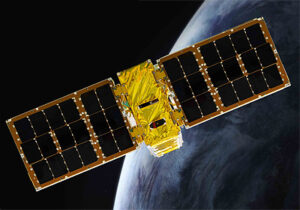
Three-Body Computing Constellation Satellite (Star Computing / Mission 021)
 ADA Space
AI-enabled orbital computing satellite built by ADA Space for the Three-Body Computing Constellation, providing on-orbit AI data processing rather than ground-based processing.
Technical specifications
- Onboard AI compute (per satellite)
- up to 744 TOPS
- Constellation compute (initial 12 sats)
- 5 POPS combined
- Onboard storage
- 30 TB (constellation)
- Inter-satellite link
- up to 100 Gbps (laser)
- Satellites launched (Mission 021)
- 12
- Launch vehicle
- Long March 2D
- Launch site
- Jiuquan Satellite Launch Center, China
- Launch date
- May 14, 2025
- Planned constellation size
- up to ~2,800 satellites (ITU-approved)
- Special payload
- Cosmic X-ray polarimeter (1 satellite)
About
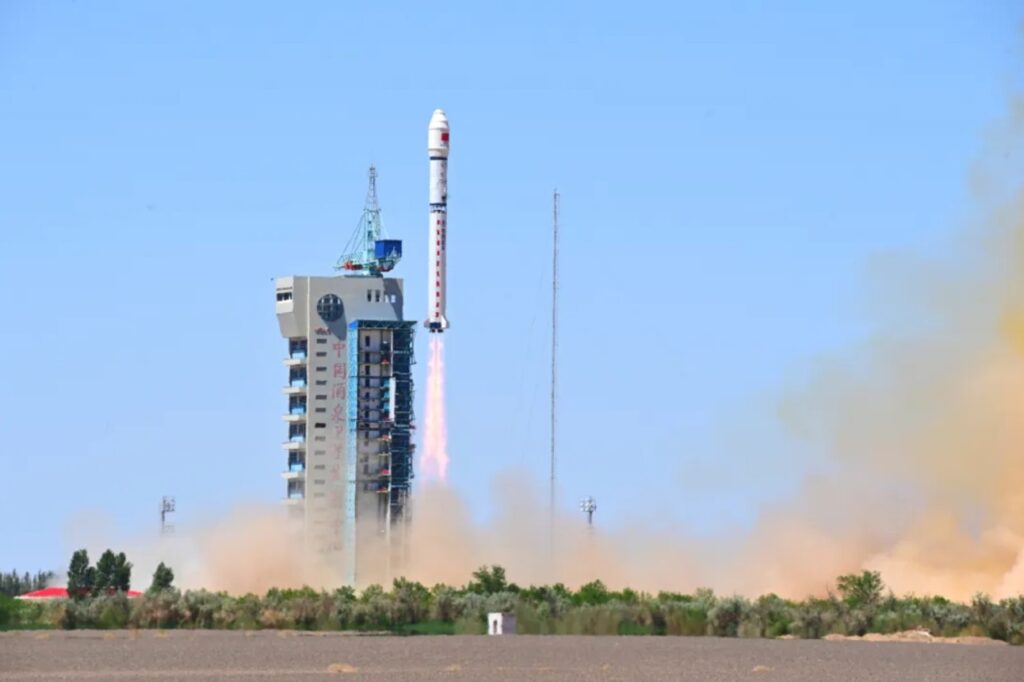
ADA Space, together with Zhejiang Lab, developed the satellites for the “Three-Body Computing Constellation” as part of the wider “Star-Compute Program,” targeting an eventual network of roughly 2,800 satellites approved by the ITU. The first 12 satellites (Mission 021, “0 to 1”) launched on a Long March 2D rocket from Jiuquan Satellite Launch Center on May 14, 2025.
Each satellite carries onboard AI processing hardware delivering up to 744 trillion operations per second (TOPS), with the initial 12-satellite constellation providing a combined 5 peta operations per second (POPS) of space-based computing power and 30 terabytes of onboard storage. Satellites are linked via inter-satellite laser communication at up to 100 Gbps, and carry remote-sensing payloads whose data is processed directly onboard rather than being downlinked for ground processing, reducing bandwidth requirements and latency. One satellite in the constellation also carries a cosmic X-ray polarimeter, developed with Guangxi University and the National Astronomical Observatories of the Chinese Academy of Sciences (NAOC), for detecting and classifying transient astrophysical events such as gamma-ray bursts. ADA Space describes the constellation as the world’s first dedicated orbital computing network, marking a shift from satellites purely for sensing/communication toward satellites that also serve as in-orbit data processors and AI platforms.
Documentation
No public datasheet yet — request the datasheet / ICD from the supplier.