CE-SAT
 Canon Electronics - Space
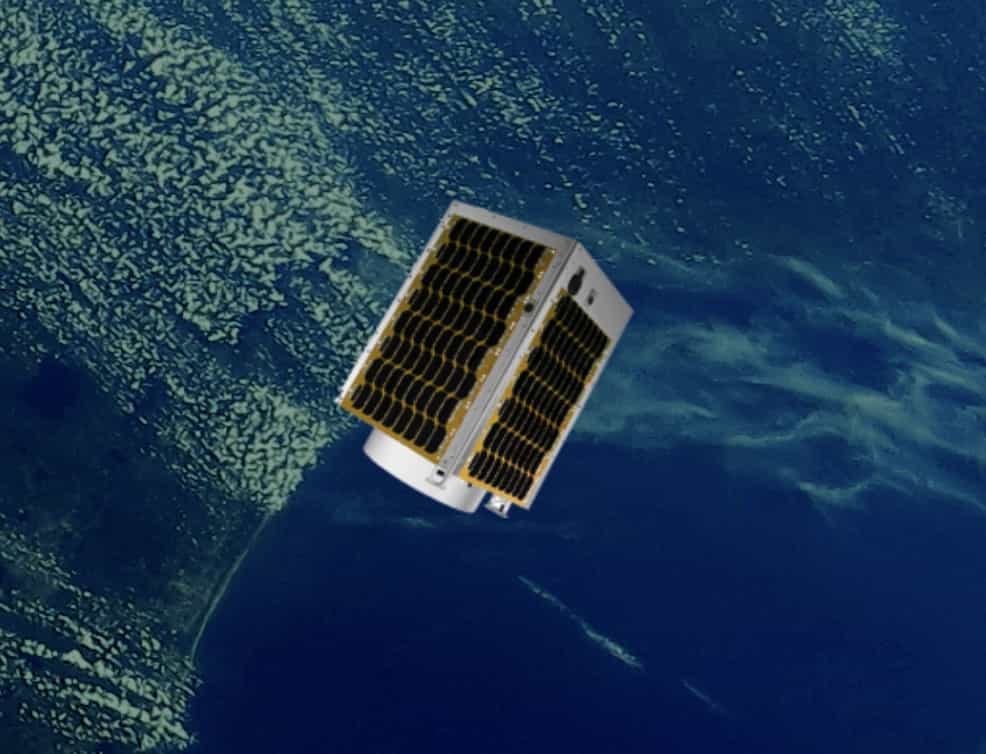
CE-SAT is Canon Electronics' family of small Earth-observation microsatellites that pair Canon EOS/PowerShot camera technology with a compact satellite bus for high-resolution optical imaging, wide-area capture, and technology demonstration.
Key figurescomparable across the catalogue
- Mass
- 50 kg
Normalised to common units so this product can be compared with others in its category. The supplier's own wording is below.
As published by the supplier
- Ce-sat-i mass
- ~50-65 kg
- Ce-sat-i optical system
- 40 cm diameter Cassegrain telescope, coupled to EOS 5D Mark III
- Ce-sat-i ground resolution
- ~0.84-1 m nadir GSD from ~500-600 km orbit
- Ce-sat-iib mass
- 35.5 kg
- Ce-sat-iib ground resolution
- 5.1 m (primary camera), 2.3 m (secondary)
- Ce-sat-ie mass
- 70 kg
- Ce-sat-ie ground resolution
- 0.8 m GSD (telephoto)
- Ce-sat-ie cameras
- EOS R5 behind 400 mm mirror telescope; PowerShot S110 wide-angle
- Flight heritage
- CE-SAT-I (Jun 2017, PSLV-XL; operated until May 2025); CE-SAT-1B (Jul 2020, Rocket Lab Electron - lost to launch failure); CE-SAT-IIB (Oct 2020, Electron; operational); CE-SAT-IE (Feb 2024, H3; operational); further units planned
About
CE-SAT is a series of Earth-observation microsatellites developed by Canon Electronics Inc. to demonstrate that consumer/commercial-grade Canon optics and camera bodies can be adapted for space-based remote sensing at low cost. The program combines a Cassegrain-type catadioptric telescope coupled to a Canon camera body for high-resolution telephoto imaging with a wide-angle compact camera for broad-area coverage, mounted on a small satellite bus in the 35-70 kg mass class. CE-SAT-I, Canon Electronics’ first satellite, launched June 23, 2017 on a PSLV-XL rocket from India, the first self-funded satellite launched by a private Japanese company; it operated until May 2025 using an EOS 5D Mark III behind a 400 mm Cassegrain telescope. A production follow-on, CE-SAT-1B, was lost on July 4, 2020 when its Rocket Lab Electron launch vehicle failed before reaching orbit. CE-SAT-IIB launched October 29, 2020 from New Zealand, carrying an ultra-high-sensitivity low-light camera for night imaging. CE-SAT-IE launched February 17, 2024 on an H3 rocket from Tanegashima Space Center, Japan, achieving 0.8 m ground sample distance. The platform targets remote sensing, satellite bus technology demonstration, and validation of commercial camera components for space applications.
Documentation
No public datasheet yet — request the datasheet / ICD from the supplier.