Quantum Camera
 Diffraqtion
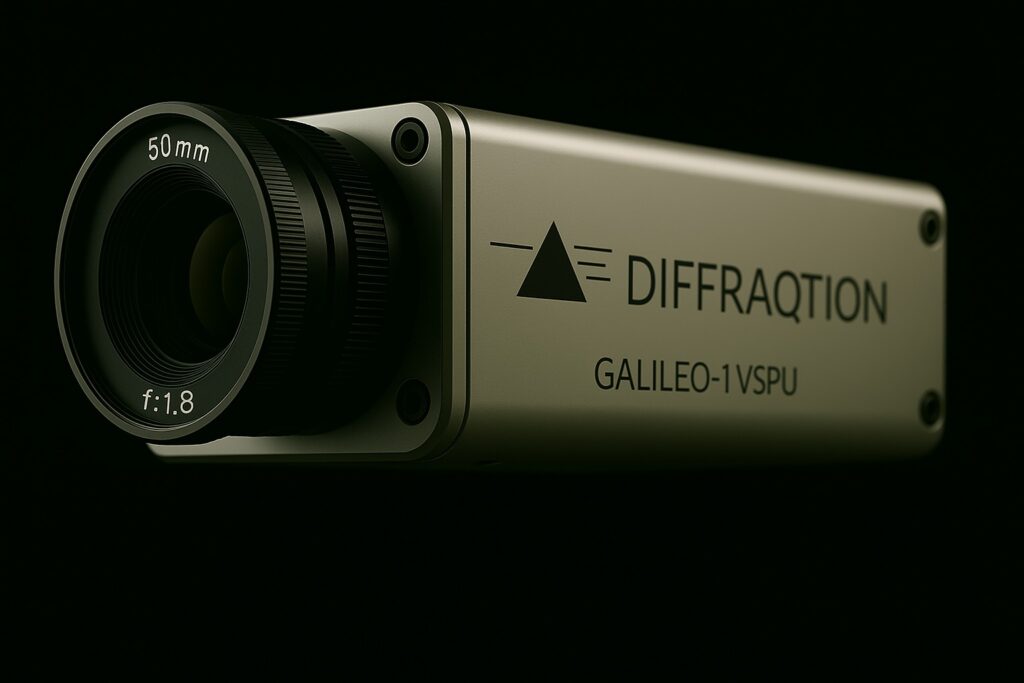
Beyond-diffraction-limit quantum imaging camera for satellite and telescope constellations providing 20x greater object identification range.
Technical specifications
- Technology
- Quantum photonics / quantum imaging
- Key capability
- Imaging beyond the diffraction limit — identifies objects 20× further than any conventional camera
- Information capture
- Captures ~95% more information than conventional cameras
- Applications
- Space situational awareness, Earth intelligence, astronomical observation (exoplanet detection)
- Backing
- DARPA (2026 demo contract), developed in partnership with NASA
About
Diffraqtion’s Quantum Camera is a breakthrough imaging instrument that captures pictures beyond the conventional diffraction limit — the physical boundary that constrains all traditional cameras. Conventional cameras lose approximately 95% of the information contained in light, limiting their object identification range. Diffraqtion’s camera uses quantum photonics technology developed over 10 years by Prof. Saikat Guha at the University of Arizona in partnership with DARPA and NASA (originally for high-precision space situational awareness and the Habitable Worlds Observatory, the successor to the James Webb and Hubble observatories). The cameras can identify objects 20× further away than any camera currently available, being the first imaging systems able to see beyond the diffraction limit. The technology is designed for integration into satellite constellations and ground-based telescopes for Earth intelligence, space situational awareness, and astronomical observation. Diffraqtion was backed by DARPA in early 2026 to demonstrate its quantum camera for space and Earth surveillance, and won first prize at SLUSH 2025 out of 1,000 competing startups.
Documentation
No public datasheet yet — request the datasheet / ICD from the supplier.