Hydra Space PocketQube IoT Satellite Platform
 Hydra Space
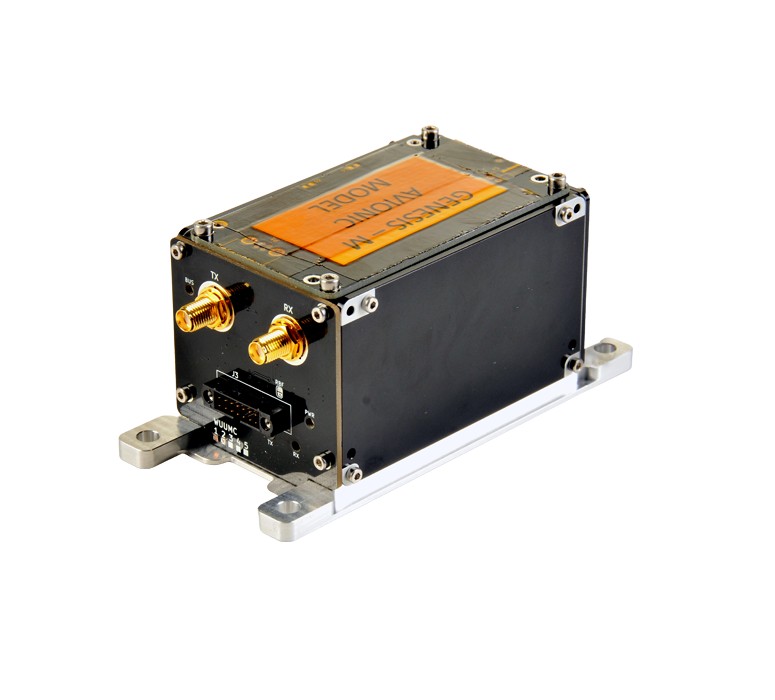
Turn-key 5×5×10 cm PocketQube (~400 g) IoT satellite platform and hosted payload service — in-house design, ground segment, and operations; SpaceX Transporter launch access; ESA-BIC backed; zero-debris design.
Typed specifications3 values
Discloses 1 of 7 fields engineers filter by in this category (category median 3).
- Mass
- 400 g product page
- Envelope (L×W×H)
- 5 × 5 × 10 cm product page
- Form factor
- PocketQube 2P product page
Each value is typed with its unit and measurement condition and cites the datasheet page it was taken from. Nothing is guessed: a field that is absent here has not been published by the manufacturer. machine-extracted ✓ checked by NewSpace Market ✓ manufacturer confirmed by the manufacturer.
As published by the supplier11 lines, in the manufacturer's own wording
- Satellite format
- PocketQube 2P
- Dimensions
- 5 × 5 × 10 cm
- Mass
- ~400 g
- Communication protocols
- LoRa, NB-IoT
- Cloud apis
- AWS and Azure compatible
- Launch vehicle access
- SpaceX Transporter rideshare
- Orbital lifespan
- 2–3 years
- Debris policy
- Zero-debris footprint
- Hosted payload capability
- Yes
- Turn-key service scope
- Mission design, build, launch, operations
- Backed by
- ESA-BIC Madrid, CDTI-Neotec, ENISA
About
Hydra Space’s PocketQube platform is an ultra-compact pico-satellite system in a 5×5×10 cm (2P PocketQube) form factor weighing approximately 400 grams, designed to provide cost-effective, scalable connectivity for remote IoT applications and to serve as a hosted payload platform for technology demonstration missions. The platform integrates the satellite bus, communications payload (LoRa / NB-IoT protocols), ground segment, cloud data pipeline, and launch facilitation into a single turn-key offering.
Customers can integrate their own experimental hardware as hosted payloads on the existing Hydra Space bus, gaining access to the space environment — power, thermal management, communications infrastructure, and mission operations — without designing a full satellite. This substantially reduces cost and timeline for space technology demonstration, regulatory approvals, and early-stage product validation. The platform can also be configured for dedicated constellation deployment, offering turn-key services from mission design through in-orbit operations.
Hydra Space operates from the Parque Científico UC3M in Leganés, Madrid, with SpaceX Transporter rideshare as the primary launch vehicle access path. The design philosophy prioritizes a zero-debris footprint via orbital mechanics management and the naturally decaying orbit of small satellites at relevant altitudes. All satellites include cloud APIs compatible with AWS and Azure, enabling seamless integration with customer data platforms. Hydra Space is backed by ESA-BIC Madrid, CDTI-Neotec, and ENISA, and is incubated under ESA’s commercialization programme.
Target IoT application sectors include precision agriculture, maritime monitoring, cold-chain logistics tracking, environmental sensing, and asset management in areas beyond terrestrial network coverage.
Documentation
No public datasheet yet — request the datasheet / ICD from the supplier.