IABG Virtual and Hybrid Testing and Simulation
 IABG
IABG
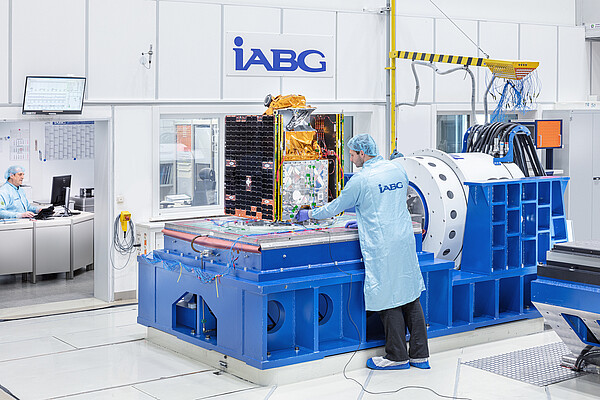
Virtual and hybrid testing services for spacecraft — high-dynamics simulation, shock simulation for naval and space platforms, HPC-based fatigue and vibration virtual safeguarding, and finite-element model validation.
Technical specifications
- Simulation types
- High-dynamics, shock, vibration, fatigue strength, operational modal, thermal-structural
- Methods
- Explicit finite-element (fast transients), implicit FE (fatigue/thermal), hybrid virtual-physical
- Hpc infrastructure
- In-house High Performance Computing cluster
- Modal analysis
- EMA and OMA (experimental and operational)
- Fem correlation
- Physical test-correlated finite-element models
- Applications
- Launch environment prediction, shock propagation, life extension, test cost reduction
- Integration with physical testing
- Hybrid campaign design (virtual + selective physical)
- Location
- Ottobrunn, Germany
- Standards
- ESA ECSS, customer-specific
About
IABG’s Virtual and Hybrid Testing and Simulation services extend physical qualification capability with computational methods that reduce test costs, accelerate development schedules, and enable qualification of systems where physical testing is impractical or prohibitively expensive. The service combines high-fidelity numerical simulation with selective physical validation — the ‘hybrid’ paradigm — to provide cost-effective qualification evidence that satisfies space agency and customer requirements.
High-dynamics simulation covers the fast transient events that characterize launch, stage separation, pyrotechnic firing, and landing impacts. IABG uses its High Performance Computing (HPC) infrastructure to run explicit finite-element simulations that resolve structural response at microsecond timescales, predicting shock propagation, acceleration environments, and structural integrity across complete spacecraft assemblies. Virtual safeguarding of vibration and shock campaigns enables early prediction of test outcomes and identification of potential failure modes before physical testing, reducing risk during expensive qualification programs.
Fatigue and endurance analysis complements dynamic simulation through validated numerical methods for predicting component and structural life under combined loading environments — thermal, mechanical, and vibroacoustic. IABG’s method development in fatigue strength analysis allows customers to extend service life assessments beyond physical test data through validated computational models, supporting life extension and fleet management decisions for operational satellites.
The service includes operational modal analysis (OMA) and experimental modal analysis (EMA) for in-situ structural characterization of assembled satellites without full sine-burst test campaigns, and supports finite-element model correlation with measured modal data. IABG’s virtual testing capabilities are integrated with its physical test infrastructure, allowing hybrid test campaigns that combine computational prediction with targeted physical measurement to validate models and reduce overall test program cost and schedule.
Documentation
No public datasheet yet — request the datasheet / ICD from the supplier.