Quantum-Enhanced Sensing for Space Missions
 Impossible Sensing
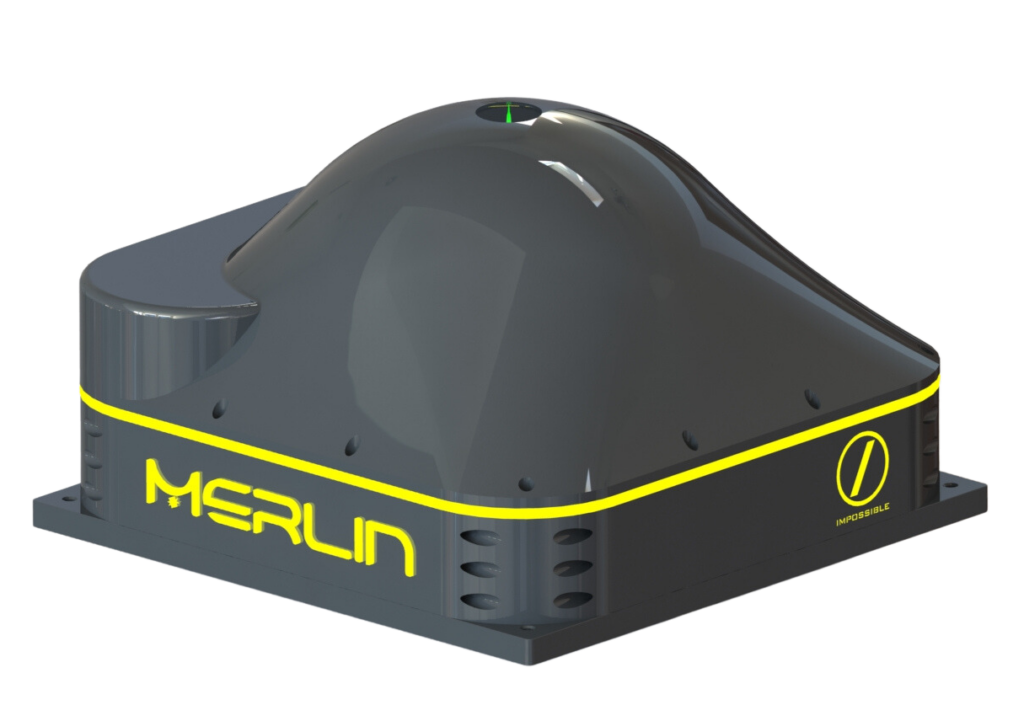
Next-generation quantum optical enhancements integrated into Impossible Sensing's LIBS and Raman instruments — sub-ppb molecular detection, microgravity-extended quantum coherence, biosignature detection below classical limits.
Technical specifications
- Technology basis
- Quantum-optical enhancements to LIBS and Raman spectroscopy
- Target sensitivity
- Sub-ppb molecular and elemental detection
- Quantum advantage
- Microgravity-extended coherence, EM-isolated environment
- Mission applicability
- Landed planetary missions, lunar surface, Mars, deep space
- Collaborators
- Washington University in St. Louis, NASA Ames Research Center
- Funding pathway
- NASA DALI, NASA CLPS
- Applications
- Ultra-sensitive biosignature detection, precision ISRU mapping, fundamental physics
- HQ
- St. Louis, Missouri, USA
About
Impossible Sensing is developing quantum-enhanced sensing capabilities that extend the performance of its optical instrument platforms beyond classical detection limits. By integrating quantum optical techniques into its LIBS and Raman spectroscopy instruments, the company targets measurement sensitivity and specificity that conventional instruments cannot achieve — enabling detection of trace biosignatures, sub-ppb chemical concentrations, and molecular structures at the edge of what physical law permits.
Quantum sensing exploits quantum mechanical phenomena — superposition, entanglement, and quantum interference — to achieve sensitivity improvements that scale beyond classical signal-to-noise limits. In the context of planetary science and astrobiology, this translates into instruments capable of detecting life-related molecules at concentrations orders of magnitude lower than current state-of-the-art flight hardware, opening the door to life detection experiments that have historically been beyond instrument sensitivity.
The space environment provides a uniquely favorable setting for quantum sensing: microgravity reduces systematic noise sources, and isolation from terrestrial electromagnetic interference allows quantum coherence times to be extended. Impossible Sensing leverages these conditions to develop sensors that achieve breakthrough performance on lunar surfaces, Mars landers, and deep-space missions.
The quantum sensing roadmap builds on the company’s existing NASA-funded instrument programs, integrating quantum-optical enhancements as technology maturity allows. Collaborations with Washington University in St. Louis and NASA Ames Research Center provide quantum photonics expertise and mission integration pathways through CLPS and future science mission opportunities. Terrestrial applications include climate monitoring, ocean sensing, and environmental analysis, consistent with Impossible Sensing’s mission to bring off-world advances back to Earth.
Documentation
No public datasheet yet — request the datasheet / ICD from the supplier.