Impossible Sensing Space Instrumentation Suite
 Impossible Sensing
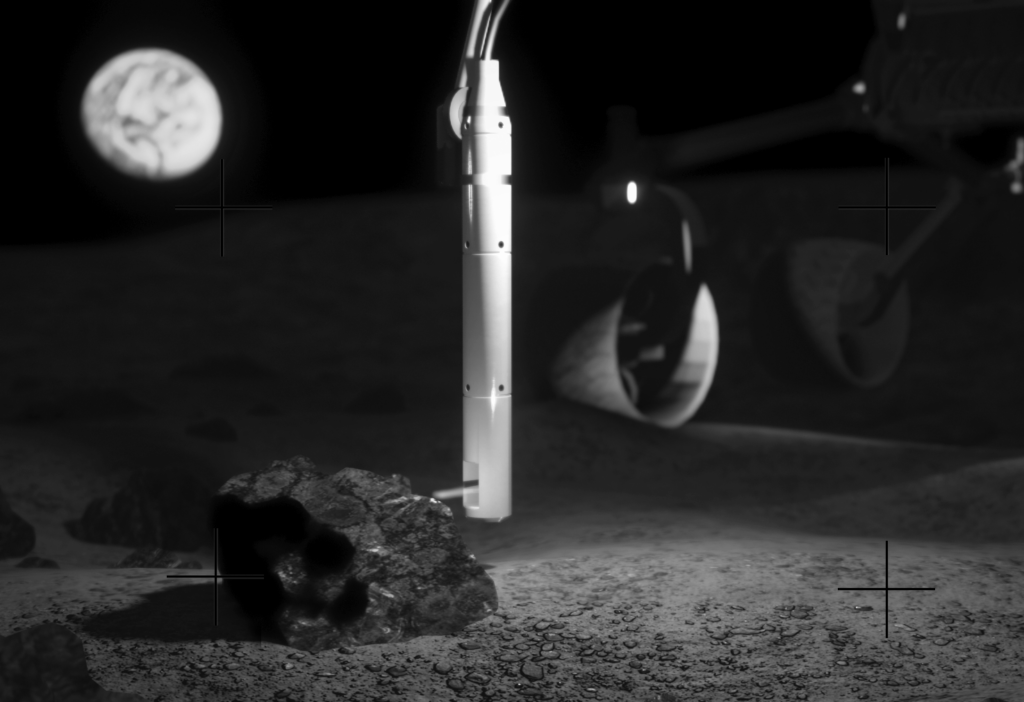
Flight-ready LIBS, Raman, and SERS spectroscopy instruments for planetary surface analysis — DiSCO (drill+dual spectroscopy), PERISCOPE (astrobiology), L3VIN (lunar ISRU), MERLIN (life detection). NASA DALI $3M funded.
Technical specifications
- Disco
- Dual LIBS + Raman + integrated drill; novel optoelectronics; in-situ depth analysis
- Periscope
- Organic/biosignature/water/REE detection; surface and borehole deployment
- L3vin
- LIBS elemental mapping; adjustable standoff; lunar ISRU support
- Merlin
- Back-illuminated SERS; 2-D molecular imaging; astrobiology life detection
- Flew.id
- Trace contaminant/heavy metal detection; ISS hydroponic/water recycler control
- Minilibs
- Portable field/lab LIBS; resource identification and quantification
- Primary funding
- NASA DALI ($3 million grant, 2024); NASA CLPS
- Collaborators
- Washington University in St. Louis, NASA Ames Research Center
- Mission applicability
- Lunar surface, Mars landers/rovers, planetary probes, ISS
- HQ
- St. Louis, Missouri, USA
About
Impossible Sensing develops a portfolio of advanced optical sensing instruments designed for deployment on landed planetary spacecraft, rovers, surface probes, and ISS-based platforms. The suite leverages laser-induced breakdown spectroscopy (LIBS) and Raman spectroscopy — two complementary techniques providing elemental and molecular characterization of geological, biological, and resource targets without requiring sample collection or return.
DiSCO combines dual spectroscopic techniques (LIBS and Raman) with an integrated drill, enabling in-situ sample analysis at depth. Novel optoelectronics replace traditional mechanical focusing mechanisms, reducing mass and complexity. PERISCOPE is designed to meet NASA’s astrobiology objectives, identifying organic compounds, biosignatures, water in all forms, and rare-earth elements — deployable as a surface probe or lowered into boreholes for subsurface depth profiling.
L3VIN is a dedicated LIBS instrument for lunar surface resource assessment, providing elemental composition mapping with autofocusing across adjustable standoff distances to support In-Situ Resource Utilization (ISRU) planning for human lunar habitability. MERLIN introduces back-illuminated Surface-Enhanced Raman Spectroscopy (SERS), capturing high-resolution 2-D molecular images for life-detection missions, developed with NASA Ames astrobiologists.
FLEW.ID provides trace contaminant and heavy metal detection for ISS hydroponic and water recycling control. miniLIBS is a portable LIBS instrument for field and laboratory use. All instruments are developed under NASA programs including CLPS (Commercial Lunar Payload Services) and DALI (a $3 million NASA grant awarded in 2024), in collaboration with Washington University in St. Louis and NASA Ames Research Center. The same core technology also applies to ocean monitoring, agriculture, and climate sensing.
Documentation
No public datasheet yet — request the datasheet / ICD from the supplier.