CHAKSU — AI-Enhanced Satellite Tracking and Inspection System
 InspeCity
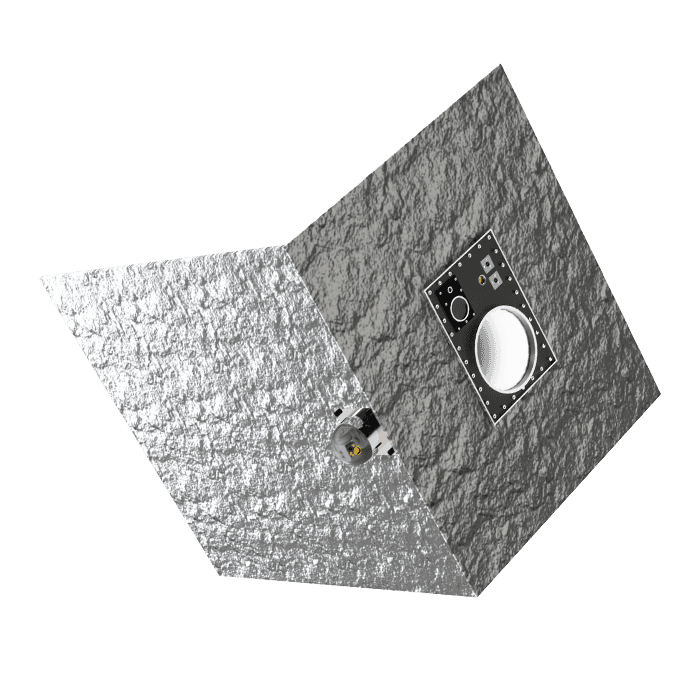
AI-enhanced sensing and tracking suite for close-proximity in-space inspection — feeds relative navigation data to InspeCity's RIG and VEDA platforms, works with both cooperative and non-cooperative targets.
Technical specifications
- System name
- CHAKSU (Comprehensive AI-Enhanced Satellite Tracking Sensor Unit)
- Function
- Relative navigation, tracking, and close-proximity visual/sensor inspection
- Guidance support
- Feeds RIG and VEDA for precision docking
- Navigation
- AI-enhanced, real-time tracking
- Target compatibility
- Cooperative and non-cooperative resident space objects
- Development status
- Design and simulation complete; entering manufacturing
- Country of origin
- India
About
CHAKSU is InspeCity’s dedicated sensing and relative-navigation payload, purpose-built to give the company’s servicing vehicles the ability to safely navigate during close-proximity and docking operations. It combines real-time tracking, AI-enhanced navigation, and high-resolution imaging sensors to allow InspeCity’s robotic platforms to approach a client or derelict satellite, characterize its motion, and inspect its exterior for damage, structural degradation, or fuel leaks — without requiring cooperative markers or prior detailed knowledge of the target’s state.
As the sensing and guidance layer of InspeCity’s stack, CHAKSU feeds precision relative-position and attitude data to the company’s RIG (robotic guidance) and VEDA (life-extension and deorbiting vehicle) platforms, enabling accurate rendezvous and docking even with non-cooperative resident space objects. The inspection data it gathers — high-resolution imagery and diagnostic sensor readings — allows satellite operators to assess anomalies remotely, informing decisions about whether a spacecraft is a candidate for repair, life-extension servicing, or responsible deorbiting.
InspeCity designed CHAKSU to be modular and reusable across its family of servicing missions, rather than a single-use instrument, so it can support a pipeline of customers needing pre-servicing diagnostics as India’s commercial in-orbit servicing and active debris removal market matures. The system has completed design and simulation work and is progressing into manufacturing.
By offering inspection as an integrated part of a broader on-orbit servicing stack — rather than a standalone flyby mission — InspeCity aims to reduce the cost and risk for satellite operators of diagnosing problems in orbit, supporting the company’s larger vision of sustainable, serviceable space infrastructure.
Documentation
No public datasheet yet — request the datasheet / ICD from the supplier.