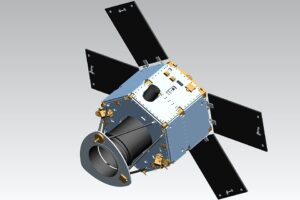
KITSAT-1
 KAIST SaTReC
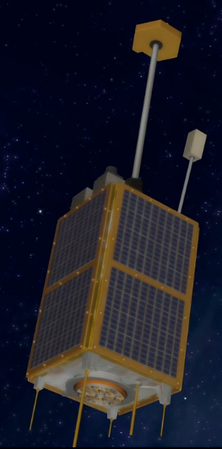
South Korea's first satellite, a 50 kg microsatellite launched in 1992 to demonstrate Korean satellite technology and provide Earth observation and communications experiments.
Technical specifications
- Mass
- 50 kg
- Orbit
- Sun-synchronous, ~1300 km
- Launch date
- 11 August 1992
- Launch vehicle
- Ariane 4
- Mission life
- >3 years
- Payload
- CCD Earth camera, packet radio, cosmic ray detector
About
KITSAT-1 (Korean Institute of Technology Satellite-1) was the first South Korean satellite, developed by KAIST SaTReC in collaboration with the University of Surrey. Launched on 11 August 1992 from Kourou, French Guiana aboard an Ariane 4 rocket, KITSAT-1 marked a historic milestone as South Korea’s entry into the space age.
The satellite was a 50 kg microsatellite operating in a sun-synchronous orbit at approximately 1300 km altitude. It carried a CCD Earth imaging camera, a digital communications experiment, a cosmic ray experiment, and a store-and-forward packet radio system. KITSAT-1 demonstrated that a small team of university engineers could design, build, and operate a functional satellite.
The mission lasted over 3 years and produced thousands of Earth images. It established the foundation for South Korea’s subsequent satellite programs and led to the development of KITSAT-2, KITSAT-3, and eventually KOMPSAT series satellites.
Documentation
No public datasheet yet — request the datasheet / ICD from the supplier.