CubeSat Structure (1U / 2U / 3U)
 KSF Space Foundation
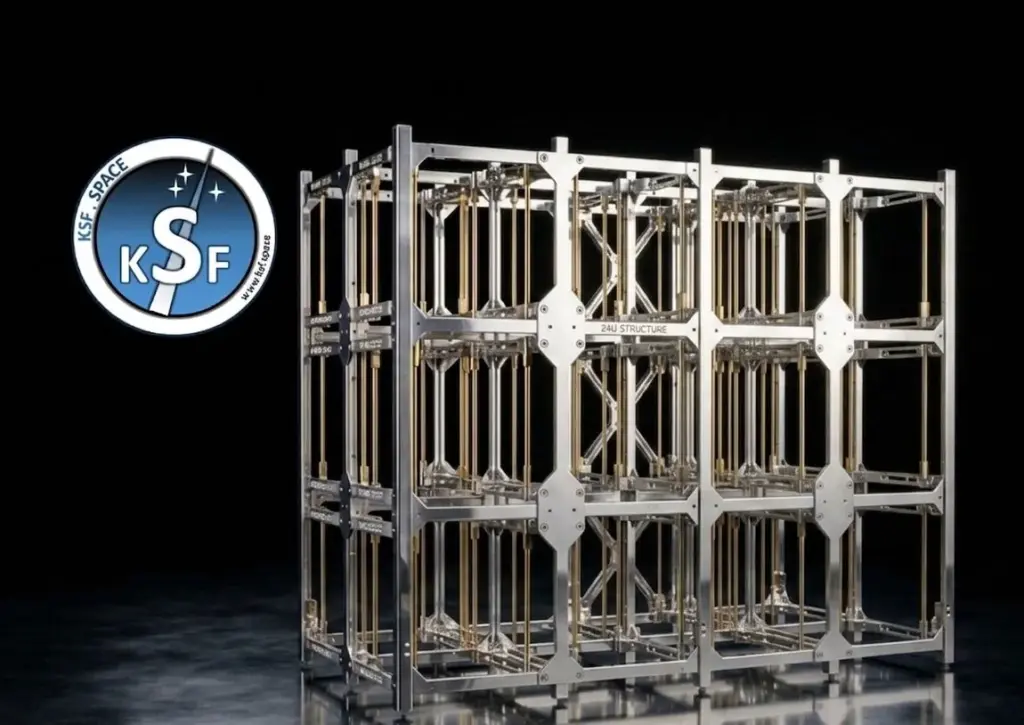
Flight-certified 1U/2U/3U CubeSat structures in aerospace-grade DMLS aluminum or PA11 polymer, validated to NASA-GSFC-STD-7000 (GEVS).
Typed specifications4 values
Discloses 0 of 11 fields engineers filter by in this category (category median 1).
- Material (as printed)
- AlSi10Mg (Aerospace-grade Aluminium) product page PA11 (bio-sourced nylon)
- Form factor, U (number)
- 1 U product page
- Envelope (L×W×H)
- 1U, 2U, 3U product page
Each value is typed with its unit and measurement condition and cites the datasheet page it was taken from. Nothing is guessed: a field that is absent here has not been published by the manufacturer. machine-extracted ✓ checked by NewSpace Market ✓ manufacturer confirmed by the manufacturer.
As published by the supplier18 lines, in the manufacturer's own wording
- Available sizes
- 1U, 2U, 3U
- Metal material
- AlSi10Mg (Aerospace-grade Aluminium)
- Metal process
- DMLS (Direct Metal Laser Sintering)
- Metal finish
- Shot Peened
- Polymer material
- PA11 (bio-sourced nylon)
- Polymer process
- Multi Jet Fusion
- Polymer density
- 99.9%
- Polymer weight savings
- Up to 50% lighter than metal
- Polymer finish options
- Grey Raw or Black Smooth (Vapor Honed)
- Assembly time
- ~15 minutes
- Thermal standard
- NASA-GSFC-STD-7000 (GEVS)
- Thermal qualification margin
- ±10°C
- 1u metal price
- US$1,000
- 2u metal price
- US$2,000
- 3u metal price
- US$2,500
- 1u polymer price
- US$500
- 2u polymer price
- US$700
- 3u polymer price
- US$1,000
About
KSF Space offers flight-certified CubeSat structures in 1U, 2U, and 3U form factors, available in two material options: Laser Melted (DMLS) Aerospace-grade Aluminium (AlSi10Mg) or PA11 bio-sourced polymer manufactured via Multi Jet Fusion. Both variants are validated against the NASA-GSFC-STD-7000 (GEVS) framework and maintain the ±10°C Qualification Margin required by NASA and ESA. The modular design allows assembly in approximately 15 minutes. The aluminum variant is optimized for high-vibration launches and deep-space exploration, while the polymer variant offers up to 50% weight savings and is ideal for rapid prototyping and weight-sensitive suborbital missions.
Documentation
No public datasheet yet — request the datasheet / ICD from the supplier.