Kuva Space Hyperspectral Microsatellites (Hyperfield Constellation)
 Kuva Space
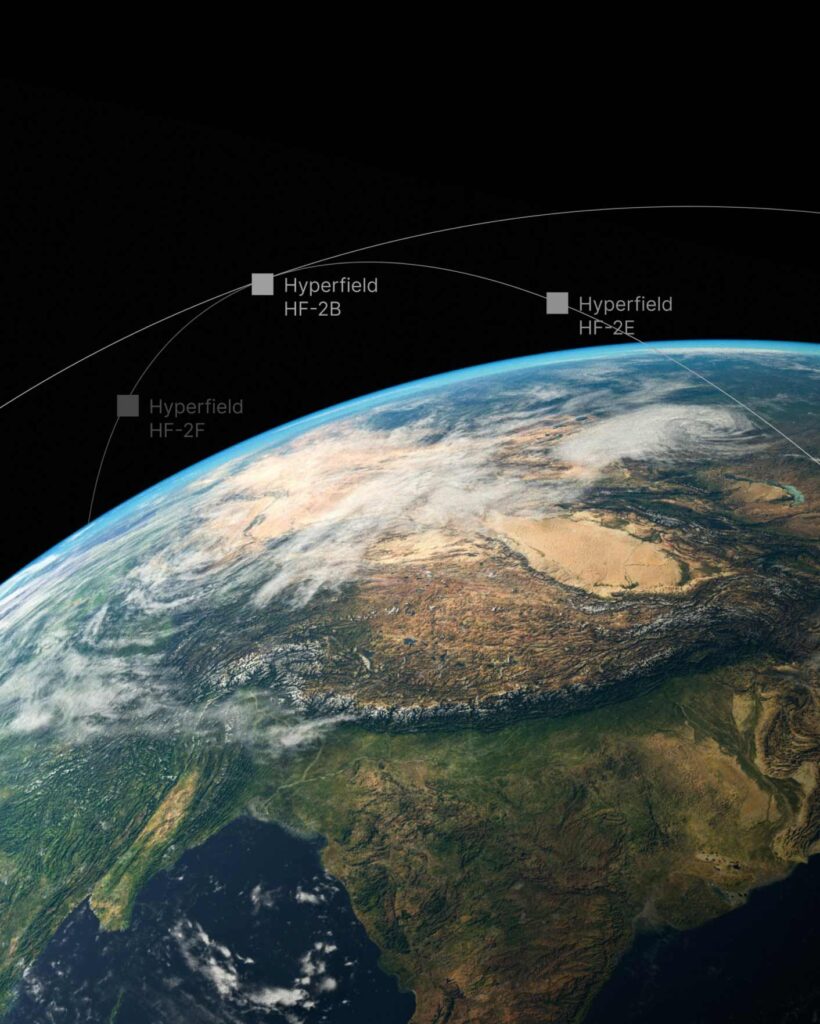
Kuva Space offers a constellation of hyperspectral microsatellites, known as Hyperfield, that continuously capture scientific-grade data on Earth's evolving conditions for various applications like agriculture, environmental protection, and security.
Key figurescomparable across the catalogue
- Mass
- 2 kg
Normalised to common units so this product can be compared with others in its category. The supplier's own wording is below.
As published by the supplier
- Constellation size (planned by 2030)
- 100 satellites
- Imaging modes
- Three
- Ai integration
- Integrated into every stage from data capture to delivery
- Hyperfield-1 type
- First-generation commercial satellites
- Hyperfield-2 launch date
- Planned for 2026
- Hyperfield-2 features
- Expanded spectral coverage and improved spatial resolution
- Reaktor hello world launch date
- Q4 2018
- Reaktor hello world launch vehicle
- ISRO/Antric PSLV, india
- Reaktor hello world class | mass
- 2U CubeSat | 2.4 kg
- Reaktor hello world spectral range
- 900 - 1400 nm
- Reaktor hello world resolution
- 200m
- Reaktor hello world payload
- Infrared hyperspectral imager (VTT)
- Reaktor hello world mission status
- Completed
- Sunstorm launch date
- Q3 2021
- Sunstorm launch vehicle
- Arianespace Vega, French Guiana
- Sunstorm class | mass
- 2U CubeSat | 4 kg
- Sunstorm payload
- Solar X-ray spectrometer (ISAWARE)
- Sunstorm mission status
- Completed
- W-cube launch date
- Q2 2021
- W-cube launch vehicle
- SpaceX Falcon9, USA
- W-cube class | mass
- 3U CubeSat | 4 kg
- W-cube payload
- W/Q-band beacon (VTT)
- W-cube mission status
- Completed
About
Kuva Space’s Hyperfield constellation consists of hyperspectral microsatellites designed to gather rich, detailed data across a wide range of applications. These satellites continuously capture scientific-grade data on Earth’s evolving conditions, delivering precise, context-rich data to power Kuva Sense™, their planetary intelligence platform. The network is planned to expand to 100 satellites by 2030, offering sub-daily data acquisition anywhere on Earth. The satellites feature three imaging modes, allowing focus on specific wavelengths relevant to each application, and integrate advanced AI from data capture to delivery for accurate, relevant, and actionable intelligence. By combining hyperspectral and relevant third-party data with AI analytics, the system uncovers hidden patterns, diagnoses root causes, and predicts future trends. The constellation includes Hyperfield-1 (first-generation commercial satellites) and Hyperfield-2 (planned for launch in 2026 with expanded spectral coverage and improved spatial resolution). Kuva Space has a history of successful missions, including Reaktor Hello World (2U CubeSat, 2.4kg, 900-1400 nm spectral range, 200m resolution, Infrared hyperspectral imager), Sunstorm (2U CubeSat, 4kg, Solar X-ray spectrometer), and W-Cube (3U CubeSat, 4kg, W/Q-band beacon for advanced space communications). They also contributed to ESA’s Hera mission with life-support interface technology and a hyperspectral imager for asteroid analysis.
Documentation
No public datasheet yet — request the datasheet / ICD from the supplier.