HORYU-2
 Kyushu Institute of Technology (Kyutech)
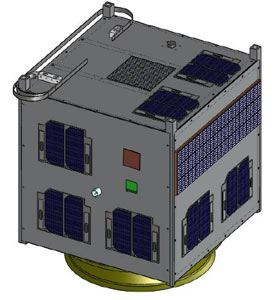
First spacecraft in the world to demonstrate 300V photovoltaic power generation in orbit.
Key figurescomparable across the catalogue
- Mass
- 7.1 kg
Normalised to common units so this product can be compared with others in its category. The supplier's own wording is below.
As published by the supplier
- Form factor
- Nanosatellite, 350x310x315 mm
- Mass
- 7.1 kg
- Payload
- 300 V high-voltage deployable solar array; electrostatic discharge (ESD) experiment; onboard camera
- Launch
- H-IIA, 17 May 2012 (secondary payload with GCOM-W1/Shizuku)
- Significance
- World's first spacecraft to generate 300 V photovoltaic power in orbit
About
HORYU-2 is a nanosatellite developed by Kyushu Institute of Technology’s spacecraft-environment research group under Prof. Mengu Cho, launched May 17, 2012 as a secondary payload with GCOM-W1 (Shizuku). It became the first spacecraft in the world to achieve 300V photovoltaic power generation in low Earth orbit, using deployable solar arrays specifically designed to test high-voltage generation and electrostatic discharge (ESD) phenomena. The mission carried an onboard camera and served as an educational platform for Kyutech’s spacecraft-environment interaction engineering program, providing data directly relevant to the design of future high-power spacecraft that must manage severe spacecraft charging and arcing risks.
Documentation
No public datasheet yet — request the datasheet / ICD from the supplier.