NEXTAR
 NEC Space Technologies
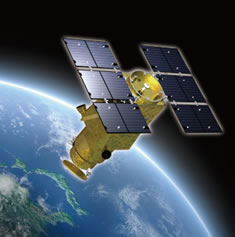
NEXTAR is a satellite bus system designed for small radar satellites, enabling quick and successive delivery of highly reliable satellite systems at low cost.
Typed specifications1 values
Discloses 0 of 7 fields engineers filter by in this category (category median 3).
- Mass
- 500 kg product page
Each value is typed with its unit and measurement condition and cites the datasheet page it was taken from. Nothing is guessed: a field that is absent here has not been published by the manufacturer. machine-extracted ✓ checked by NewSpace Market ✓ manufacturer confirmed by the manufacturer.
As published by the supplier16 lines, in the manufacturer's own wording
- Satellite
- ASNARO-1
- Satellite (2)
- ASNARO-2
- Bus system
- NEXTAR NX-300L
- Bus system (2)
- NEXTAR NX-300L
- Mass
- 500 kg
- Mass (2)
- 570 kg
- Major on-board device
- Optical sensor
- Major on-board device (2)
- X-Band Synthetic Aperture Radar
- Ground sampling distance (GSD)
- 0.5 m or less.
- Ground sampling distance (GSD) (2)
- 1.0m
- Observable width
- 10 km
- Observable width (2)
- 10 km
- Launched
- November 6, 2014
- Launched (2)
- January 18, 2018
- Rocket
- Dnepr rocket
- Rocket (2)
- Epsilon rocket
About
NEXTAR is a satellite bus system developed by NEC, leveraging their extensive experience in aerospace development and advanced technologies like AI. It is designed to facilitate the rapid and cost-effective delivery of highly reliable small satellite systems. The bus is capable of supporting missions that require advanced imaging capabilities, such as radar satellites that can operate effectively in cloudy weather and at night, capturing clear surface images. The system also allows for flexible attitude changes to customize observations according to user needs. NEC provides comprehensive support for satellites utilizing the NEXTAR bus, covering development, production, launch, operation of data centers for image processing and analysis, and training for all processes. The page specifically highlights its use in the ASNARO-1 (optical sensor) and ASNARO-2 (X-Band Synthetic Aperture Radar) missions.
Documentation
No public datasheet yet — request the datasheet / ICD from the supplier.